
A ducted HVAC system asks one stream of air to do three jobs: heat or cool the room, control the humidity and bring in fresh air. It takes a lot of air to move heat, so the ducts are large. And because one system handles temperature and humidity together, it does neither well.
The oceanfront house in Rye, New Hampshire splits those jobs apart.
The ceiling handles temperature
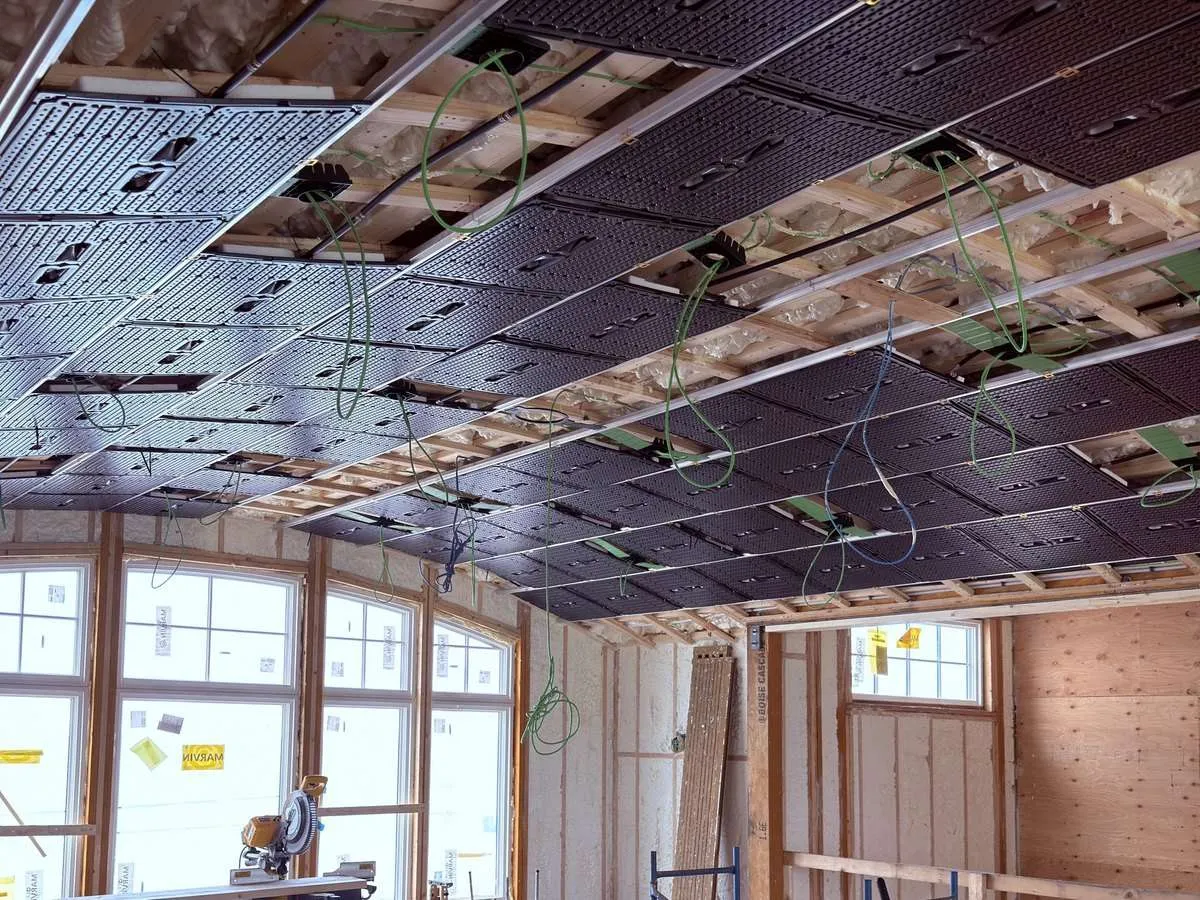
ThermaCEILING carries the sensible load. That is the heating and cooling you feel as temperature. It does it by radiant exchange with the room, from behind the drywall, with no fans and no air movement.
Small ducts handle fresh air and humidity
Design Day Mechanicals designed the ERV and dehumidifier system for this house. It is a standard ERV, a dehumidifier and a steam humidifier, with a cooling coil on the dehumidifier outflow. A dehumidifier warms the air as it dries it, so the coil brings that air back to room temperature before it returns to the house. It delivers fresh, humidity controlled air through small, well placed ducts, at a flow rate you cannot detect.
The ducts can be small because the air is no longer carrying the heating and cooling. It only has to supply fresh air and take out moisture, and that takes far less air.
Sensible and latent
Sensible heating and cooling change the temperature, the part a thermometer reads. Latent heating and cooling change the moisture in the air. A ducted system combines the two. In cooling it overcools the air to dehumidify. In heating it delivers dry, overheated air.
Comfort sits at about 40 to 60 percent relative humidity and 68 to 77 F. Separating the sensible and latent systems lets both temperature and humidity be held where they belong.
Why decoupling works
- Each system does one job. Temperature, humidity and fresh air are each controlled on their own.
- The ceiling can cool without sweating. The dehumidifier keeps the room dew point down, and the controls hold the fluid above it.
- Small ducts fit. In Rye, large ducts would have been impossible to route past the large laminated beams. Small ducts went where they were needed. That is also how the house fit three floors in a flood zone.
- It is quiet. A small volume of air moves slowly. The ceiling makes no sound at all.
- Heat pumps like it. The ceiling works with mild fluid temperatures. High output at low temperatures means high COP for heat pumps.
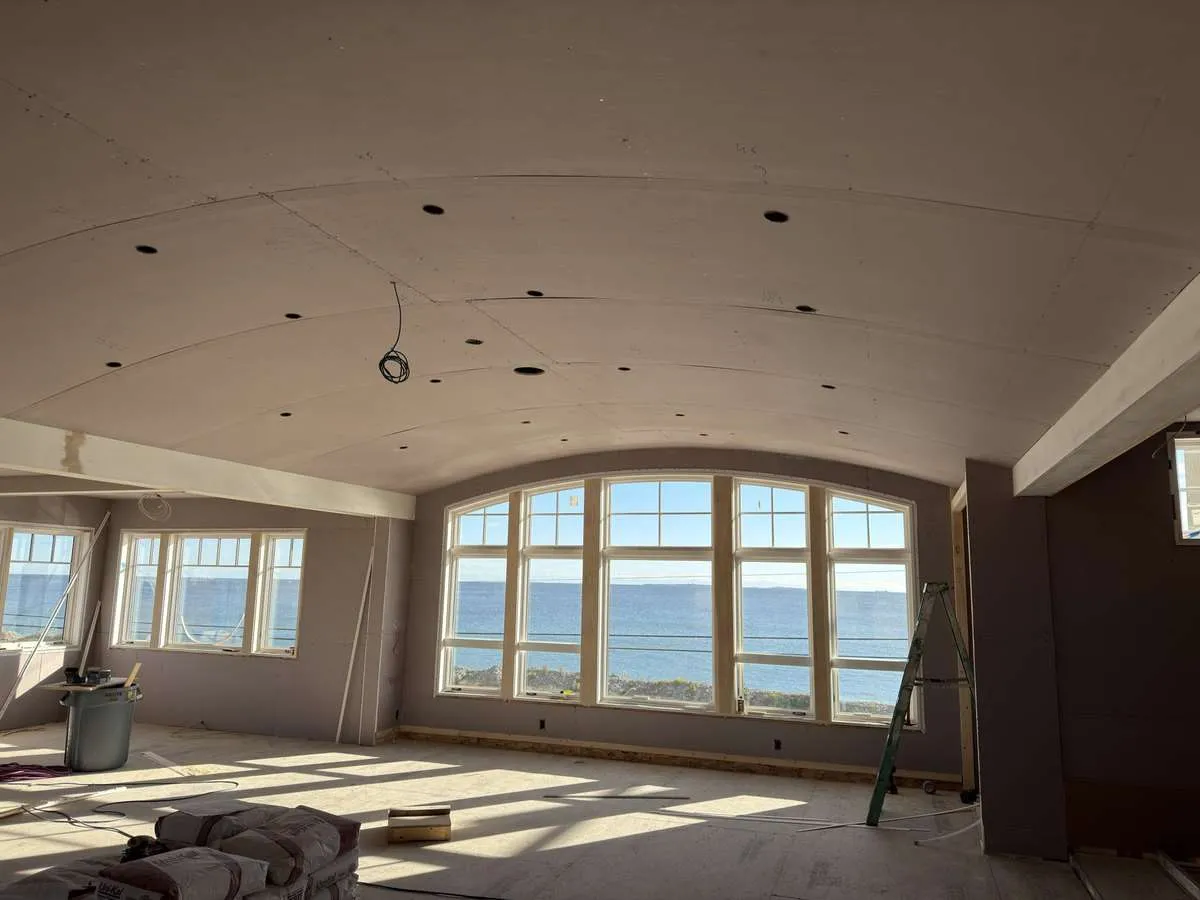
The same approach in Harwinton, CT
A net zero ICF home in Harwinton, Connecticut, designed by Leigh Overland Architect, is decoupled the same way. ThermaCEILING handles temperature. A Build Equinox CERV2, with a dehumidifier and a steam humidifier, handles fresh air and humidity. Sophie Ashley of Energy Vanguard engineered the small duct system.
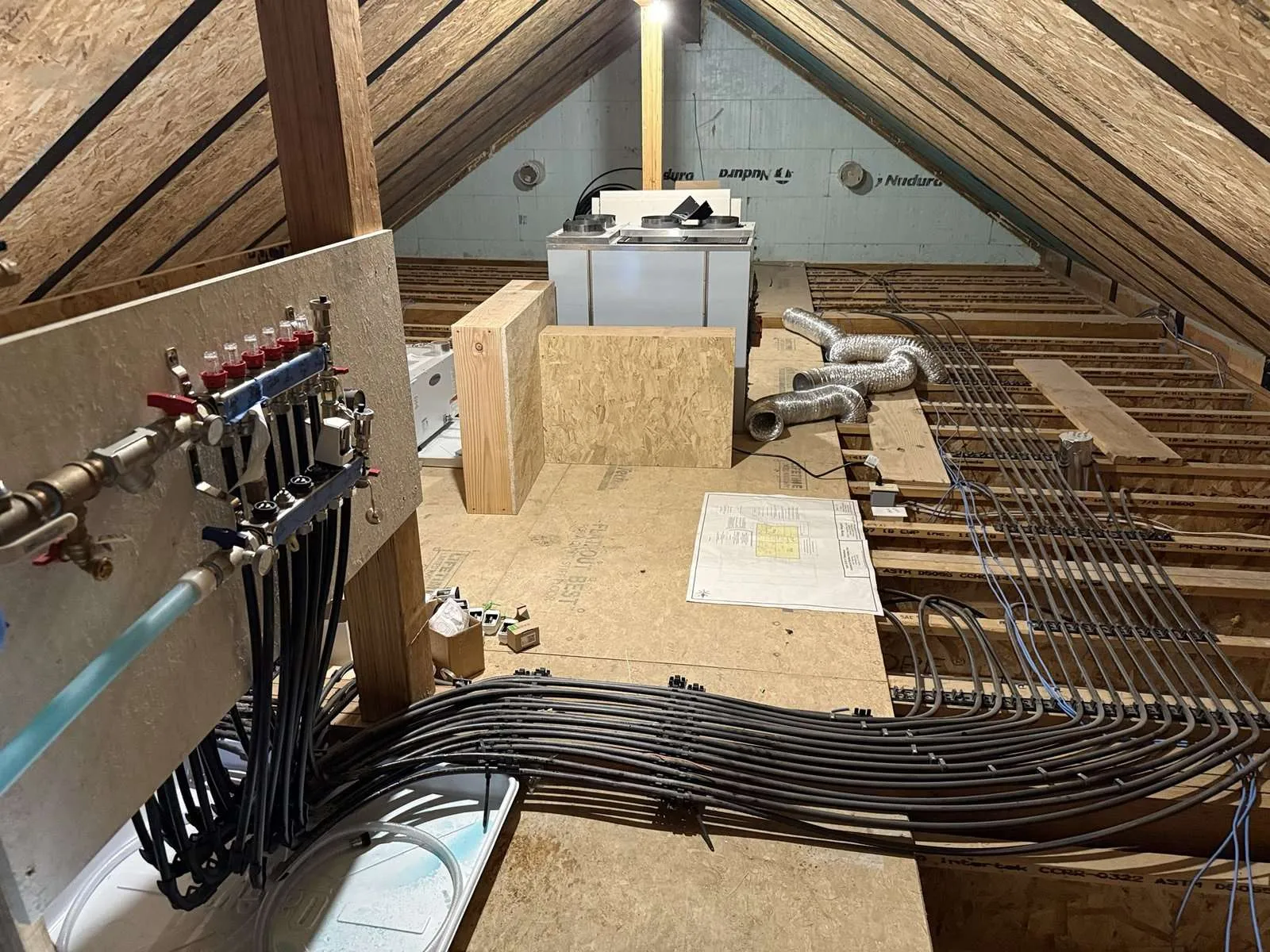
The ceiling manifold and the CERV2 share a humidity controlled attic.
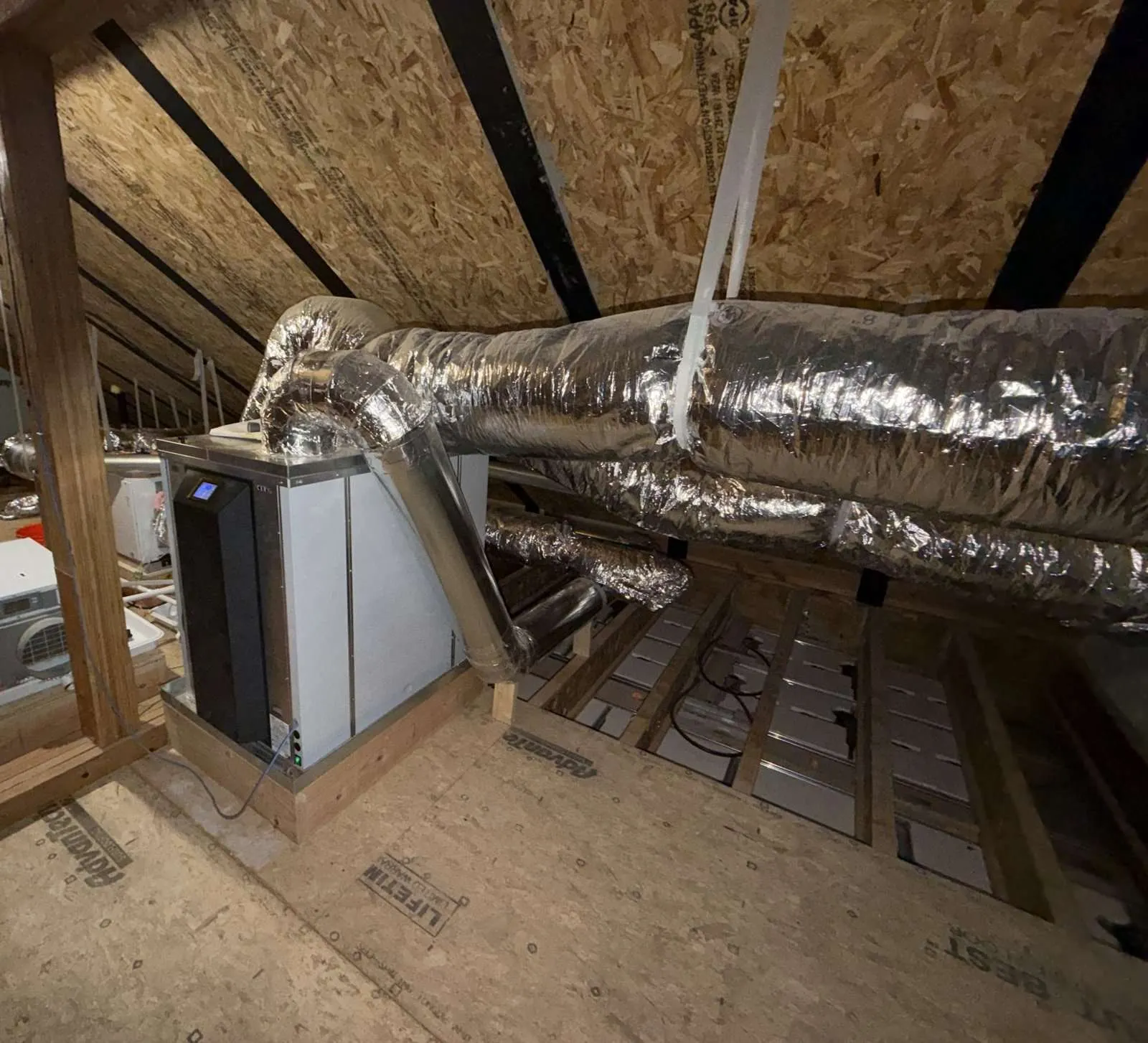
The CERV2 with its ducts connected. They are small because they carry only fresh, humidity controlled air.
The controls tie the two systems together. Loxone holds the fluid above the room dew point, and when a window or door opens in humid weather, the zone valves for that room close.
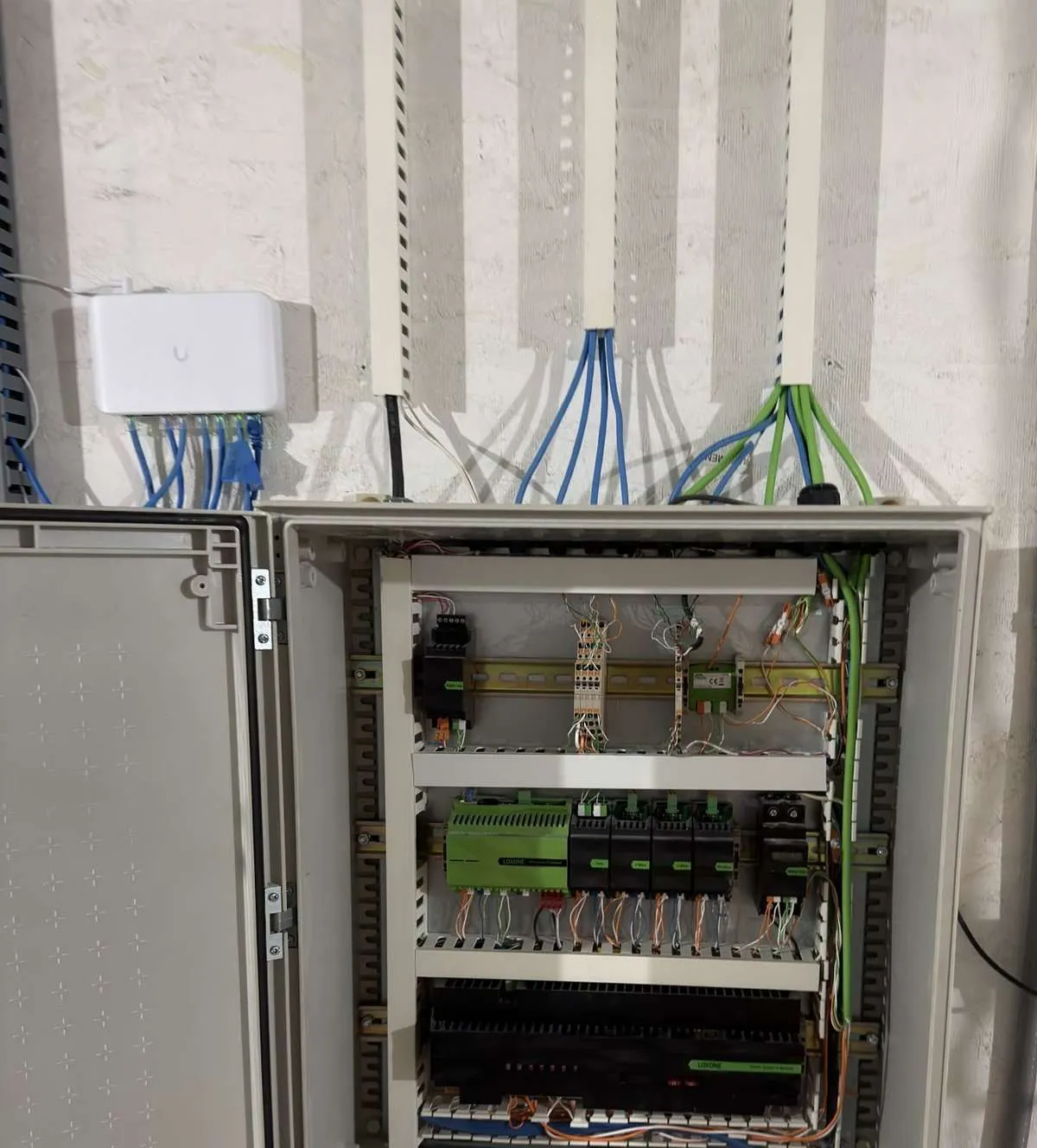
The Loxone control panel.
See the project profile in Plumbing & Mechanical.
What the alternative looked like
Without large ducts, the only other way to cool this house was mini splits, paired with radiant floors for heat. Mini splits are noisy and unattractive. Radiant floors are inefficient and cannot cool effectively. Decoupling gave the house one silent surface for comfort and one small air system for fresh air.
Send us your plans
We design the ThermaCEILING system and work with your mechanical engineer on the fresh air and humidity side. Plan and product review, or call (603) 319-8815.