
If you design or build in Aspen, you already know the rule. The City of Aspen caps the energy a property can spend outdoors, on snowmelt, pools, spas and heat tape combined, at 200 million BTU a year. Pitkin County adopted the same 200 million BTU cap for unincorporated residential property in 2024, replacing its old 6,000 square foot snowmelt limit. Both jurisdictions run the Renewable Energy Mitigation Program, which means whatever exterior energy you do use has to be offset with on-site renewables or paid for through a mitigation fee.
Snow still falls on the driveway. The question is how many square feet you can keep clear inside that budget. The answer depends less on the heat source than on how much of the heat reaches the surface.
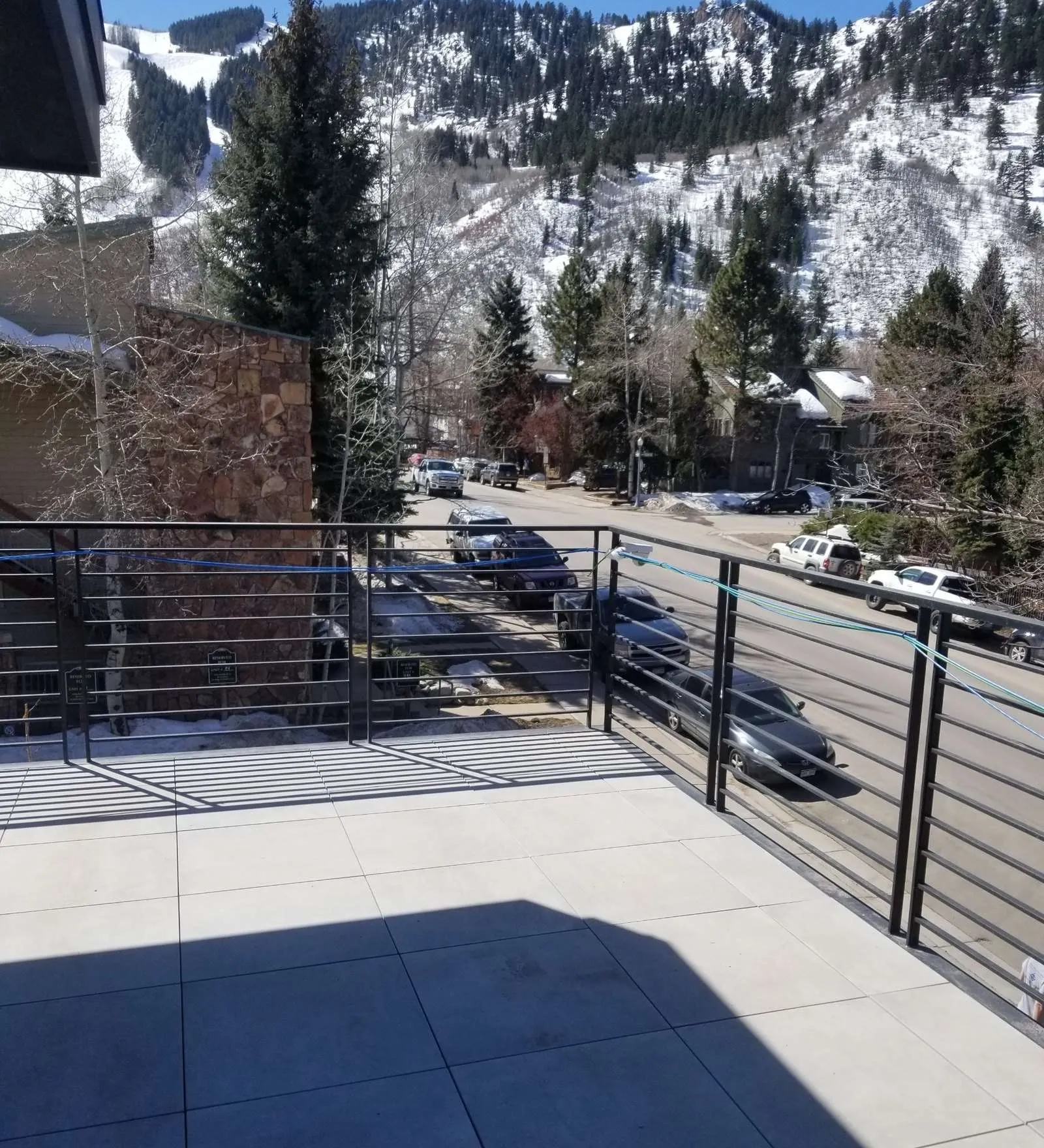
Where this system came from
ThermaPANEL started in Aspen. Before founding Therma-HEXX, I worked in Aspen and Snowmass as an architectural designer and developer, and the snowmelt systems available then were the problem: tubing buried in heavy slabs, high temperature glycol from big boilers, and no practical way to melt snow on a pedestal paver deck without a topping slab the structure couldn’t carry. I designed ThermaPANEL to fix that. It was the first pedestal paver snowmelt system in the world, it is still the only modular hydronic snowmelt system made for pavers, and the design choices that made it work on a roof deck, low mass, low supply temperature, insulation built into the panel, are the same ones that make it work under a BTU cap. Robert Barmore, founder.
Modular Fluid Thermal Transfer Device: US Patent 8,944,146 B2, issued February 3, 2015, and US Patent 9,683,756 B2, issued June 20, 2017.
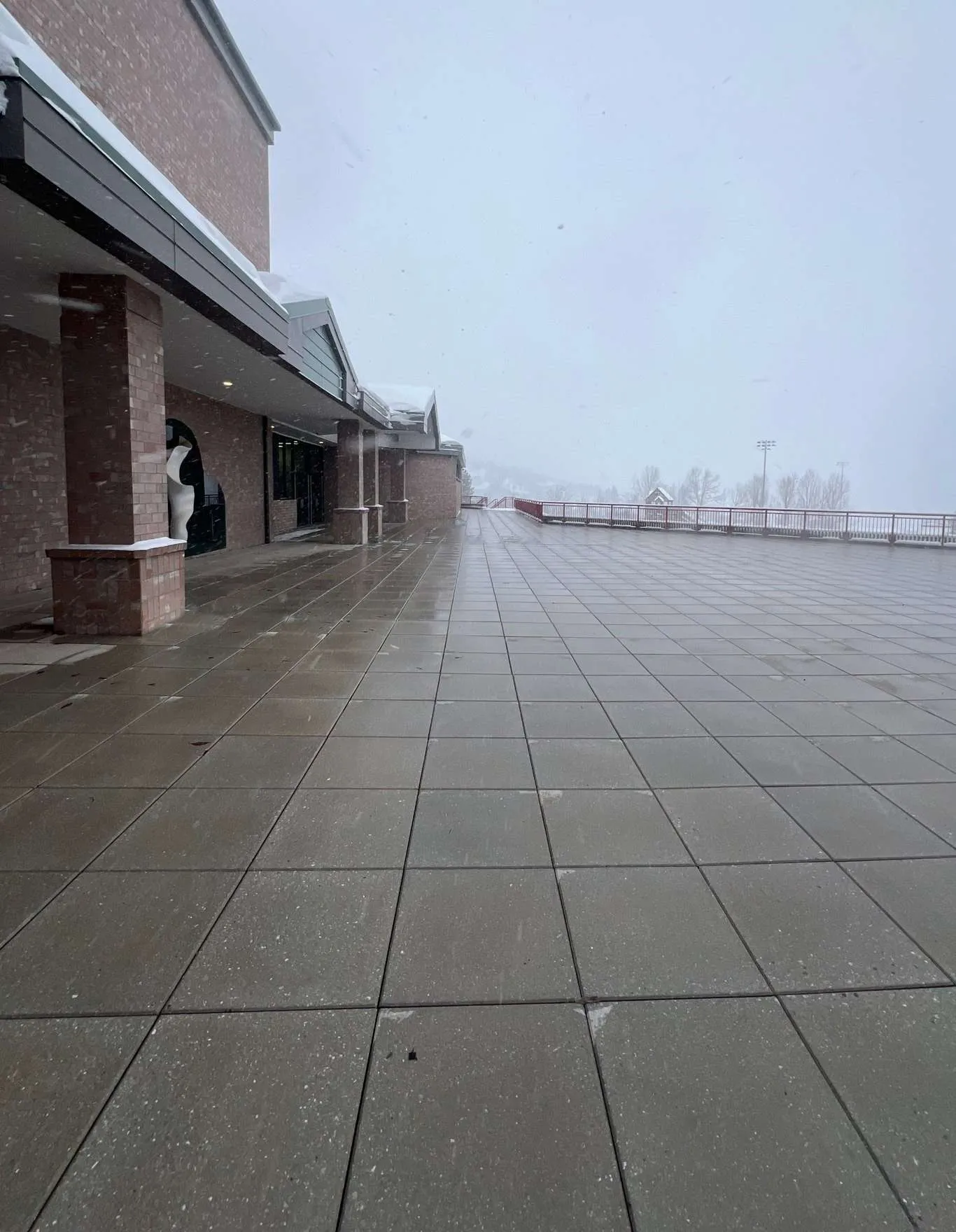
Aspen is one of sixteen mountain towns and nine major cities with rules like this. The full list, with sources and anchors for each town, is on our snowmelt energy codes page.
What the cap actually buys
Pitkin County staff put the number in plain terms when they wrote the ordinance: 200 million BTU a year is roughly 2,300 square feet of conventional snowmelt, and the average request they see is about 2,560 square feet per parcel. If the house also has a pool or spa, the snowmelt allowance shrinks accordingly. A spa draws a flat REMP fee in the county regardless of size.
So the budget is tight for the kind of property that wants snowmelt in the first place. Every BTU that goes somewhere other than the paver surface is a BTU you can’t spend on another square foot.
Where tubing in concrete loses the budget
The standard snowmelt detail buries PEX tubing in a four to six inch slab, or in a sand bed under pavers, with tubes nine or twelve inches apart. Three things follow from that geometry.
- Mass. Before any snow melts, the system has to heat tons of concrete or sand. That pre-heat is paid for in BTUs every storm.
- Striping. Heat spreads sideways from each tube. The surface over the tube is warm and the surface between tubes is cooler, so the system runs hotter than the average surface needs, to get the cold stripes above freezing. We have thermal images of exactly this through two inch pavers, side by side with our panel on the same supply.
- High fluid temperature. Getting heat through mass and across tube spacing takes 140 to 180 degree supply fluid, which is boiler territory. Air to water heat pumps are most efficient delivering 100 to 120 degrees.
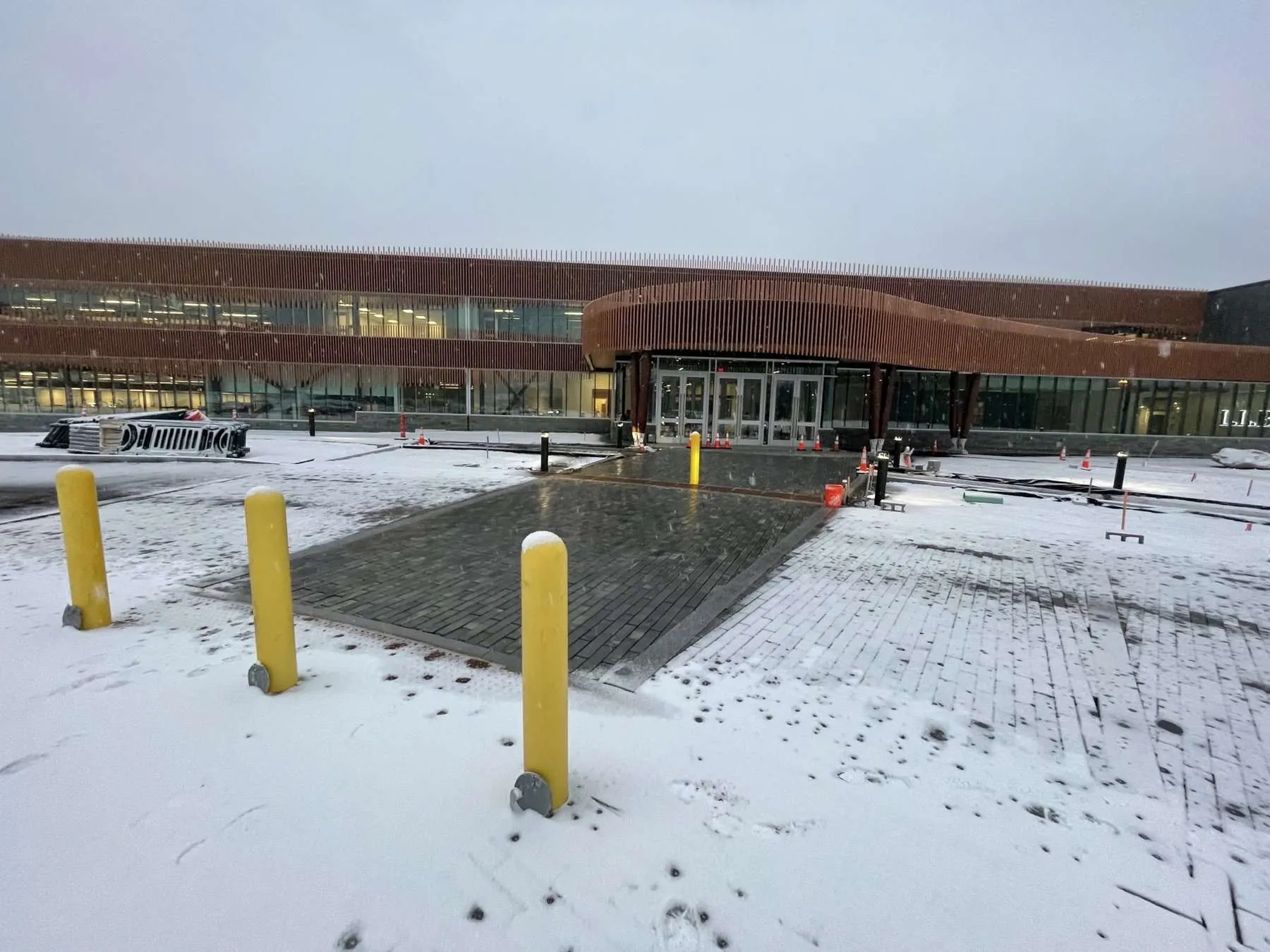
- No repair. When tubing in a slab fails, the fix is to tear out the slab and start over. At Snowbird’s Summit Lodge a section of slab PEX snowmelt by others has failed and sits out of service next to our terrace for exactly that reason. ThermaPANEL under pavers is repaired by lifting pavers and swapping a panel.
The other approach you will see offered for pedestal decks is tubing clipped to aluminum sheet or set in a tray under the pavers. Thin aluminum spreads heat sideways poorly; the surface over the tube runs hot and the surface between tubes runs cold, so the system needs high supply temperatures to get the cold stripes above freezing. That puts it outside the range a heat pump delivers and, in Breckenridge, above the 130 F supply cap the town wrote into its code. Under a BTU budget it spends energy on stripes that are warmer than they need to be.
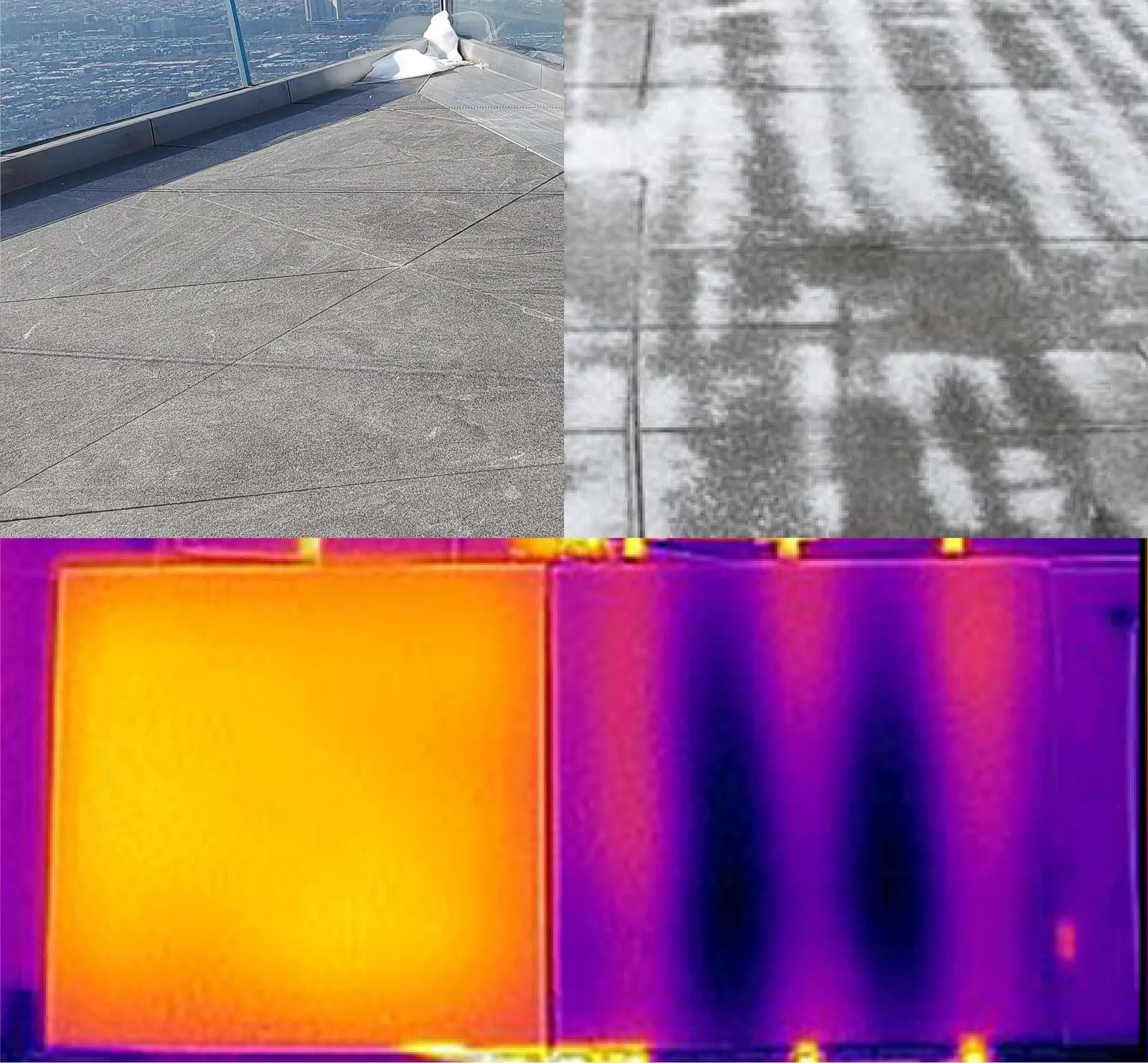
Look at the thickness. ThermaPANEL is clearing four inches of granite on the left. The tube and sheet system is striping through three quarters of an inch of porcelain on the right.
How ThermaPANEL changes the arithmetic
ThermaPANEL is a two foot square thermoformed PE-RT panel with 24 fluid channels across its width, bonded to an EPS insulation backing. It sits directly under the pavers, on pedestals for a terrace or roof deck, or on grade for a driveway or plaza. Where the pavers are odd sized, or the stone is not strong enough to be carried at its corners, grating mounted on pedestals or deck framing goes under the panels and gives the surface full support. There is no slab and no tube spacing, because fluid is present under the whole surface.
The proof is older than the heat pumps. Our first installation, a New England driveway, melted snow on a zone valve off the house boiler at a supply under 60 F. No heat pump on the market has trouble making 60 F fluid.
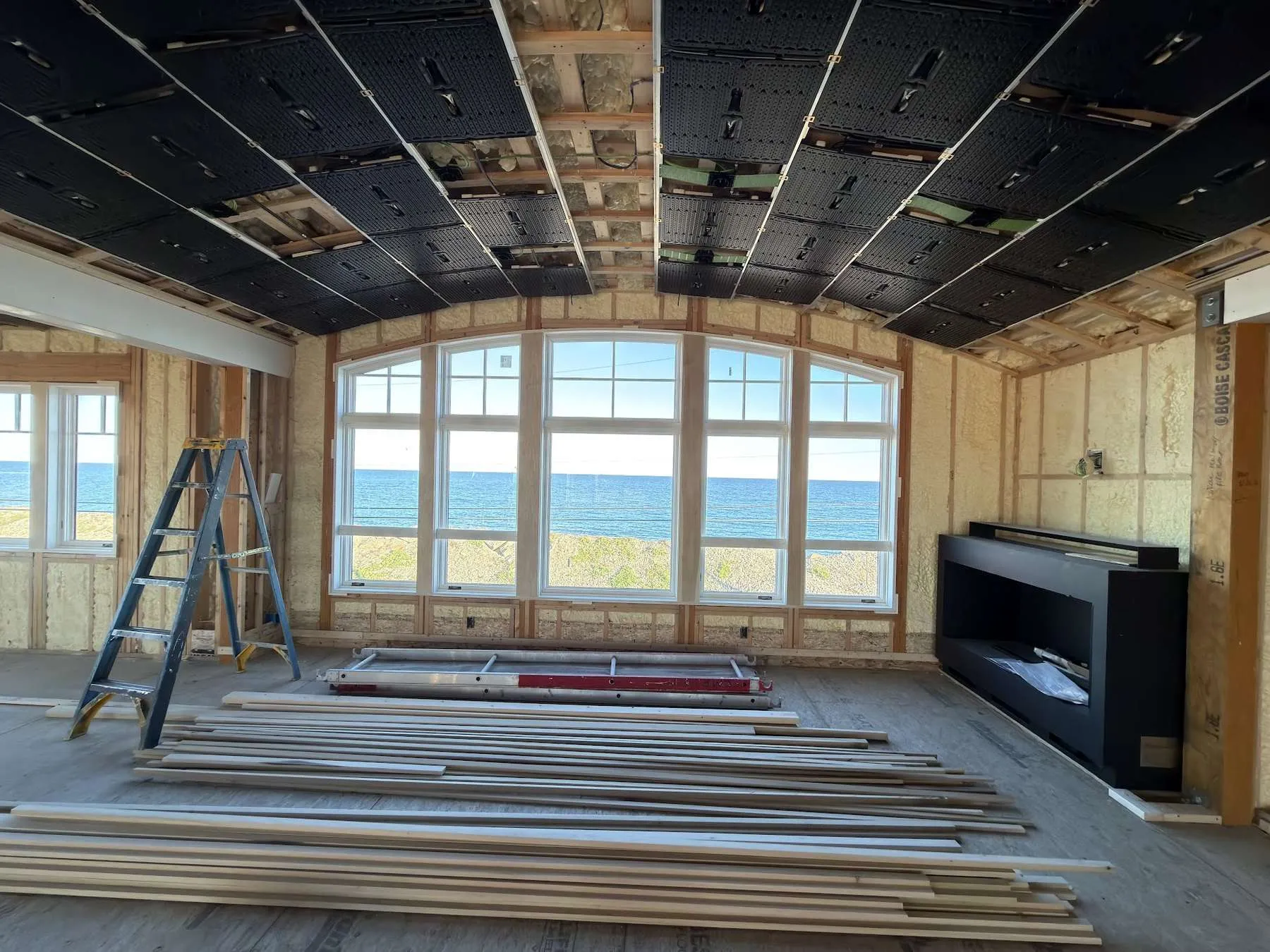
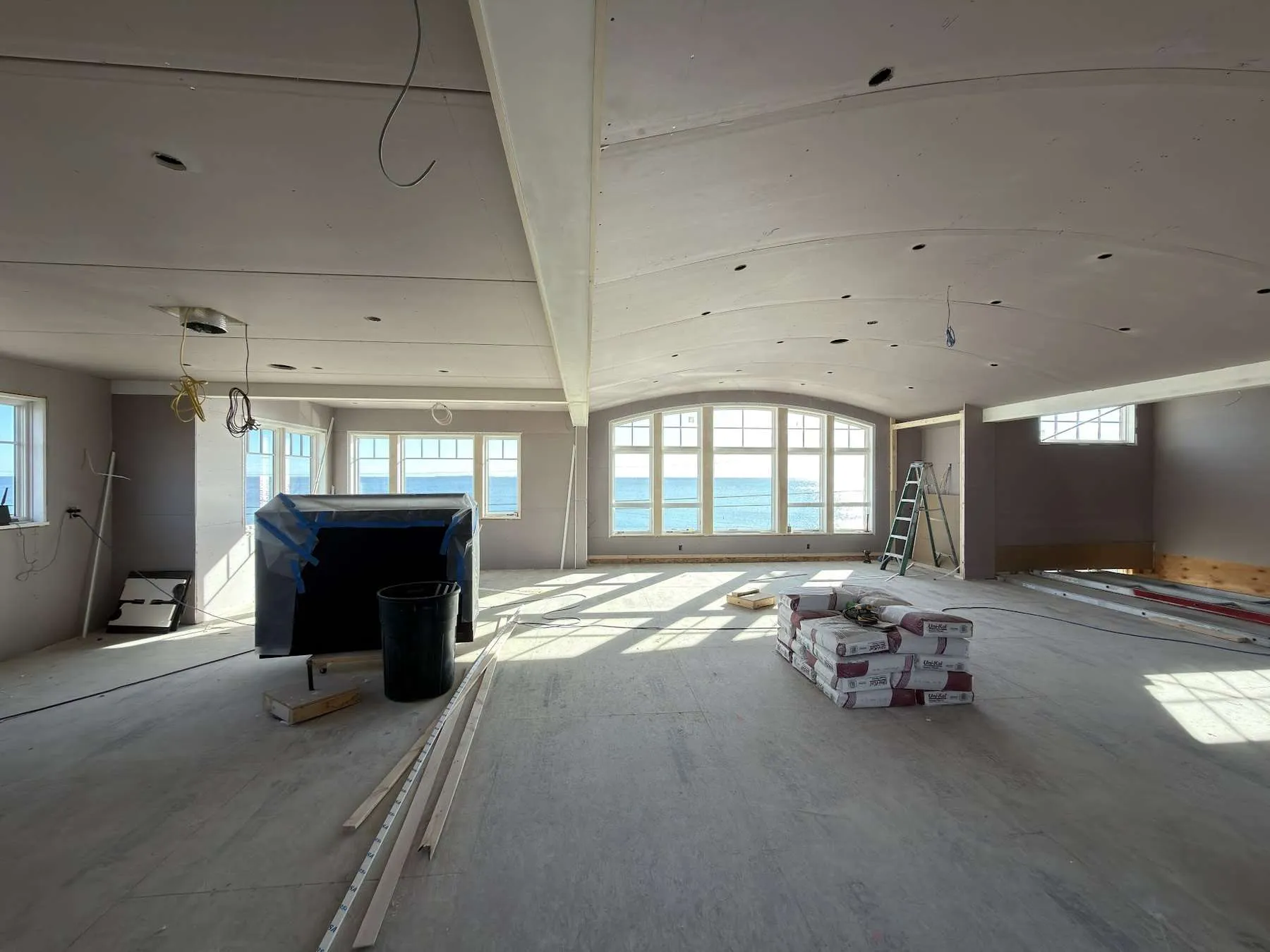
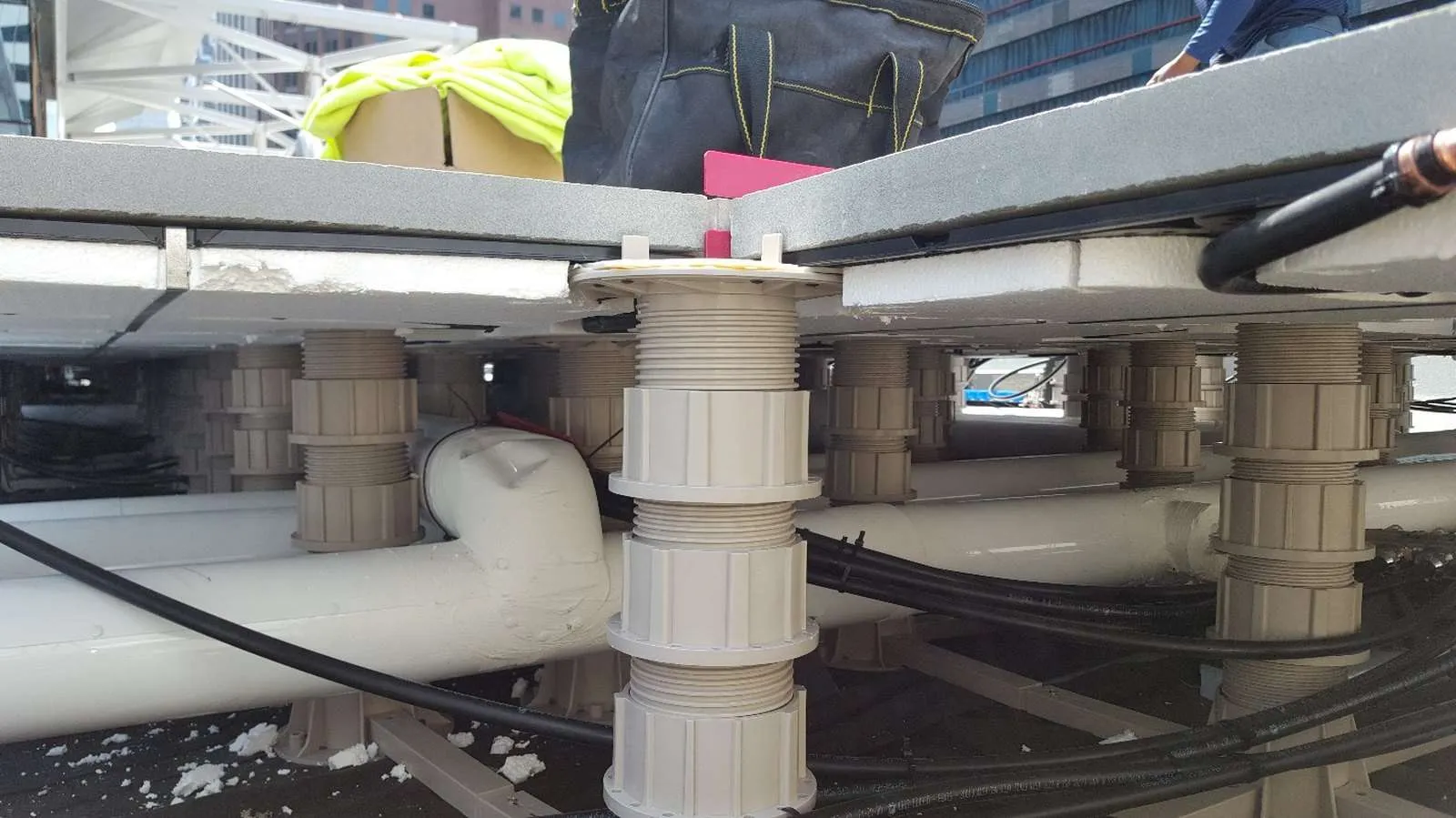
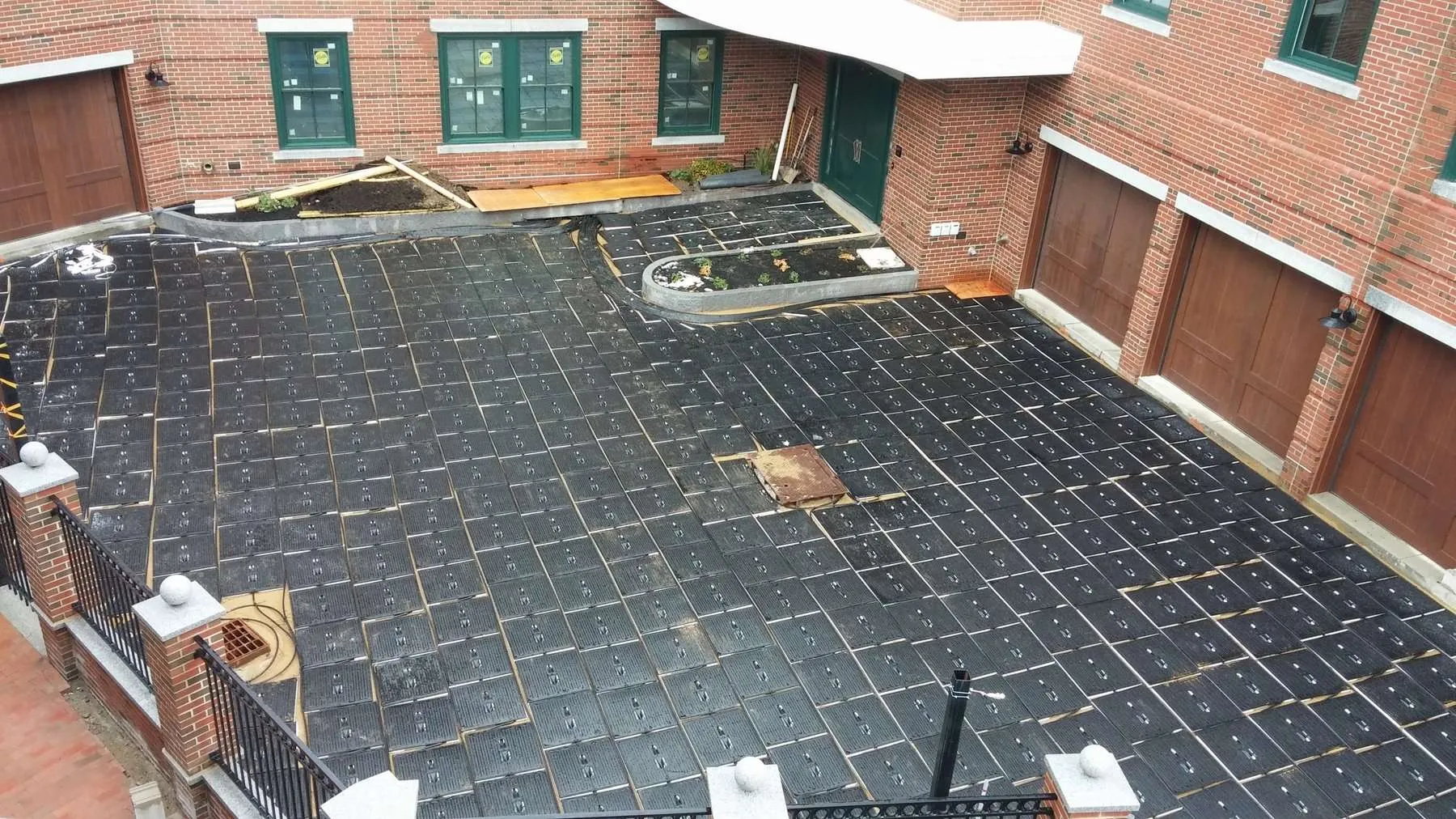
That does three useful things for an Aspen project.
- Low supply temperature. Because the fluid is under the whole surface, the panel melts at supply temperatures a heat pump produces comfortably. We design these systems around 100 to 130 degree supply, which is the range air to water and ground source heat pumps are built to deliver. High output at low temperatures means high COP for heat pumps. Two of our New Hampshire houses, a lake house in Jaffrey and an oceanfront house in Rye, run Chiltrix air to water heat pumps that heat and cool the interior and melt the exterior surfaces from the same plant. No gas in the mechanical room, which also puts the project on Aspen’s expedited review path for all-electric construction.
- Less wasted heat. The EPS backing sends heat up, not down into the roof or the ground, and there is no mass to pre-heat. In our ice bath test, a single panel in 30 degree water on 110 degree supply moved 1,600 to 3,400 BTU per hour depending on flow. The surface responds in minutes rather than hours.
- More area per BTU. A heat pump delivers several units of heat for each unit of electricity it consumes (the heat pump manufacturer’s ratings give the figure for your climate). Electric resistance cable delivers one for one. Put a heat pump on a panel that works at heat pump temperatures and the same 200 million BTU covers more driveway, more terrace, more walkway.
REMP credit, in both seasons
REMP rewards on-site renewable thermal energy. A ground source heat pump feeding ThermaPANEL is a renewable thermal system on the worksheet. And the same panels that melt snow in January collect heat in July: we have been heating pools from sun warmed patios with ThermaPANEL for years, which is one more way to offset the property’s annual energy picture rather than paying for it.
Roof decks and the structural question
Aspen and Snowmass have a lot of elevated terraces. A mortar bed or a topping slab with tubing is heavy. ThermaPANEL on pedestals adds the weight of the panel, the fluid (one quart per panel) and the pavers you were installing anyway. We are designing a pedestal paver roof deck in Aspen right now on exactly this basis.
What we need to size it
Send us four things and we will return a panel layout, a BTU estimate for the REMP worksheet, and a mechanical schematic for the heat source you prefer:
- Site plan or roof plan with the snowmelt zones marked (PDF or CAD).
- Square footage per zone.
- Surface finish: paver, stone or porcelain, thickness, and whether it is on pedestals, on grade, or needs grating for odd sized or weak stone.
- Heat source: air to water heat pump, ground source heat pump, or an existing boiler.
Contact Therma-HEXX engineering or call (603) 319-8815. We are an OEM partner of Caleffi, Taco Comfort Solutions, Grundfos, Spirotherm, Axiom, Amtrol, Chiltrix and others, and we supply the complete mechanical package, not just the panels. ThermaPANEL projects are in most of the major ski resorts: Aspen, Snowmass, Telluride, Steamboat, Jackson Hole, Big Sky, the Yellowstone Club, Park City, Deer Valley, Snowbird, Mammoth, Lake Tahoe, Whistler and Revelstoke. ThermaPANEL is installed coast to coast in North America.
Questions we get from Aspen projects
Is hydronic snowmelt allowed in Aspen?
Yes. Hydronic snowmelt is permitted in the City of Aspen and in Pitkin County. The combined exterior energy use of the property has to stay under 200 million BTU a year, and that use has to be offset with on-site renewables or a REMP mitigation payment.
Can ThermaPANEL run without a gas boiler?
Yes. ThermaPANEL works with any heat source, and because it melts at low supply temperatures it is a good match for air to water and ground source heat pumps. An all-electric mechanical room qualifies for Aspen’s expedited permit review.
Why not electric resistance cable? It is all-electric too.
Cable converts one unit of electricity into one unit of heat. A heat pump delivers several units of heat per unit of electricity. Under a BTU cap, that difference is the difference between a heated walkway and a heated driveway.
Does the 200 million BTU cap apply to commercial property?
The Pitkin County cap applies to residential property, and the City of Aspen’s 2023 code applied the 200 million BTU exterior cap to homes. For a commercial parcel, confirm the applicable exterior energy and REMP requirements with the Community Development Department.
Sources: Aspen Journalism and the Aspen Times on the Pitkin County ordinance (2024); the Colorado Sun and Confluence Architecture on the City of Aspen 2023 code adoption. Verify current fee schedules with the City of Aspen or Pitkin County before submitting a REMP worksheet.
Related: snowmelt for mountain homes.