
Snowmelt Energy Codes in Mountain Towns and Major Cities
ThermaPANEL on a heat pump, designed inside the rulesAspen caps it. Snowmass and Breckenridge charge for it. Steamboat wants it renewable. New York and Seattle name the fuel. Every rule, town by town, with sources, and the low temperature design that fits inside all of them.
Mountain resort towns from Aspen to Jackson Hole now regulate how much energy a heated driveway, terrace or walkway may use. Some cap it, some charge for it, some require it to run on renewables, and a few ban gas or electric resistance outright. This page collects the rules we work with on ThermaPANEL projects, town by town, with sources (our projects in each region are on Snowmelt by Region), and explains why a low temperature panel system on a heat pump is the design that fits inside all of them.
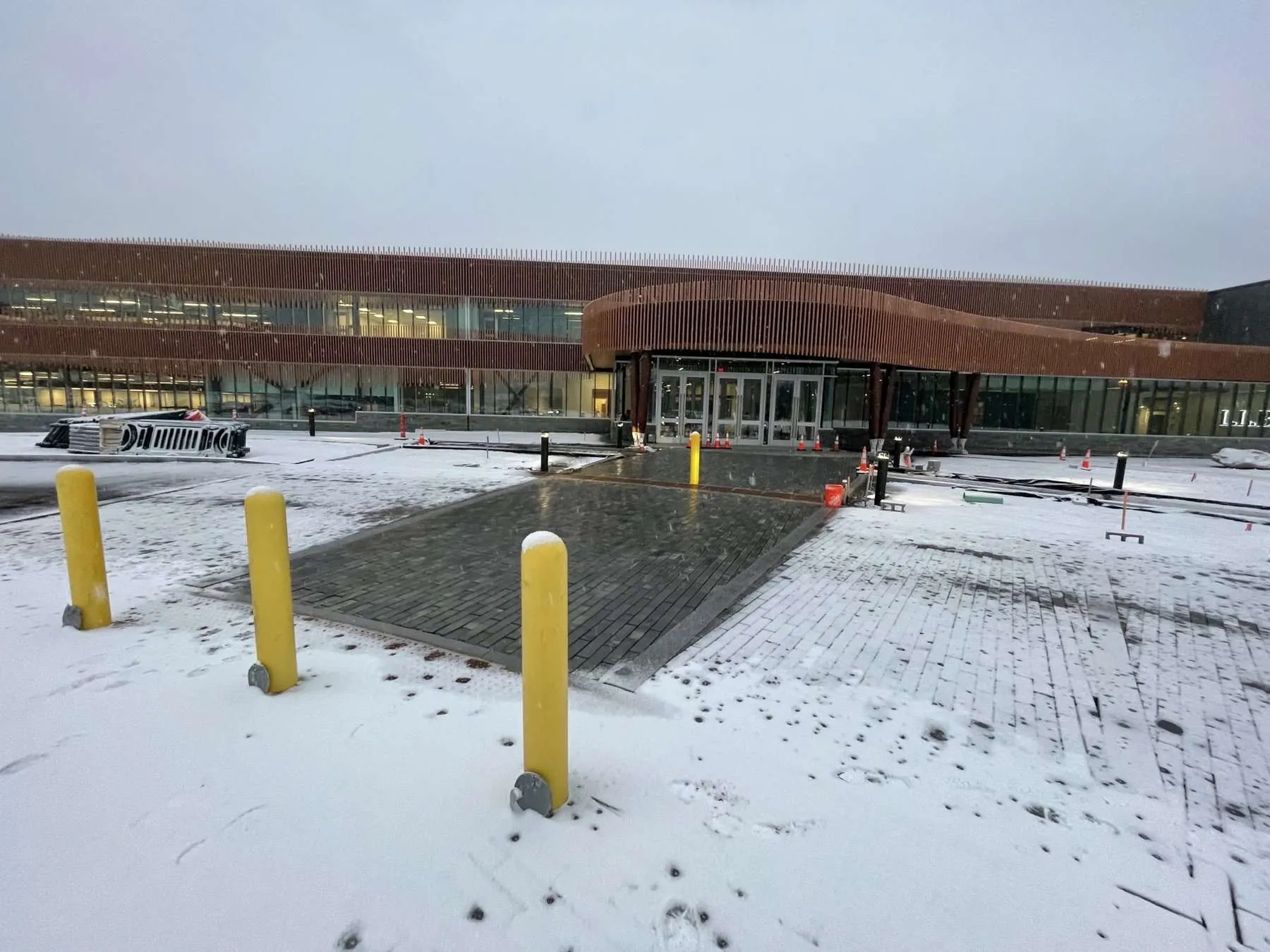
Rules change. Each section carries the date of the document we read. Confirm the current fee schedule with the building department before you submit a worksheet.
The pattern behind the rules
Every one of these programs started from the same observation: exterior heating is the largest discretionary energy use on a luxury property, and most of it has been burning gas. The responses fall into four types.
| Type of rule | Where | What it means for design |
|---|---|---|
| Hard annual energy cap | Aspen, Pitkin County, Mt. Crested Butte | Every BTU wasted on slab mass or downward loss is a square foot you cannot heat |
| Offset or pay per square foot | Snowmass Village, Breckenridge, Avon, Eagle County, Teton County, Telluride, Mountain Village, Ketchum | Fees scale with area and modeled energy; efficient systems and on-site renewables cut the bill |
| Fuel restriction | Steamboat Springs (renewable only), Crested Butte (all-electric), Telluride (no electric resistance), Whistler (no fossil at rezoning), Seattle (electric only for outdoor heating), New York, Denver, Vancouver and Montreal (all-electric new buildings) | The heat source has to be a heat pump, geothermal, or renewable supplied electricity |
| Design standards | Breckenridge (130 F supply cap, R-15 under slab), Ketchum, California Climate Zone 16, and every IECC or ASHRAE 90.1 jurisdiction (slab and outdoor temperature cutoffs) | Sensors, insulation and supply temperature limits that a low temperature panel already meets |
| Whole building emissions cap | New York (LL97), Boston (BERDO), Washington DC (BEPS), Seattle (BEPS), Toronto (TGS), Vancouver | Snowmelt fuel counts against the building's cap; an electric plant with a high COP is the way to add snowmelt without buying penalties |
Mountain towns, rule by rule
Each entry carries the date of the document we read. Confirm current fee schedules with the building department before you submit.
City of Aspen, Colorado
Rule: 200 million BTU per year cap on all exterior energy use (snowmelt, pools, spas, heat tape combined), adopted by Ordinance 1 of 2023 on January 24, 2023. The city's own summary puts the equivalents at 2,414 square feet of snowmelt, or a 603 square foot pool, or a 466 square foot spa, or 3,125 linear feet of heat tape. Renewable Energy Mitigation Program (REMP) since 2000: offset with on-site renewables or pay a mitigation fee. Expedited permit review for all-electric new construction.
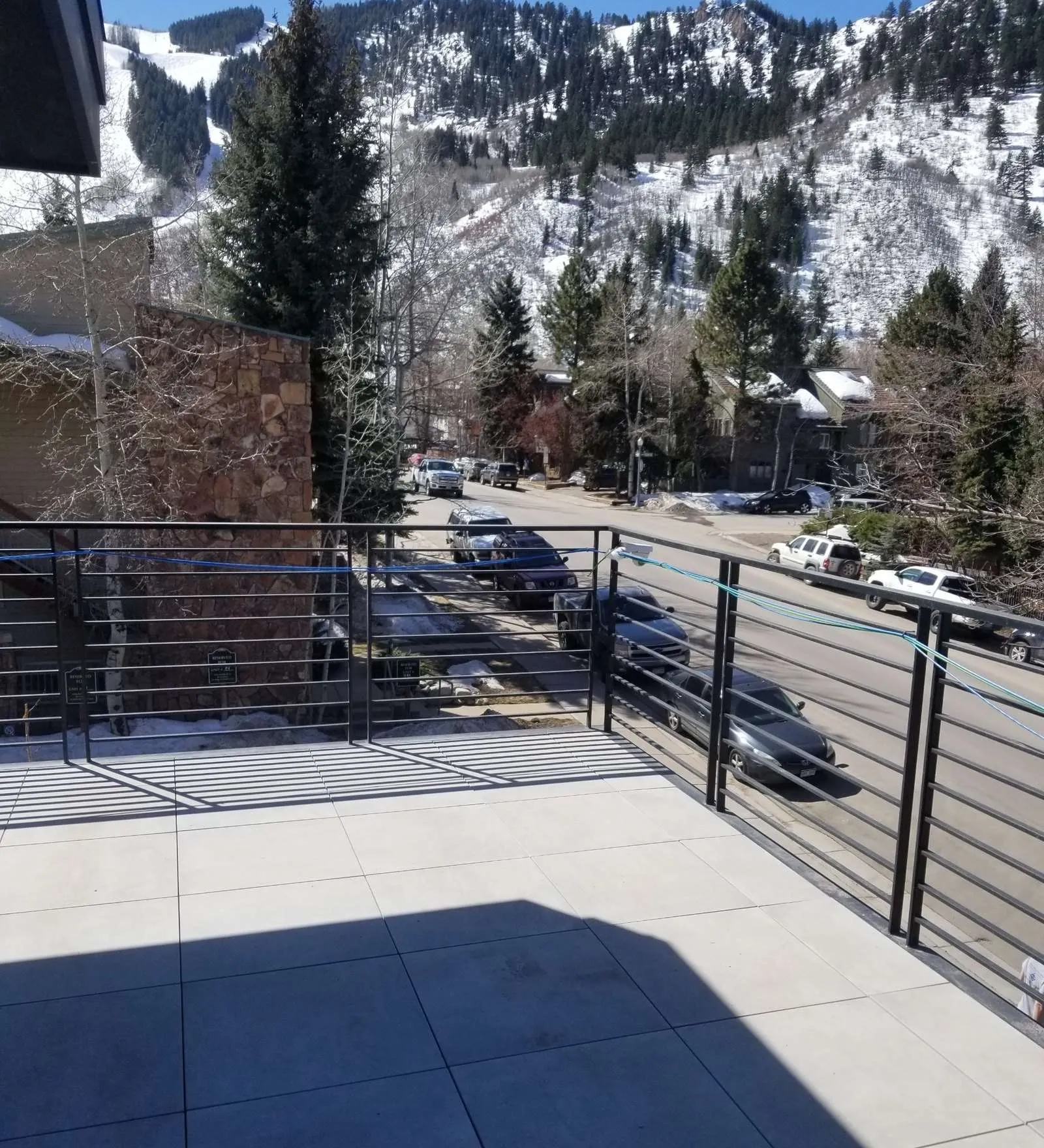
What it means: The cap equals roughly 2,400 square feet of conventional snowmelt and less if there is a pool. An all-electric, heat pump driven system moves through review faster and makes each BTU count. Our Aspen article walks through the math: Snowmelt under Aspen's 200 million BTU cap.
Sources: City of Aspen, Building Energy Codes page and "2021 I-Code Adoption: Major Changes" summary; Colorado Sun, Jan 30, 2023.
Pitkin County, Colorado (unincorporated)
Rule: Same 200 million BTU per year exterior energy budget, residential, adopted 2024. It replaced a 6,000 square foot snowmelt cap that county staff found equaled about 523 million BTU. No exterior use is exempt from the budget; the REMP payment can be waived for life safety uses, but the energy still counts. County average exterior use is about 125 million BTU per year.
What it means: About 2,300 square feet of conventional snowmelt. Heat pump efficiency and direct surface transfer stretch that.
Sources: Aspen Journalism, Jan 31, 2024; Aspen Times, 2024.
Town of Snowmass Village, Colorado
Rule: Renewable Energy Offset Program (REOP), Municipal Code 18-224, Ordinance 2 of 2011. Offset 50 percent of exterior energy with renewables, or pay in lieu at 100 percent. Snowmelt payment rate $34.00 per square foot, divided by a 0.92 boiler efficiency factor. The code's own example: 1,200 square feet of snowmelt is a $44,348 obligation. Credits include $6.75 per 100,000 BTU per year for a ground source heat pump that serves at least 20 percent of peak building heating load and all exterior uses. Exemptions: 200 square foot garage apron, accessible routes, spas up to 64 square feet. The town's REOP form dated April 2026 still lists $34.00 per square foot.
What it means: Geothermal earns credit against the fee, and the fee is sized to modeled energy, so a system that needs fewer BTUs per square foot costs less to permit.
Sources: snowmass.gov REOP page; Ordinance 2, Series 2011; code excerpt (Table 3 and Table 4).
Town of Breckenridge, Colorado
Rule: REMP under Town Code 8-1-26. Ordinance 21 of 2023 (effective Aug 16, 2023), superseded by Ordinance 14 of 2025 (effective Jan 13, 2026). Snowmelt, pools and spas offset 100 percent on site or by payment. Reference rates in Exhibit A: snowmelt $56.67 per square foot residential, $100.00 commercial. Design standards: R-15 insulation under the slab, moisture plus temperature controls, no residential idling, 95 percent AFUE boilers, and a 130 F cap on condensing boiler supply temperature (sections C409.3.2 and R409.3.2), with operation limited to outdoor temperatures between 20 F and 40 F and slab temperature capped at 38 F. Ground source heat pumps earn on-site credit at COP 3.0 serving 20 percent of peak exterior load. The 2025 ordinance also prohibits electric resistance space heating in new Climate Zone 7 homes and requires cold climate heat pumps. Exemptions: 100 square feet continuous to a residence, 100 square feet per commercial egress path, heat tape.
What it means: Breckenridge wrote the supply temperature cap that ThermaPANEL was designed around. We design at 100 to 130 F supply as standard practice.
Sources: Ordinance 2023-21; Ordinance 2025-14; Town Code 8-1-26 and Exhibit A; Colorado Sun, Aug 15, 2023.
Eagle County, Colorado (Vail Valley, unincorporated)
Rule: Exterior Energy Offset Program, updated January 2025. Fees based on modeled emissions and square footage, including a social cost of carbon, phasing in: 25 percent of the fee for 2025 permits, 50 percent in 2026, 75 percent in 2027, 100 percent in 2028. Offset with on-site solar or battery storage. Exempt: snowmelt under 200 square feet, pools and spas under 64 square feet.
What it means: Fees double each year through 2028. Lower modeled energy per square foot is the lever.
Source: Aspen Public Radio, Dec 31, 2025.
Town of Avon, Colorado
Rule: Exterior Energy Offset Program, Municipal Code Title 15 Chapter 27, amended by Ordinance 24-16 for permits submitted on or after February 13, 2025. The offset rose from 50 to 100 percent of new exterior energy use (snowmelt, pools, spas, outdoor gas fire features), met with solar PV or a fee in lieu. The town's calculator credits heat pumps at 25 percent and battery storage at 75 percent; a ground source heat pump must supply at least 20 percent of peak load at COP 3.0. Exempt: snowmelt of 200 square feet or less, spas of 64 square feet or less. Vail Daily reported the fee basis at $3,250 per kW of required PV and an example of about $101,000 for 2,035 square feet of snowmelt plus a spa; those two figures come from the newspaper, not the ordinance text.
Sources: Town of Avon staff report and Ordinance 24-16, Jan 14, 2025; Avon Building page; Vail Daily, January 2025.
Town of Vail, Colorado
Status: No exterior energy offset program adopted as of October 2026. Council heard an introduction to one on March 17, 2026, covering snowmelt, pools and spas, and at least one project has already proposed a payment to the program in advance. Vail's 2024 code adoption (Ordinance 13 of 2024) favors all-electric buildings with lighter efficiency package requirements.
What it means: Design for the program that is coming. A heat pump system permitted now will not need redesign when the fee arrives.
Sources: Vail Ordinance 13, Series 2024; Town of Vail bulletins, Mar 18 and Oct 7, 2026.
Steamboat Springs, Colorado
Rule: The city's 2021 code adoption, amended November 2023 and effective January 1, 2024, adds IECC sections C403.13.4 and R403.9.3: outdoor heated snowmelt systems "shall not be allowed to be installed unless powered by a 100 percent renewable energy source." Exceptions: tubing may be installed if the plans state the system is not approved for use; snowmelt required by federal, state or local regulation; required ADA routes from the accessible parking stall to the entrance. Routt County's building department applies the same language with a Green Choice enrollment condition. In practice that means electricity on the utility's renewable program, or geothermal. Existing systems are grandfathered per local reporting.
What it means: Gas is out. Electric resistance cable on a renewable tariff is the default answer and the expensive one to run. A heat pump on a low temperature panel delivers several units of heat per unit of renewable electricity.
Sources: Steamboat Springs 2021 Building Code Ordinance text (Routt County Regional Building); Routt County code reminder sheet; Yampa Valley Bugle, Nov 22, 2023.
Town of Telluride, Colorado
Rule: Telluride Energy Mitigation Program (TEMP), Municipal Code 15-9-30 and 15-9-40. Electric resistance snowmelt is prohibited except gutter and downspout heat trace. Snowmelt controls must shut off above 50 F pavement with no precipitation and above 40 F outdoor. Snowmelt, pools, spas and heated garages pay mitigation at 100 percent offset, and all electricity must be 100 percent renewable, on site or through the utility's green power. Fee amounts are in the town's TEMP spreadsheet.
What it means: Hydronic is the only snowmelt Telluride allows, and the heat source is pushed toward renewable electricity. That is a heat pump on a hydronic panel.
Sources: Telluride Municipal Code 15-9-30; town TEMP information sheet.
Town of Mountain Village, Colorado
Rule: Smart Building Program, MVMC 17.7.12 (Ordinance 2015-02, amended 2023-03). All snowmelt is offset through REMP using the town's exterior energy spreadsheet, payment before permit. On-site renewables receive double credit. Exemptions are generous: 1,000 square feet of hydronic snowmelt for a single family home (main drive plus required exits), 1,000 square feet plus 50 per unit for multifamily and commercial. Geothermal heat pumps count as a renewable source.
Source: Mountain Village Municipal Code 17.7.12.
Crested Butte and Mt. Crested Butte, Colorado
Crested Butte: All-electric new construction for permits since January 1, 2023, continued by Ordinance 9 of 2025 (2024 codes, effective January 1, 2026): new residential and commercial buildings use electricity for heating, hot water and appliances, commercial kitchens excepted. Any hot tub over 64 square feet or outdoor heated space must be offset by renewable energy or pay a REMP fee, applied through an Outdoor Energy Usage Permit. Mt. Crested Butte (per Crested Butte News, Dec 3, 2025; ordinance text not yet published online): a three tier Exterior Energy Offset Program with a hard cap of 150 million BTU per year for single family exterior energy, reached at roughly 1,300 square feet of snowmelt; below the cap, one to one solar offset or a fee. Reported example: a 324 square foot heated driveway requires 6.24 kW of PV or $27,450.
What it means: In Crested Butte the mechanical room is electric by law. In Mt. Crested Butte the cap is tighter than Aspen's, so efficiency per square foot decides how much driveway you get.
Sources: Town of Crested Butte Building Code Information and Licensing pages; 2024 Building Code Fact Sheet; Ordinance 9, Series 2025; Crested Butte News, Aug 3, 2022, Oct 1 and Dec 3, 2025.
Jackson Hole and Teton County, Wyoming
Rule: Teton County Energy Mitigation Program, fee schedule effective January 1, 2026. Exterior heated hardscape (driveways, walkways, patios) is a "non-essential element" at $10.00 per square foot, residential and commercial. Pools and spas also $10.00 per square foot. Residential credits paid after certificate of occupancy: $5,000 for a ground source heat pump at COP 4 or better, $5,000 per kW of solar PV, and $8,000 for a zoned ductless primary heating system, hydronic floor heating being the schedule's own example. Commercial hardscape exempt where the Building Official finds it necessary for egress or accessibility.
What it means: The fee is flat per square foot, so the design lever is the credit side: geothermal and hydronic earn money back.
Sources: Teton County Energy Mitigation Plan fee adoption, 2019; Teton County fee schedule 2026.
Ketchum, Idaho (Sun Valley)
Rule: Ordinance 1269, Municipal Code 12.04.030.N, effective January 1, 2026, for private snowmelt that extends into the public right of way. Design standards: surface and ambient sensors with precipitation detection, shutoff above 50 F pavement and 40 F outdoor, perimeter and under slab insulation, boilers at 90 percent AFUE gas. A one time right of way fee is calculated from the whole system's modeled energy over 30 years, converted to carbon and priced at the utility's carbon cost. On-site renewable output is subtracted from the fee base.
What it means: The fee is proportional to design BTU per square foot. A system that melts at lower load pays less.
Sources: City of Ketchum council memos, Nov 3 and Dec 1, 2025.
Lake Tahoe, Truckee and Mammoth Lakes, California
Rule: No local snowmelt energy fee from TRPA, Truckee or Mammoth Lakes that we could verify. Statewide, the 2025 California Mechanical Code section 1220.4, effective January 1, 2026, requires an automatic control that regulates supply fluid temperature for snow and ice melt systems, glycol freeze protection, and R-5 minimum slab insulation with higher levels in Climate Zone 16 (Tahoe, Mammoth), referencing the Energy Code.
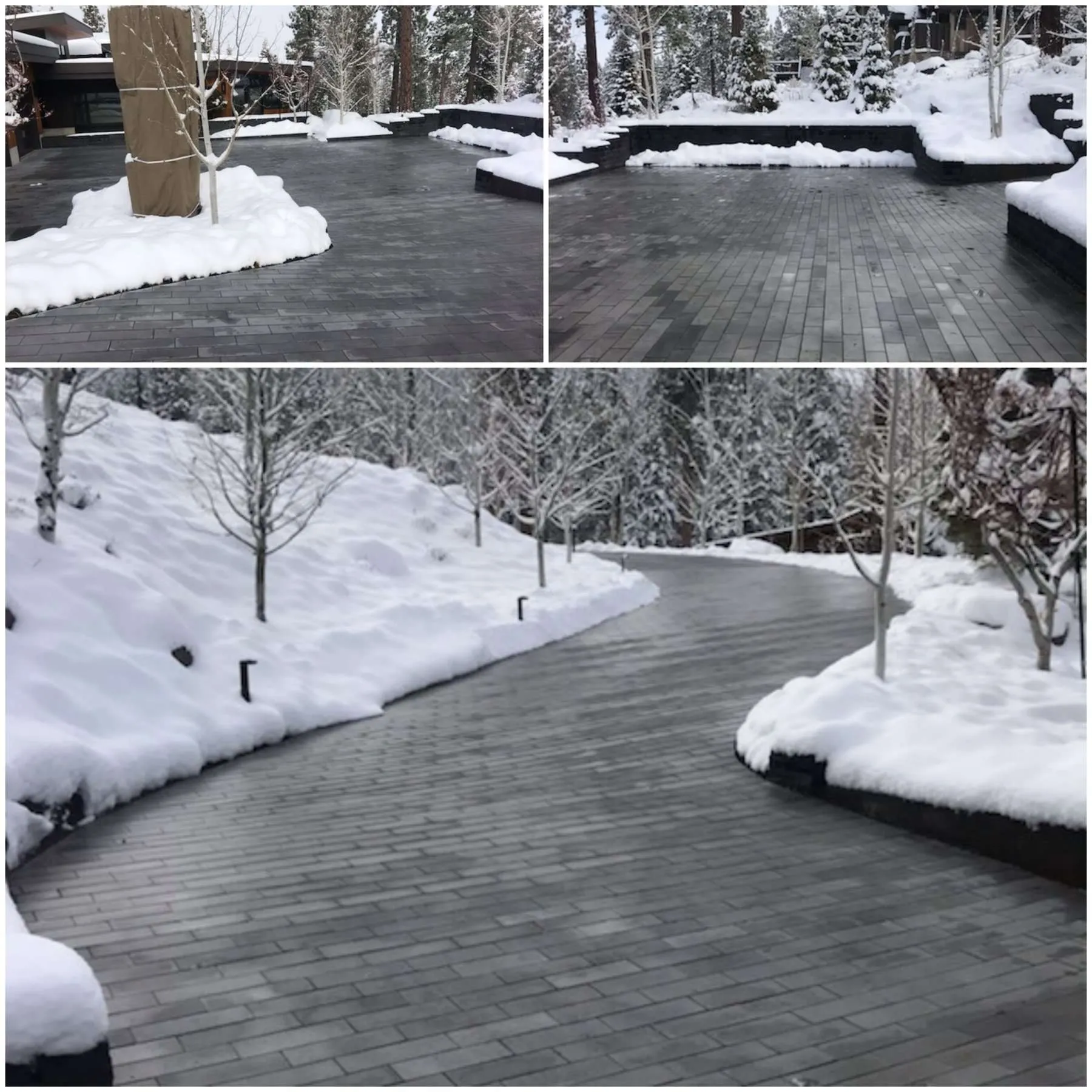
What it means: California regulates the design, not the square footage. A controlled, insulated, low temperature system is what the code describes.
Sources: TRPA ClimateSmart code amendments, 2023 to 2024; 2025 California Mechanical Code 1220.4.
Park City and Summit County, Utah
Rule: None local. Utah does not allow municipalities to adopt an energy code more stringent than the state's, and Park City says so on its own sustainability page. Snowmelt is governed by the state code.
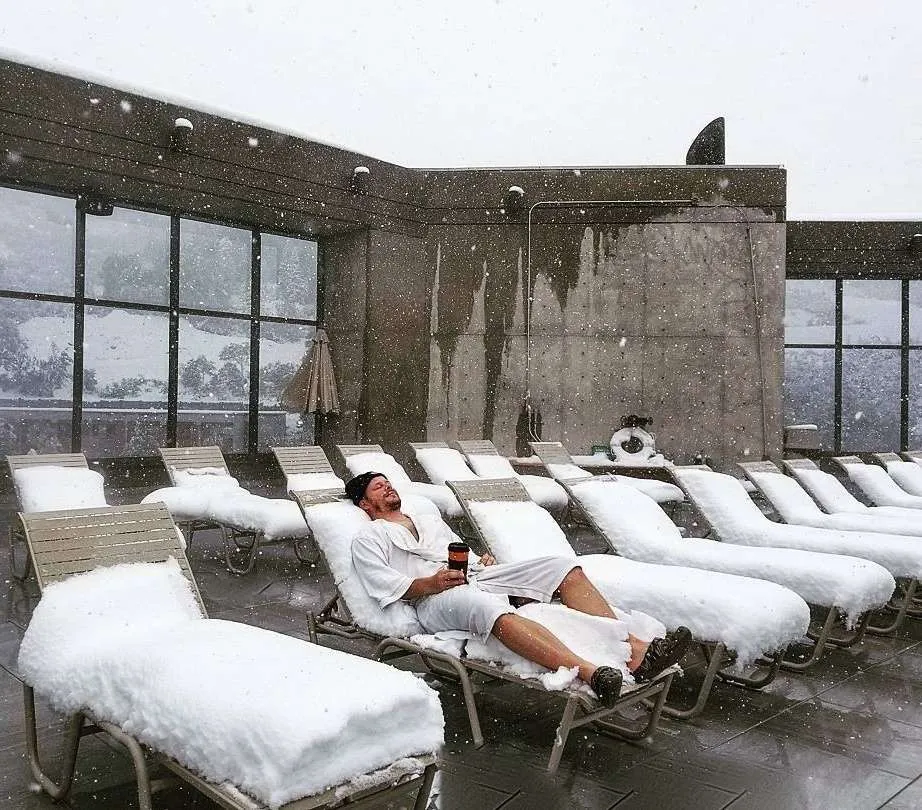
What it means: No fee or cap, but the same physics. Heat pump driven snowmelt is a utility bill decision rather than a permit decision. Utah is also where ThermaPANEL has some of its hardest working installations: the Cliff Lodge rooftop pool deck and the Summit Lodge terrace at Hidden Peak, both at Snowbird.
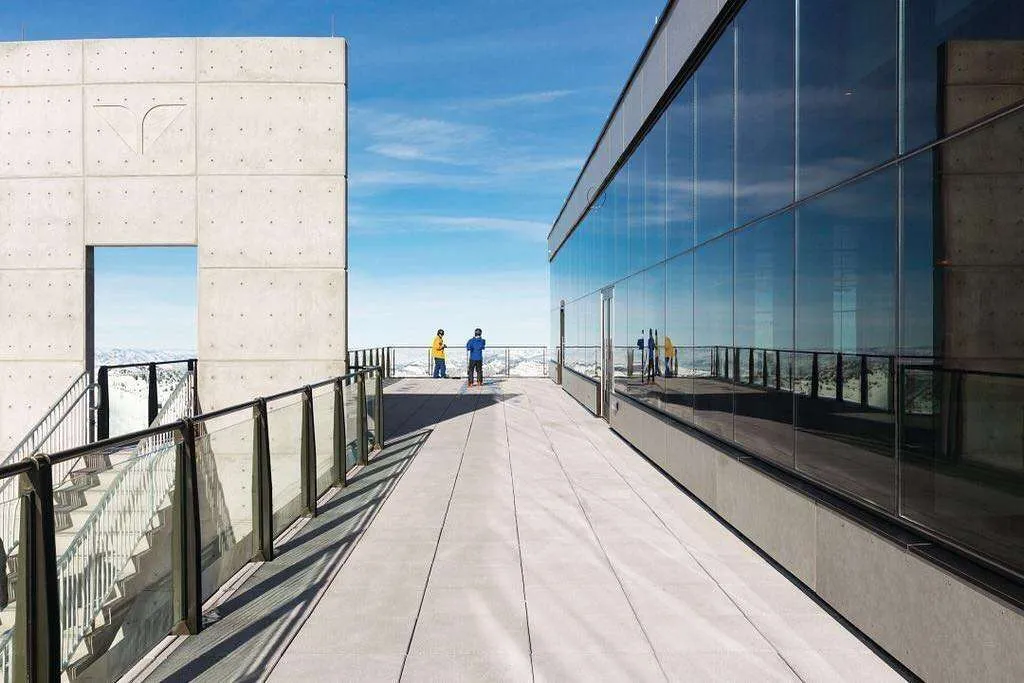
Source: parkcity.gov, Decarbonizing Buildings.
Whistler, British Columbia
Rule: Council Policy G-28, Green Building Policy (December 2022), applied at rezoning: non-fossil heating for all outdoor space heating including heated driveways and walkways, and for pools and hot tubs. Low carbon energy systems must show a seasonal COP above 2.
Source: Resort Municipality of Whistler, Council Policy G-28.
Colorado statewide, from July 2026
Colorado's Model Low Energy and Carbon Code becomes the state minimum on July 1, 2026. Any local government updating its code after that must adopt it or something stronger. It does not address snowmelt directly and does not ban gas, but it tiers requirements by home size (7,500 square feet and up must reach net zero energy), credits high efficiency heat pumps, and keeps electric-ready provisions. The snowmelt rules above are local overlays and stay in force.
Sources: Colorado Energy Office, Sept 2, 2025; Colorado Sun, Sept 3, 2025.
Major cities: the heat source is the rule
No large city caps snowmelt area. Every one of them sits on a model energy code that requires automatic controls on snow and ice melt systems (shut off above 50 F pavement with no precipitation, and above 40 F outdoor air; IECC C403.13.2 in the 2021 edition, ASHRAE 90.1 equivalent). What varies is what the city does to the heat source: all-electric mandates for new buildings, whole building emissions caps that count snowmelt fuel, and in one case an energy code that names the fuel for outdoor heating.
New York City
Local Law 154 bars on-site combustion of fuels above 25 kg CO2 per MMBtu in new buildings: under seven stories for permits filed from January 1, 2024, all buildings from July 2, 2027. Snowmelt is not among the exemptions, so a gas snowmelt boiler is out in a covered new building. Local Law 97 caps whole building emissions for buildings over 25,000 square feet, with a $268 per metric ton penalty and limits that roughly halve in 2030; snowmelt fuel counts against the cap. The 2025 NYC Energy Conservation Code carries the snowmelt control rule at C403.14.2. Heated public sidewalks need a DOT revocable consent. ThermaPANEL's reference here is The Edge NYC at Hudson Yards: 4 inch granite slabs on the observation deck, 1,100 feet above the street, kept clear on a hydronic system.
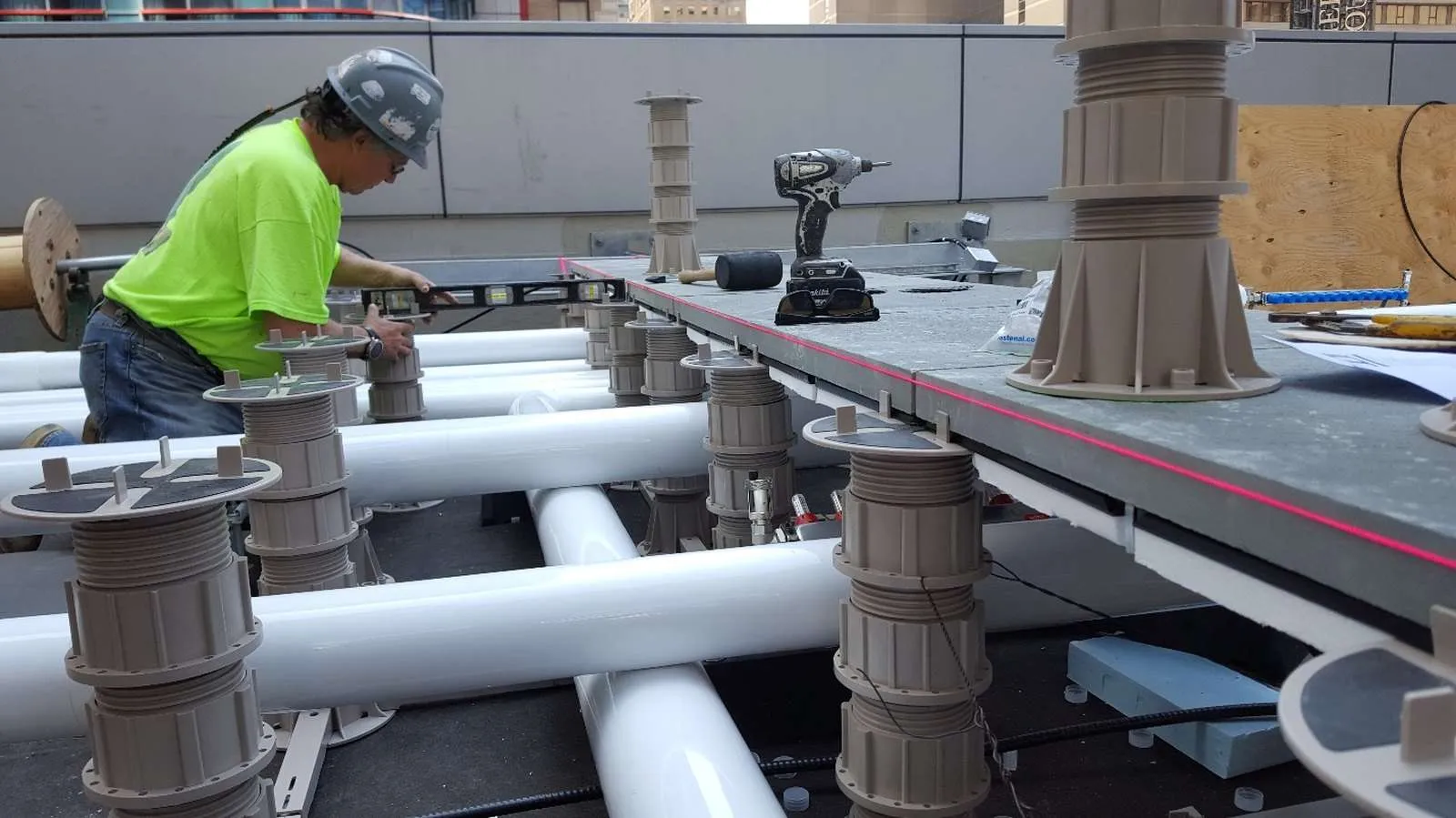
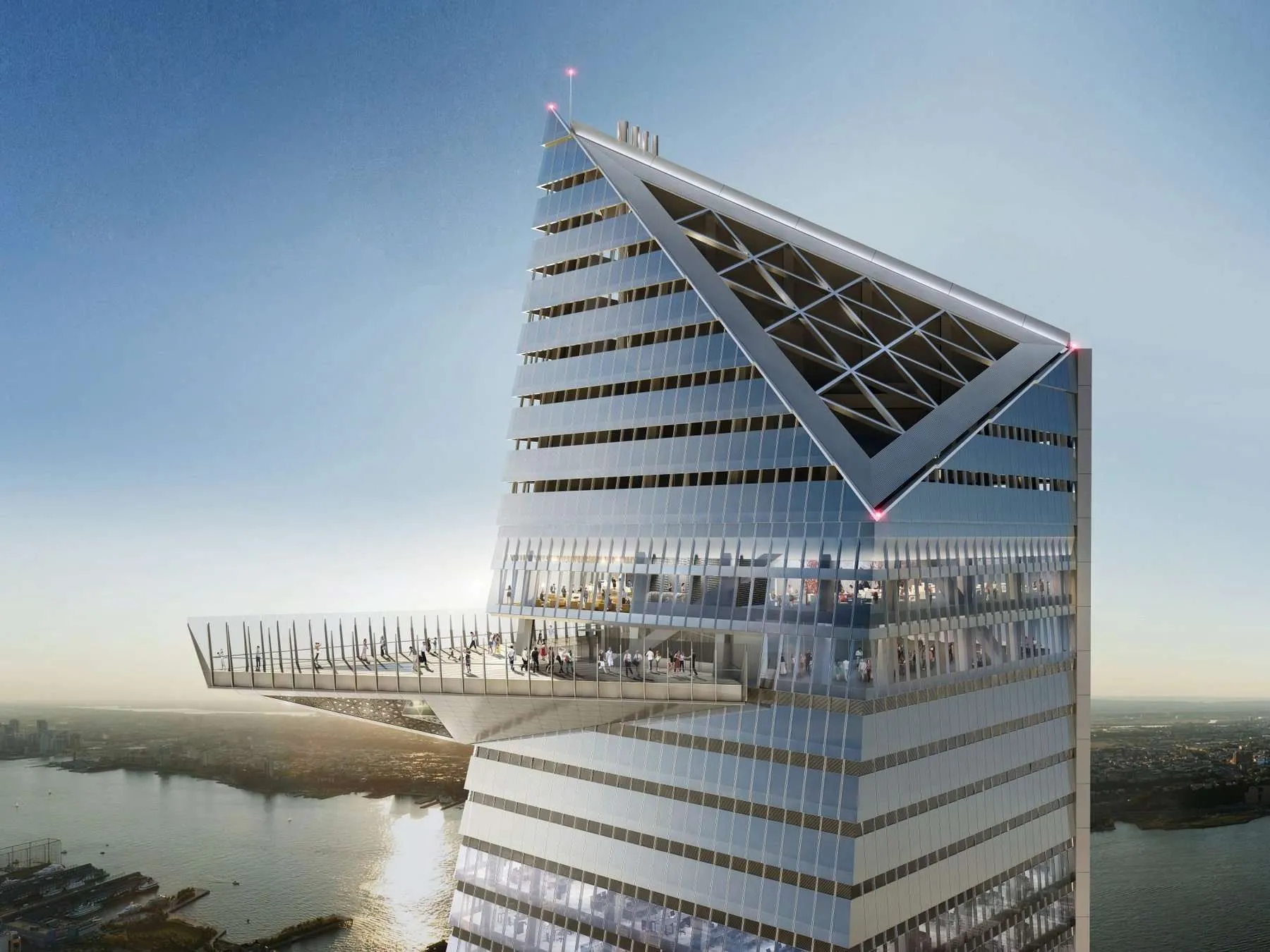
Con Edison's Clean Heat program pays for heat pump plant in existing buildings; whether a snowmelt load qualifies is a custom path question. Sources: nyc.gov LL154 page; Urban Green Council LL97 summary; DOB LL97 year one report; 2025 NYCECC Chapter 4; NYC DOT revocable consents.
Boston
BERDO 2.0 sets falling emissions limits for buildings of 20,000 square feet or 15 units and up, net zero by 2050, with an alternative compliance payment of $234 per metric ton. Massachusetts' specialized stretch code, which Boston adopted in 2023, requires new commercial buildings to be wired for electrification even on the mixed fuel path. Sources: boston.gov BERDO compliance guide; Massachusetts DOER stretch code explainer, Feb 2026.
Chicago
The 2022 Chicago Energy Transformation Code adopts the 2021 IECC without weakening amendments, so the snowmelt control rule applies, and it adds electric-ready wiring requirements in new residential buildings. A 2024 ordinance to bar fossil heating in new buildings stalled in committee. No heat source mandate yet. Sources: City of Chicago Energy Transformation Code summary; Chicago Municipal Code.
Denver
Since January 1, 2024, new commercial and multifamily buildings may not use gas for space and water heating, a rule that survived a federal preemption suit dismissed in August 2026. Energize Denver sets performance targets for existing buildings over 25,000 square feet, with a 10 percent target bonus for buildings that run at least 80 percent on electricity. Sources: Denverite, Aug 12, 2026; Smart Cities Dive on the April 2025 Energize Denver changes; Denver Revised Municipal Code Sec. 10-20.
Washington, DC
Building Energy Performance Standards apply to private buildings of 50,000 square feet and up now, 25,000 from 2027 and 10,000 from 2033, on five year cycles, with penalties up to $10 per square foot per year. The standard is energy based, which rewards a high COP heat pump plant over a boiler. Source: DC Code 8-1772.21; DC Policy Center FY2027 analysis.
Seattle
The clearest rule anywhere. The 2021 Seattle Energy Code, section C403.11, requires mechanical systems that provide heat outside the building envelope, snowmelt included, to use an electric heat pump or electric resistance heating; gas is not an option for new construction snowmelt. Seattle's Building Emissions Performance Standard adds emissions targets for buildings over 20,000 square feet from 2031. Sources: 2021 Seattle Energy Code Chapter 4; Seattle BEPS, Dec 2023.
Toronto
Toronto Green Standard version 4 caps greenhouse gas intensity for new buildings at 15 kg CO2e per square metre per year for residential and office at Tier 1, lower at higher tiers. The standard says nothing about snowmelt, but a gas snowmelt boiler on a large plaza has to fit under that whole building cap. A proposed emissions standard for existing buildings was paused in November 2025. Sources: toronto.ca TGS v4 energy and emissions page; City of Toronto council documents, 2025.
Vancouver
From March 1, 2025, new Part 3 residential, office and retail buildings must meet 3.0 kg CO2e per square metre per year, which in practice means electric heating throughout. Existing commercial buildings over 100,000 square feet face annual GHG limits from 2026 under By-law 13472. Sources: Vancouver council report, Nov 26, 2024; 2025 Vancouver Building By-law guide.
Montreal
Montreal's bylaw on greenhouse gas emissions of new buildings prohibits combustion devices for space and water heating in all new buildings from April 1, 2025 (small buildings from October 1, 2024), with a parallel regulation across 82 municipalities of the Montreal Metropolitan Community. A gas snowmelt boiler is a combustion water heater; design electric. Hydro-Québec's Efficient Solutions program funds up to 75 percent of eligible heat pump costs for medium and large businesses. Sources: montreal.ca bylaw summary; Hydro-Québec Efficient Solutions.
Minneapolis, Saint Paul, Salt Lake City and Calgary have no heat source rule beyond the model code controls, and Utah law prohibits cities from banning gas. The physics is the same there; the permit pressure is not.
Designed in Aspen, for Aspen's problem
ThermaPANEL was invented by Therma-HEXX founder Robert Barmore, who worked in Aspen and Snowmass as an architectural designer and developer before starting the company. The snowmelt systems of that era were tubing in heavy slabs fed by high temperature boilers, and there was no workable way to melt snow on a pedestal paver deck. ThermaPANEL was designed to replace them, and it was the first pedestal paver snowmelt system in the world. It remains the only modular hydronic snowmelt system made for pavers. Modular Fluid Thermal Transfer Device: US Patent 8,944,146 B2 (February 3, 2015) and US Patent 9,683,756 B2 (June 20, 2017). The same low mass, low temperature, insulated design is what fits inside the energy rules these towns have adopted since.
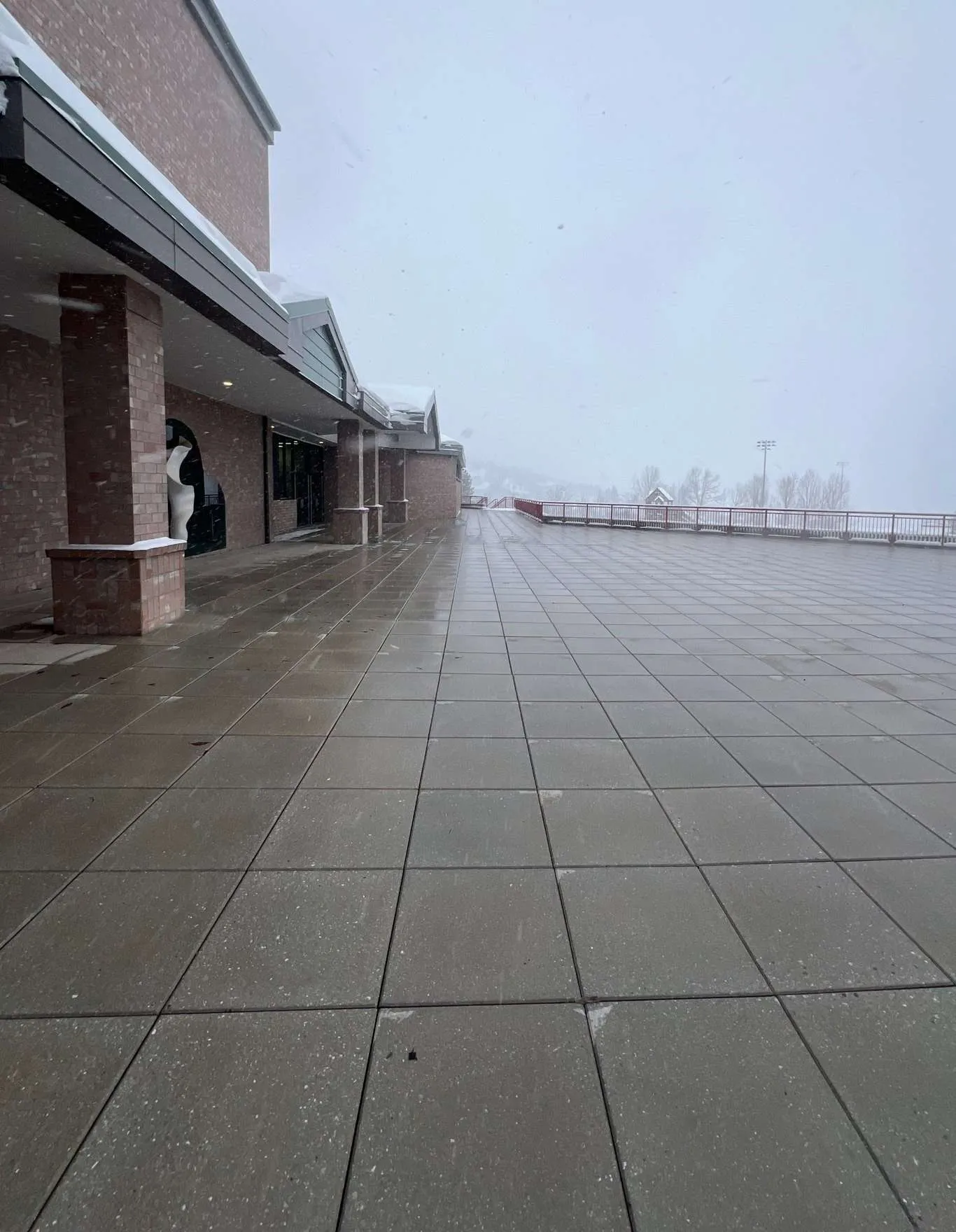
Designing inside the rules
Read across the table and the requirements converge: fewer BTUs per square foot, lower supply temperature, a heat pump or geothermal source, insulation under the heated surface, and controls that only run when there is snow. That is a description of ThermaPANEL on a heat pump. High output at low temperatures means high COP for heat pumps.
Fluid under the whole surface
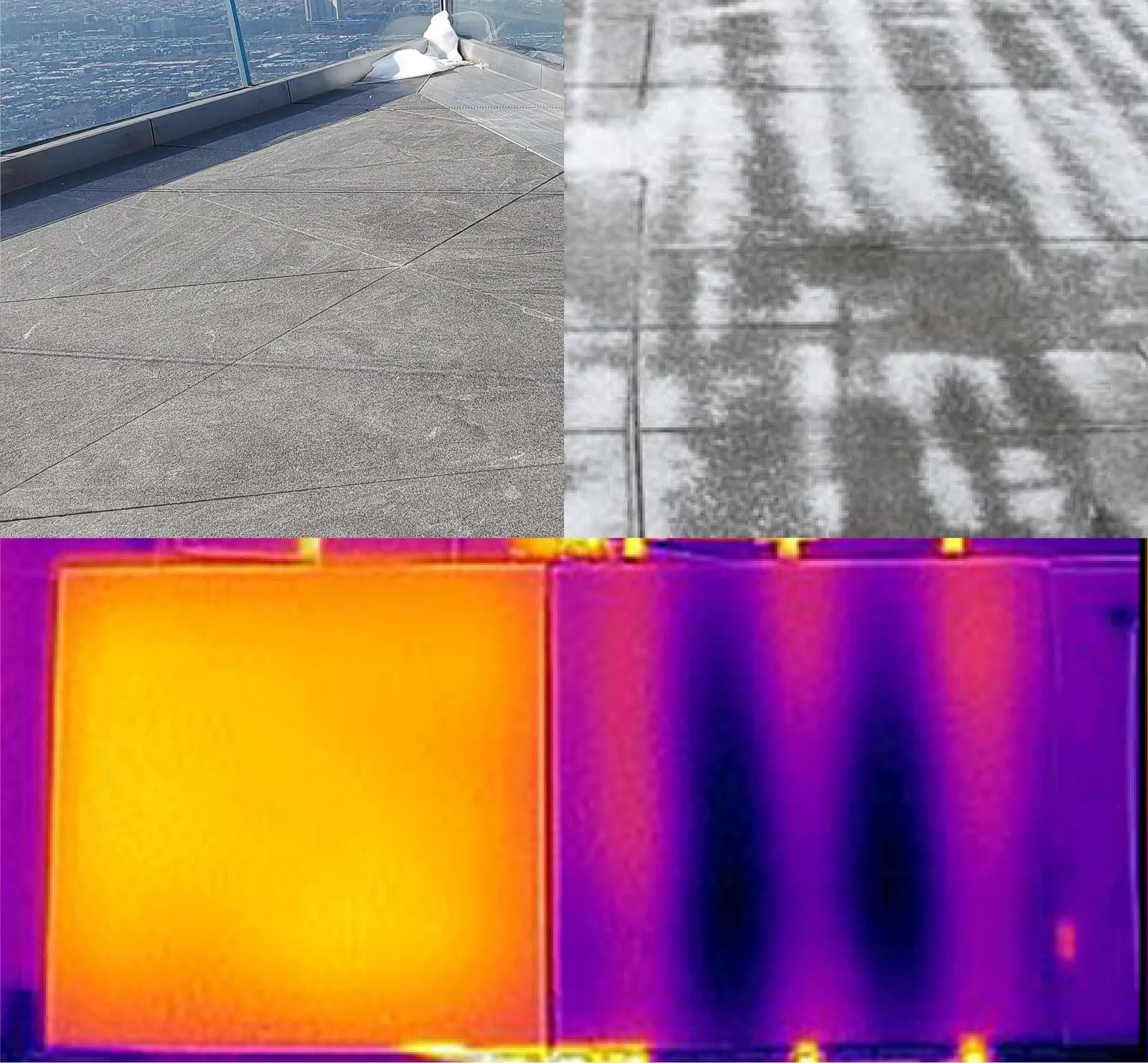
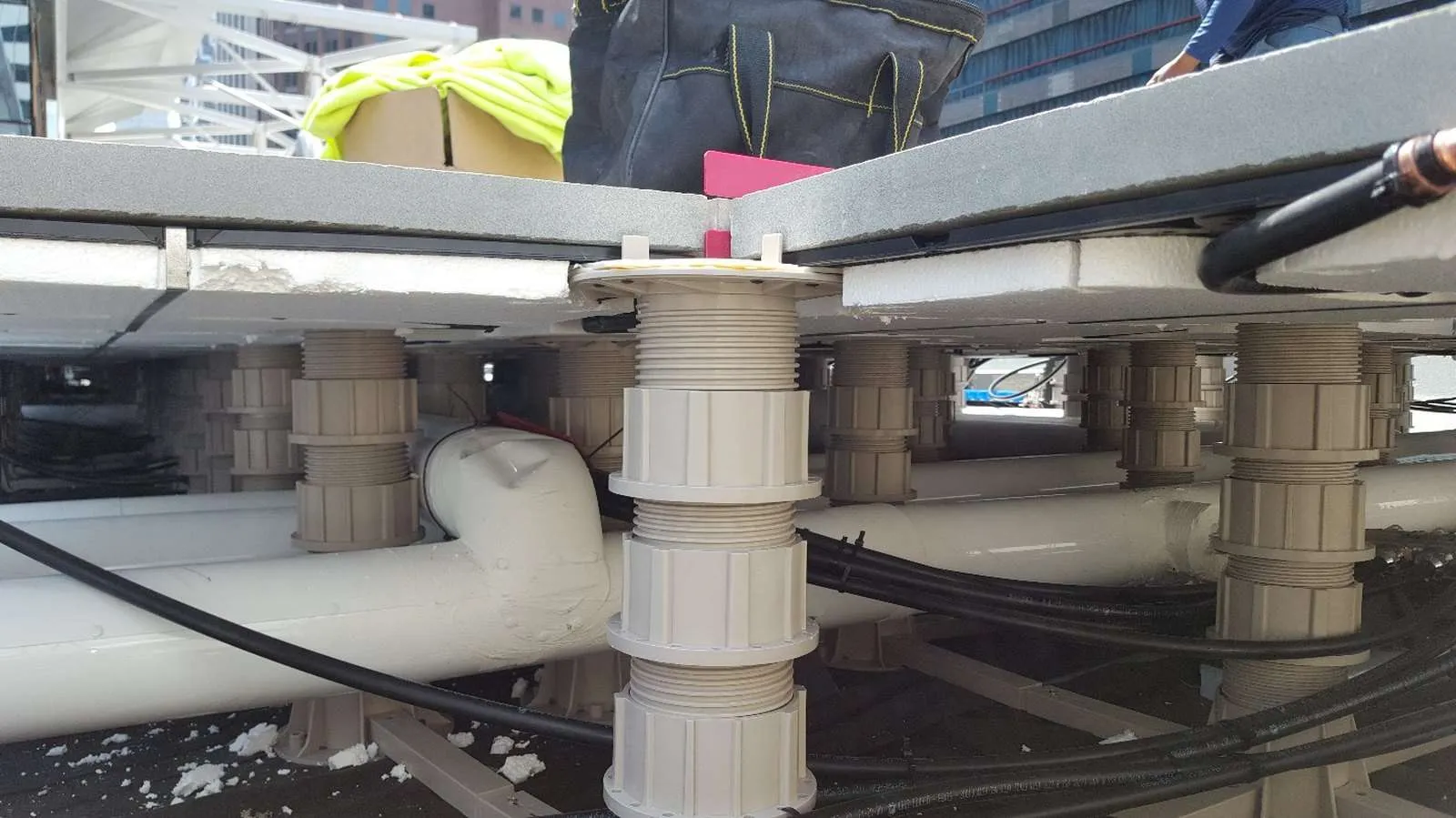 Edition Hotel, Times Square: paver, pedestal head, panel, insulation. Nothing else in the stack. No slab to pre-heat, no tube spacing, no hot stripes and cold valleys. Our side by side thermal images through two inch pavers show the difference against tube and plate on the same supply.
What it looks like going in
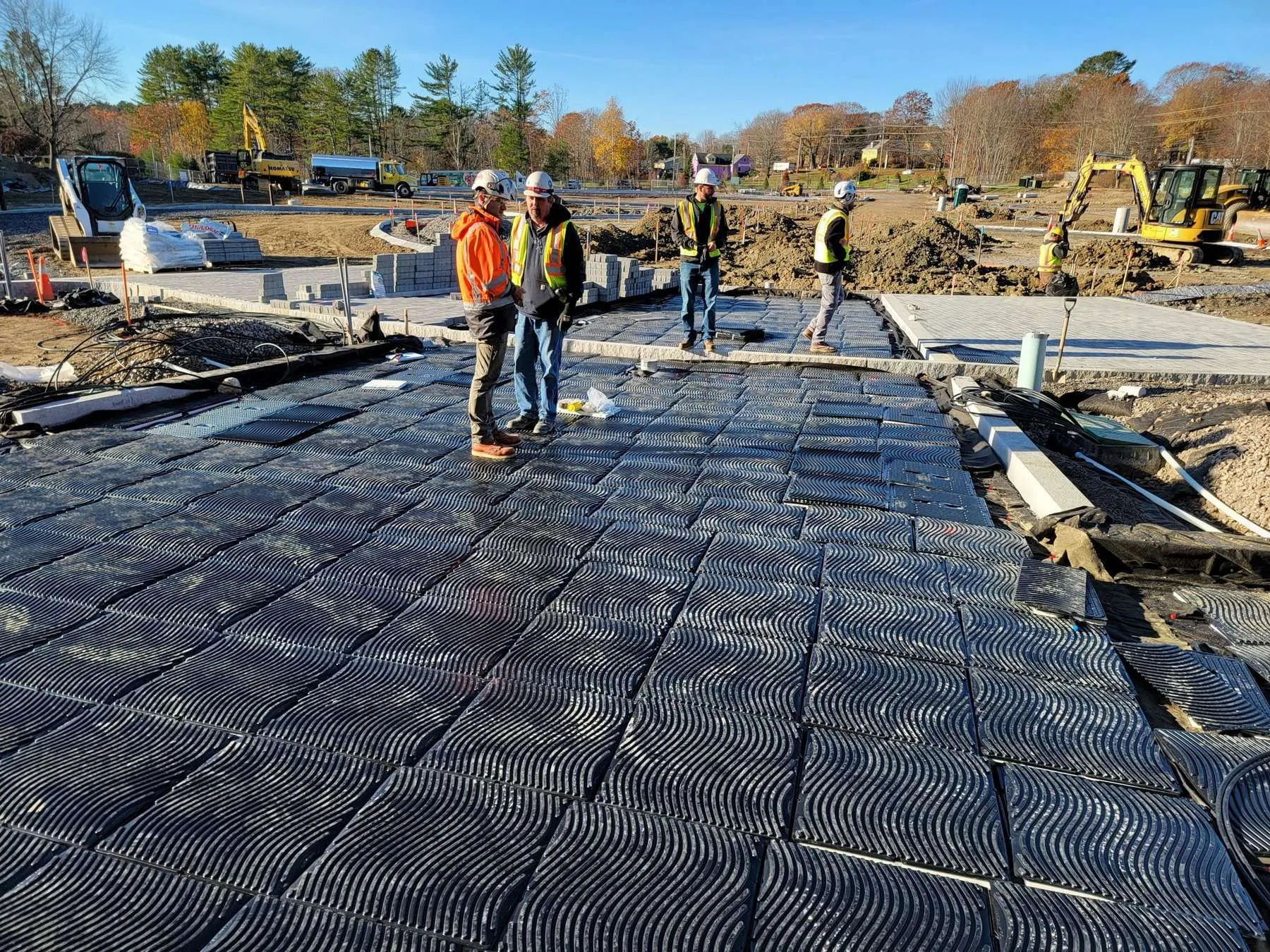 L.L.Bean's corporate entry drive in Freeport, Maine: the panels down, permeable pavers going on, no slab anywhere.
Not tube and sheet
Heat pump temperatures
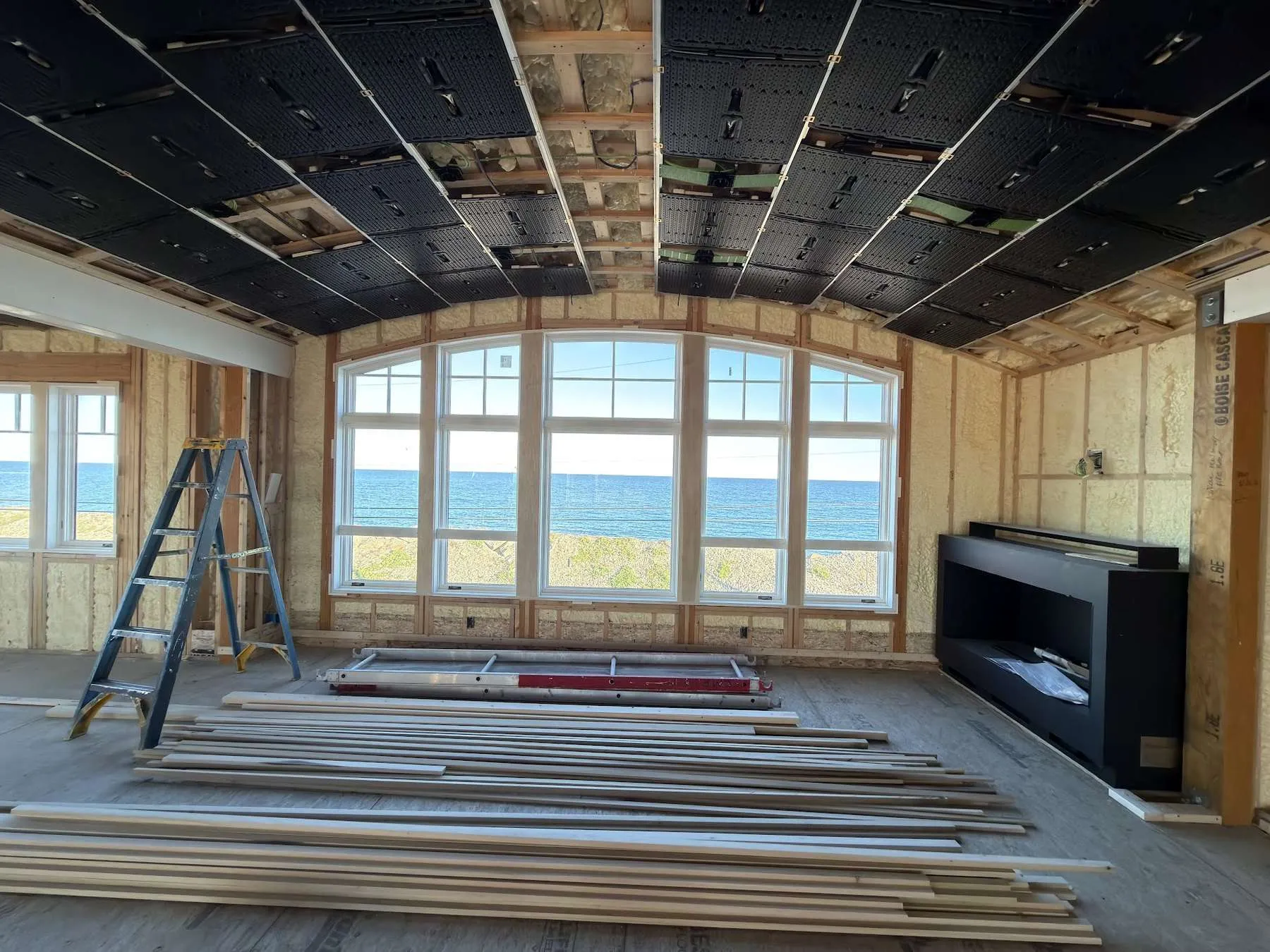 Rye, New Hampshire: ThermaCEILING on the vaulted ceiling before drywall. The same Chiltrix heat pumps that heat and cool this room melt the terraces outside.
Insulation built in
Repairable
Weight
Two seasons
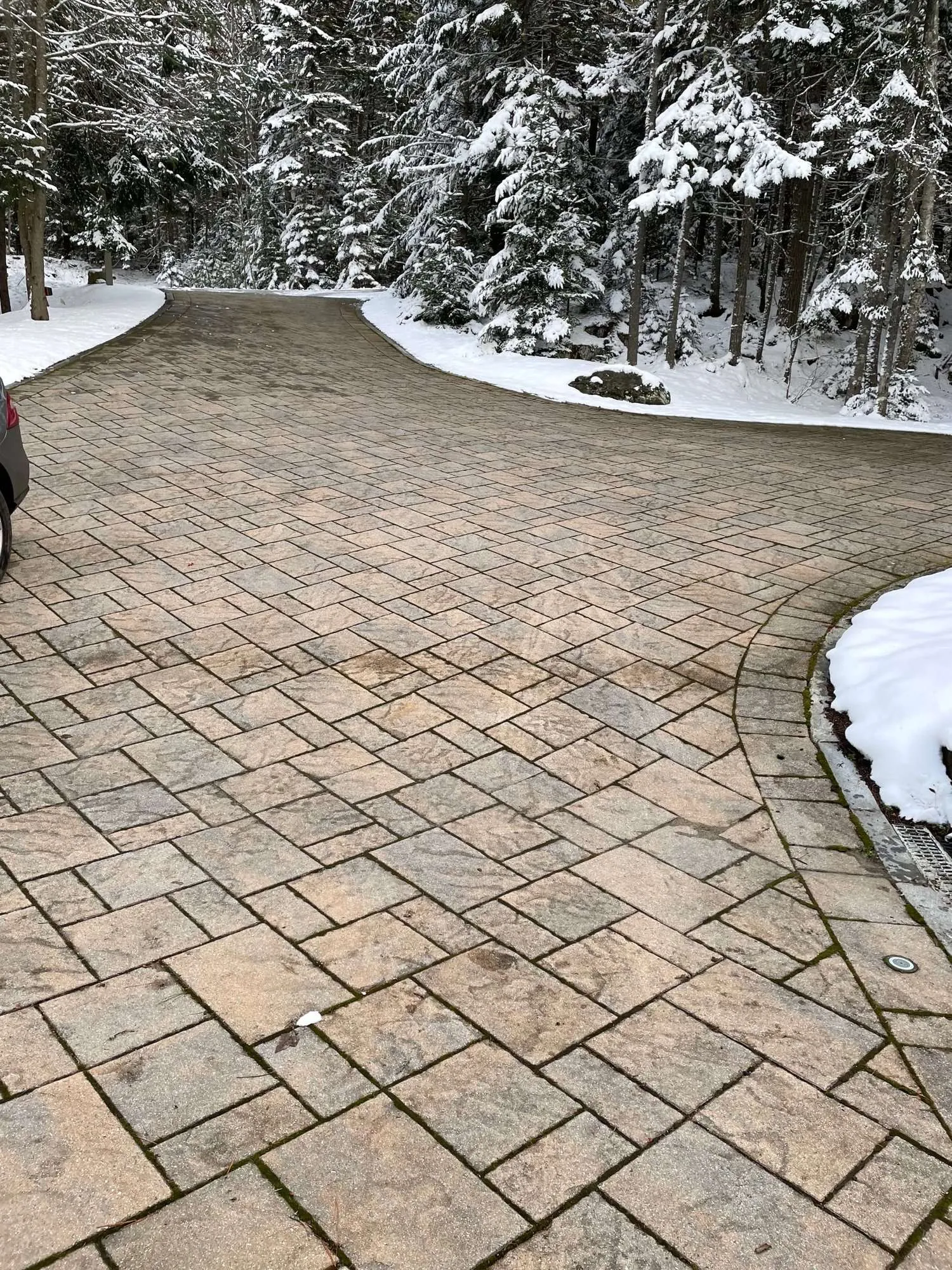 Coastal Maine drive after a December snowfall: trees loaded, pavers clear.
Listed
We supply the complete mechanical package, manifolds, heat exchanger where needed, air and dirt separation, expansion and glycol feed, as an OEM partner of Caleffi, Taco Comfort Solutions, Grundfos, Spirotherm, Axiom, Amtrol, Chiltrix and others, and we size it to the heat source you choose.
Send us your plans for a BTU and layout review
Four things get you a panel layout, an annual BTU estimate for the local worksheet, and a mechanical schematic:
- Site plan or roof plan with snowmelt zones marked (PDF or CAD)
- Square footage per zone
- Surface finish and mounting: paver, stone or porcelain; pedestal, on grade, or grating for odd sized or weak stone
- Heat source: air to water heat pump, ground source heat pump, or existing boiler
Contact Therma-HEXX engineering or call (603) 319-8815. Portsmouth, New Hampshire. ThermaPANEL projects are in most of the major ski resorts: Aspen, Snowmass, Telluride, Steamboat, Jackson Hole, Big Sky, the Yellowstone Club, Park City, Deer Valley, Snowbird, Mammoth, Lake Tahoe, Whistler and Revelstoke. ThermaPANEL is installed coast to coast in North America.
"*" indicates required fields
Questions
Which mountain towns cap snowmelt energy use?
The City of Aspen and Pitkin County, Colorado cap exterior energy at 200 million BTU per year per property. Mt. Crested Butte has adopted a 150 million BTU per year cap for single family exterior energy, per December 2025 reporting. Most other towns charge a fee per square foot or require a renewable offset rather than capping area.
Which towns charge a fee for heated driveways?
Snowmass Village ($34 per square foot of snowmelt), Breckenridge ($56.67 residential, $100 commercial, reference rates), Teton County, Wyoming ($10 per square foot of heated hardscape), Avon and Eagle County (fees calculated from required solar offset), Telluride, Mountain Village and Ketchum (fees from the town's energy worksheet). Figures are as published at the dates cited above.
Can a heat pump run a snowmelt system in a cold climate?
Yes, when the heated surface works at the supply temperatures a heat pump produces. ThermaPANEL is designed for 100 to 130 F supply, the range air to water and ground source heat pumps are built to deliver, and we have houses in New Hampshire running interior heating, cooling and exterior snowmelt from one Chiltrix air to water heat pump plant. The heat pump manufacturer's cold climate ratings determine capacity at your design temperature.
Is electric resistance cable a way around these rules?
In Telluride it is prohibited. Everywhere else it is allowed but it converts one unit of electricity to one unit of heat, so under a BTU cap or an energy based fee it is the most expensive way to heat a square foot. A heat pump delivers several units of heat per unit of electricity.