
A ski house deck that is usable in February, a driveway that does not need a plow truck at 6 am, and a heating requirement the town’s energy code will sign off on. ThermaPANEL is a modular hydronic snowmelt panel that goes under pavers, stone or decking, runs on the efficient low temperature fluid a heat pump makes, and can be lifted and serviced one paver at a time. It was designed in Aspen for exactly these houses and it is installed at most of the major ski resorts: Aspen, Snowmass, Telluride, Steamboat, Jackson Hole, Big Sky, the Yellowstone Club, Park City, Deer Valley, Snowbird, Mammoth, Lake Tahoe, Whistler and Revelstoke. ThermaPANEL is installed coast to coast in North America.
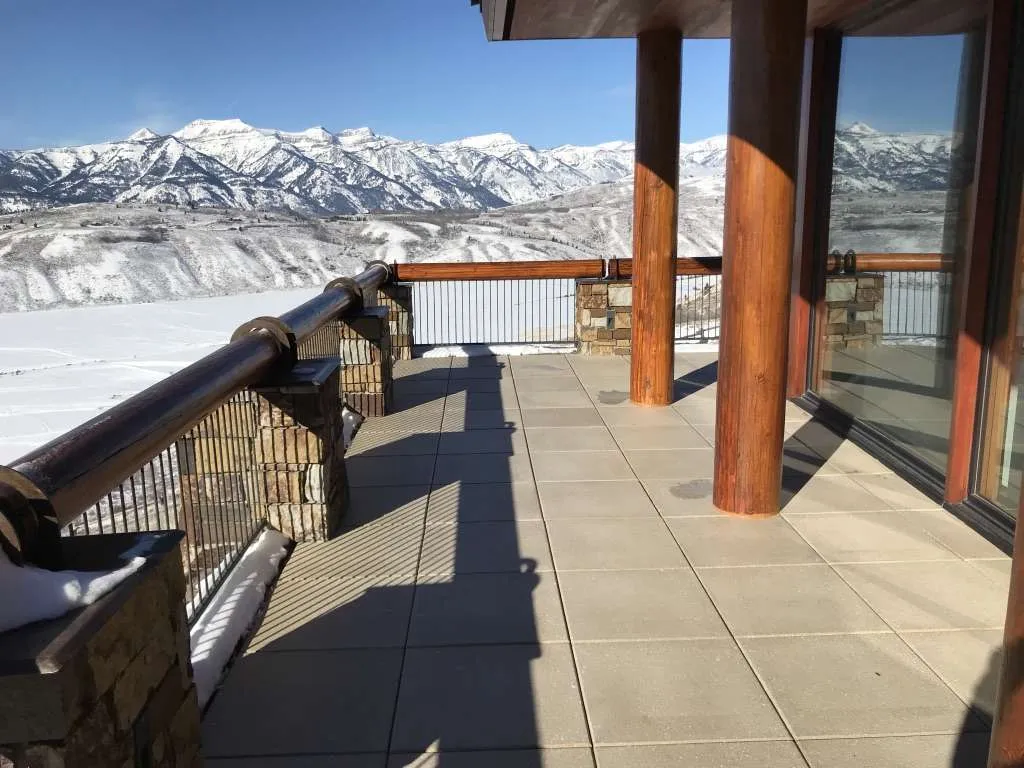
Where it goes on a mountain house
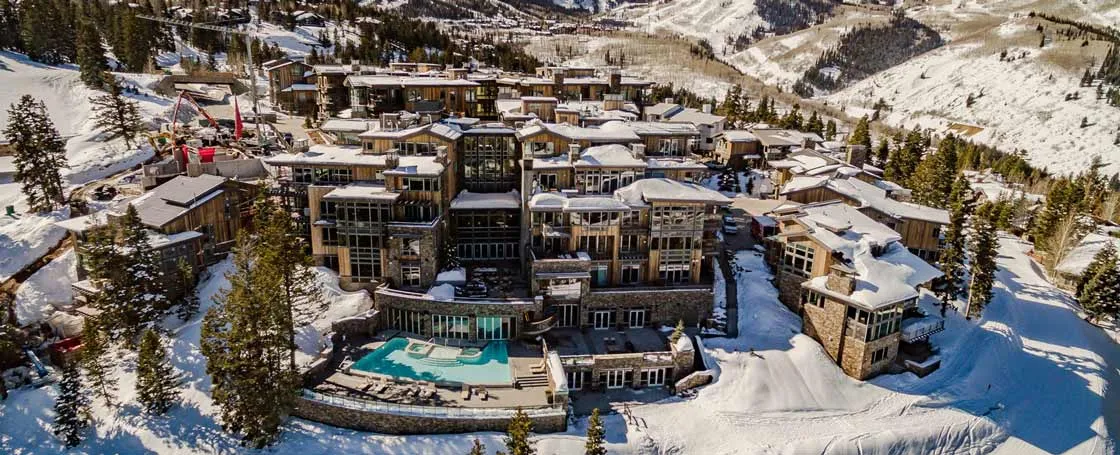
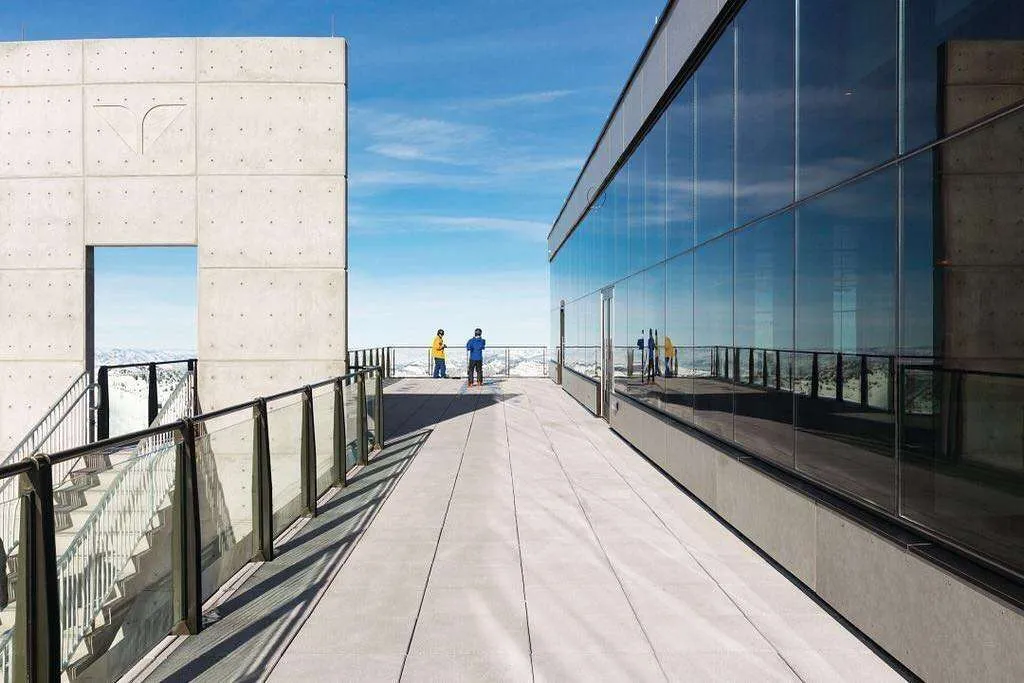
- Roof decks and terraces over living space. Pedestal pavers on ThermaPANEL. The only penetrations are the supply and return mains, which usually come up through the deck in roofing collars sealed to the pipe, or through a wall, a cabinet or a bench seat. The deck drains through the joints as it was designed to, and any paver lifts for access. Big Sky, Snowmass, Jackson, Stein Eriksen Residences in Deer Valley.
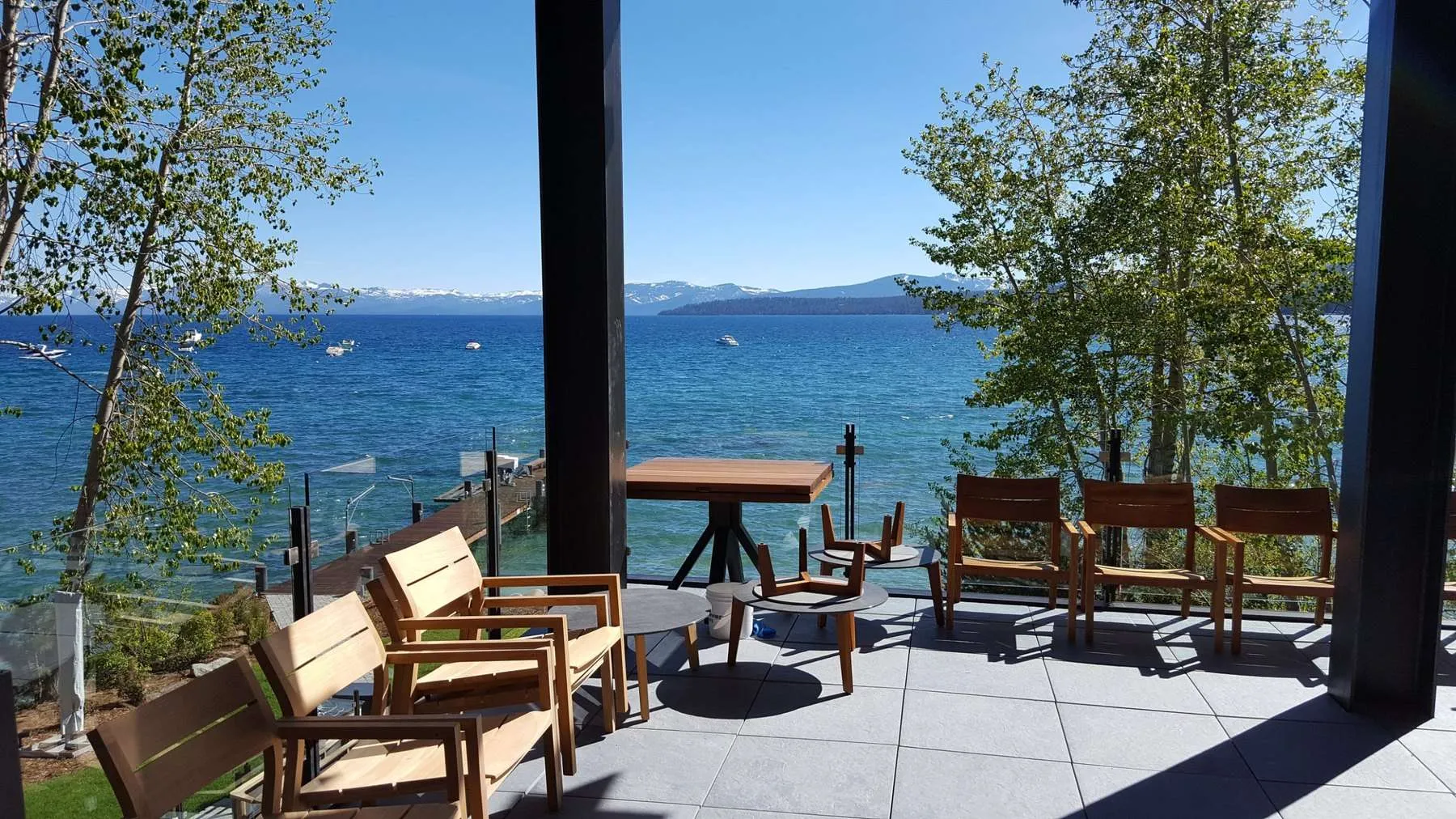
- Driveways, auto courts and walks on grade. Panels 1.375 inches thick on a prepared base under pavers, including permeable pavers. The surface stays dry edge to edge because fluid is under all of it, not in stripes. Martis Camp, Lake Tahoe.
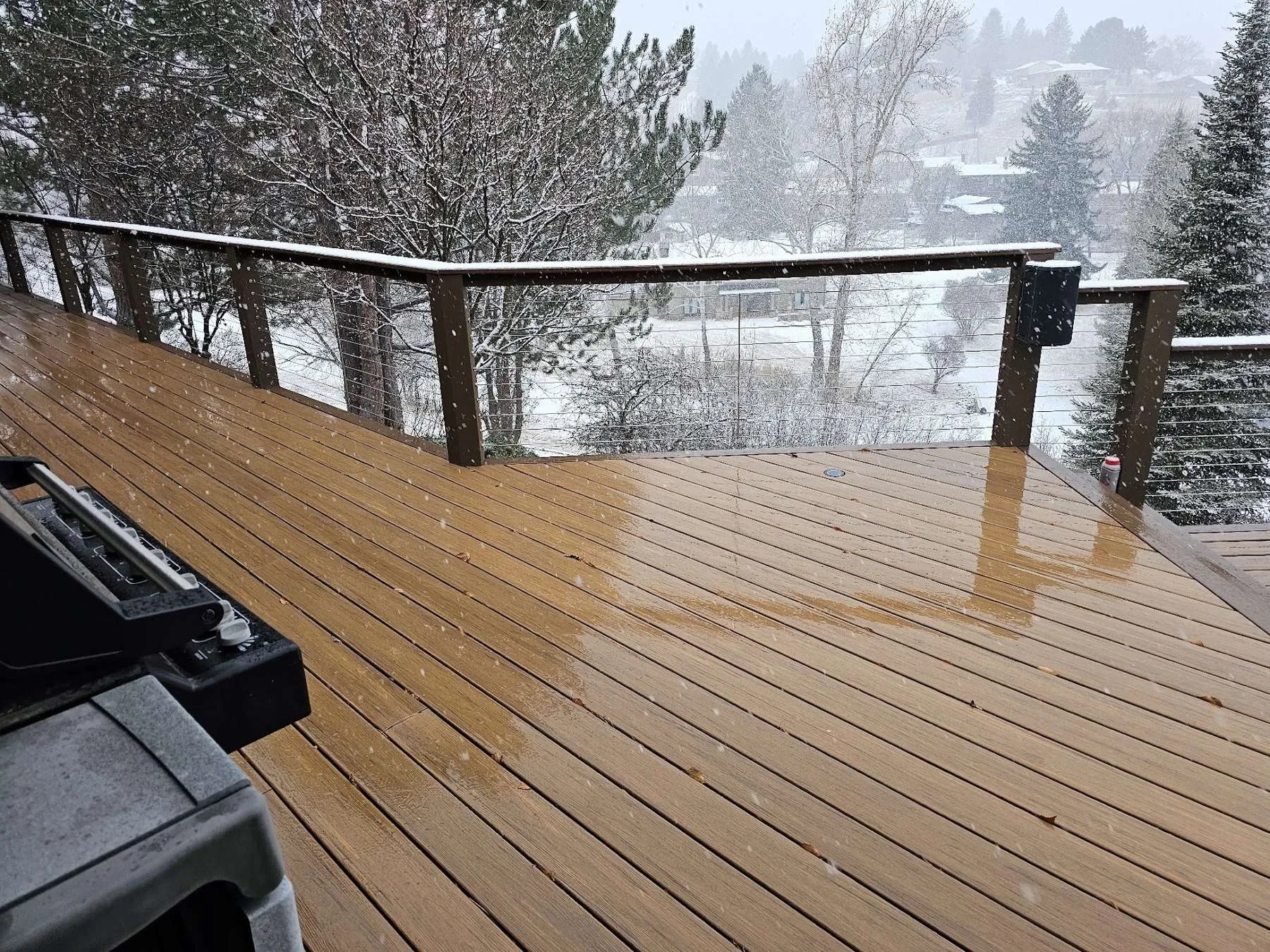
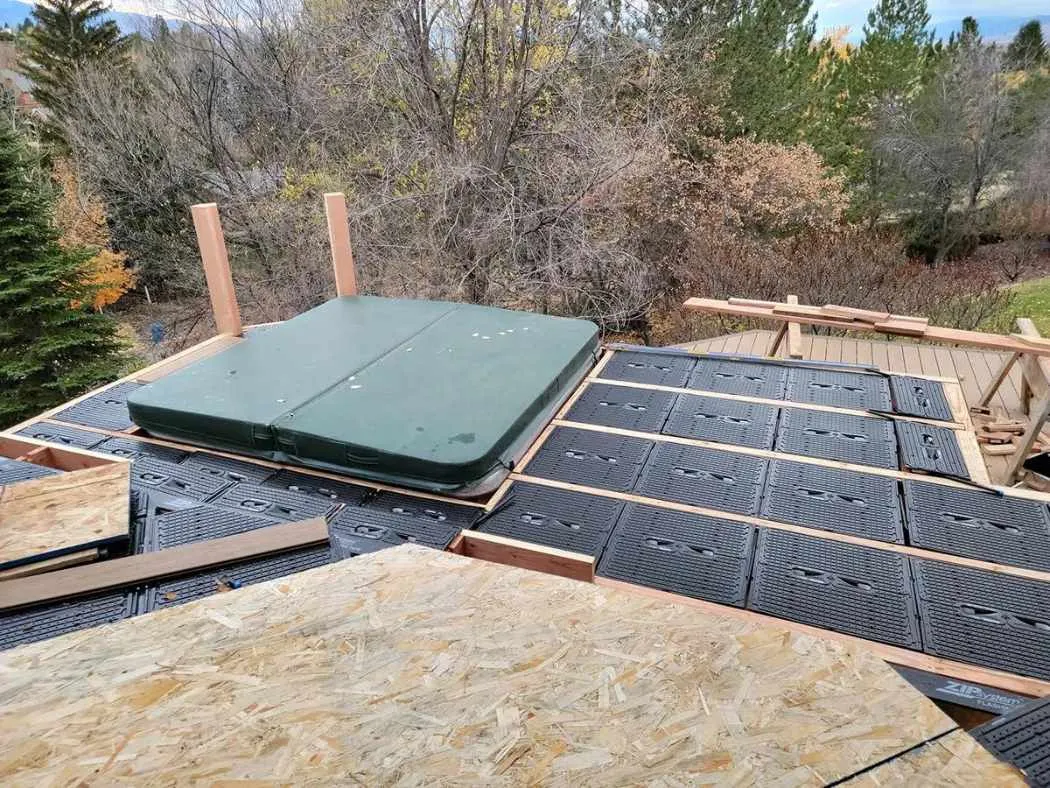
- Wood and composite decks. Panels sized to 24 inch on center framing, decking over them. In Missoula a cedar deck was replaced with composite on the original framing, with ThermaPANEL between the joists running off the boiler that already served the driveway; the lid of the hot tub’s TV lift was heated too. Missoula, Lake Almanor.
- Egress and the path to the hot tub. The small confined terrace that fills with snow and blocks a door. Salt Lake City.
- Steps and pool decks. Ritz-Carlton Lake Club on Tahoe, Snowbird Cliff Lodge pool deck.
Altitude, design temperature and the heat source
Mountain jobs are sized from the local design weather, not a rule of thumb: the snowfall rate, the design air temperature, the wind on an exposed deck, and how clear the owner needs the surface. A north facing roof deck at 9,000 feet and a sheltered auto court in the valley are different systems. We run the numbers for each one, which is also what the Aspen, Pitkin County and Breckenridge forms now ask you to show.
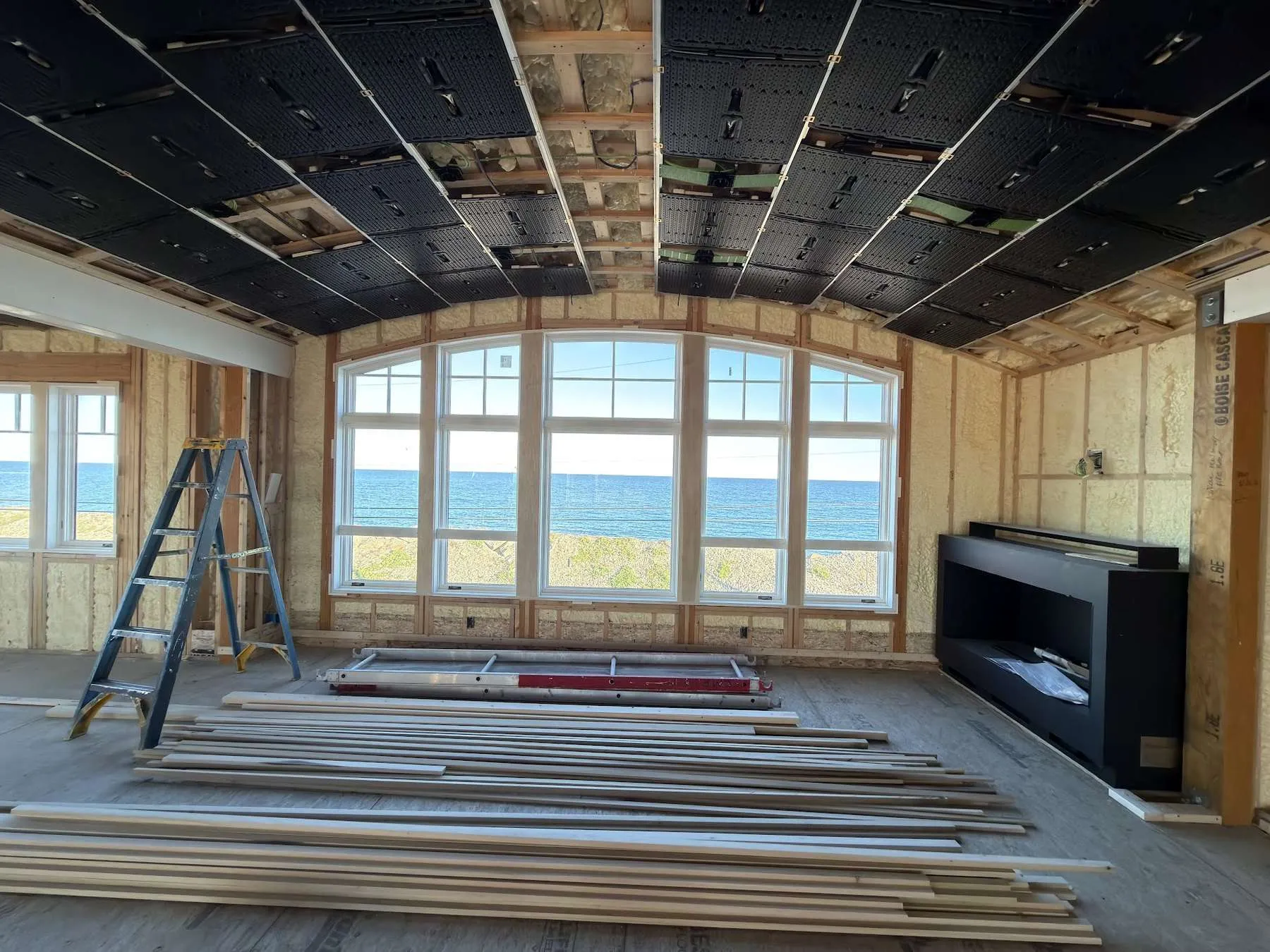
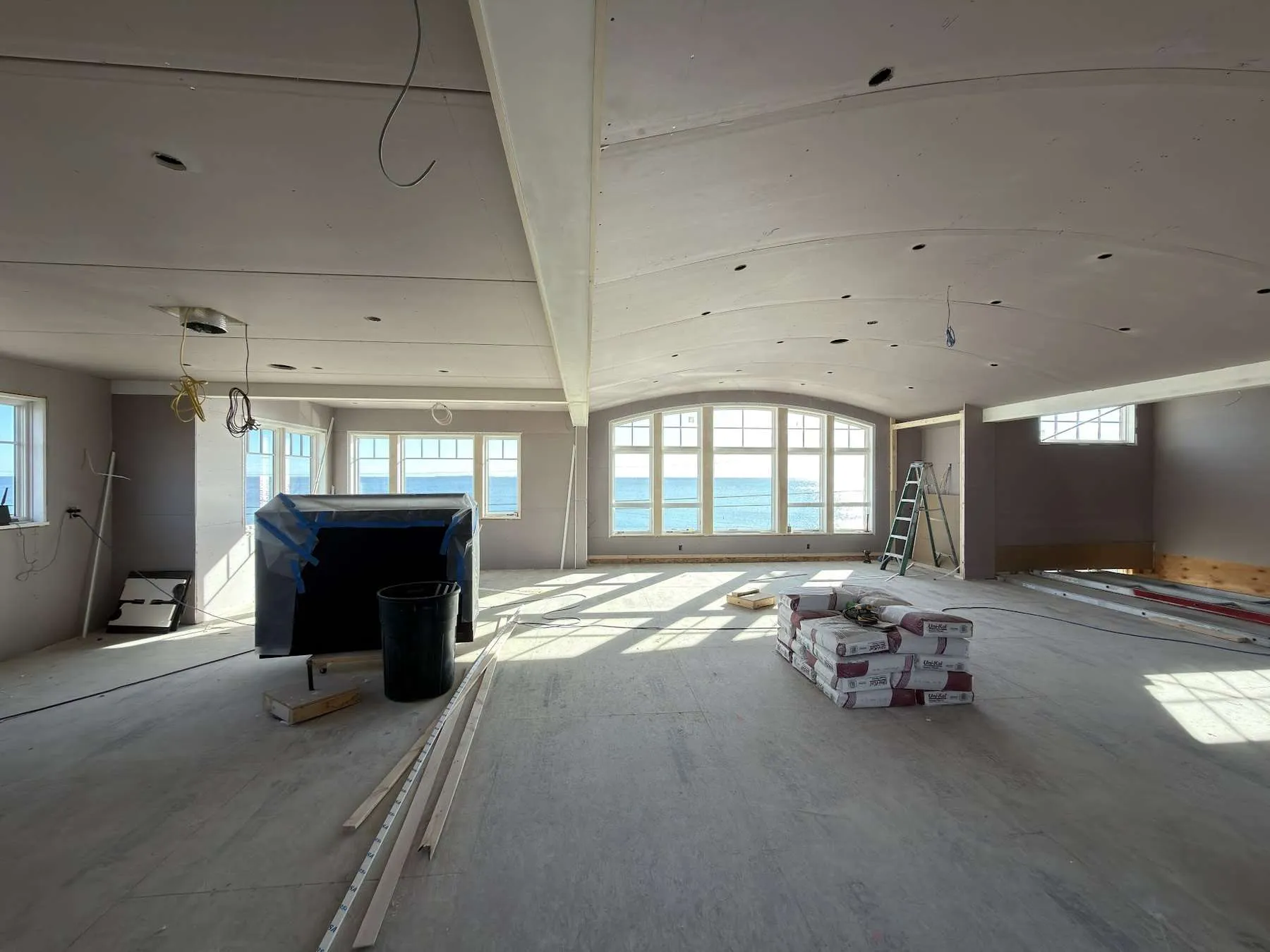
The heat source is the owner’s choice and the town’s rule. Boilers still do most of the work in resort country; an air to water heat pump does it where the code pushes that way or the house is already electric. ThermaPANEL is designed for 100 to 130 F supply, which a heat pump makes without strain. Two New Hampshire houses, a lake house in Jaffrey and an oceanfront house in Rye, heat and cool the interior and melt the exterior surfaces from the same Chiltrix air to water heat pumps. Our first installation, a New England driveway, ran on a zone valve off the house boiler at a supply under 60 F.
The energy codes, town by town
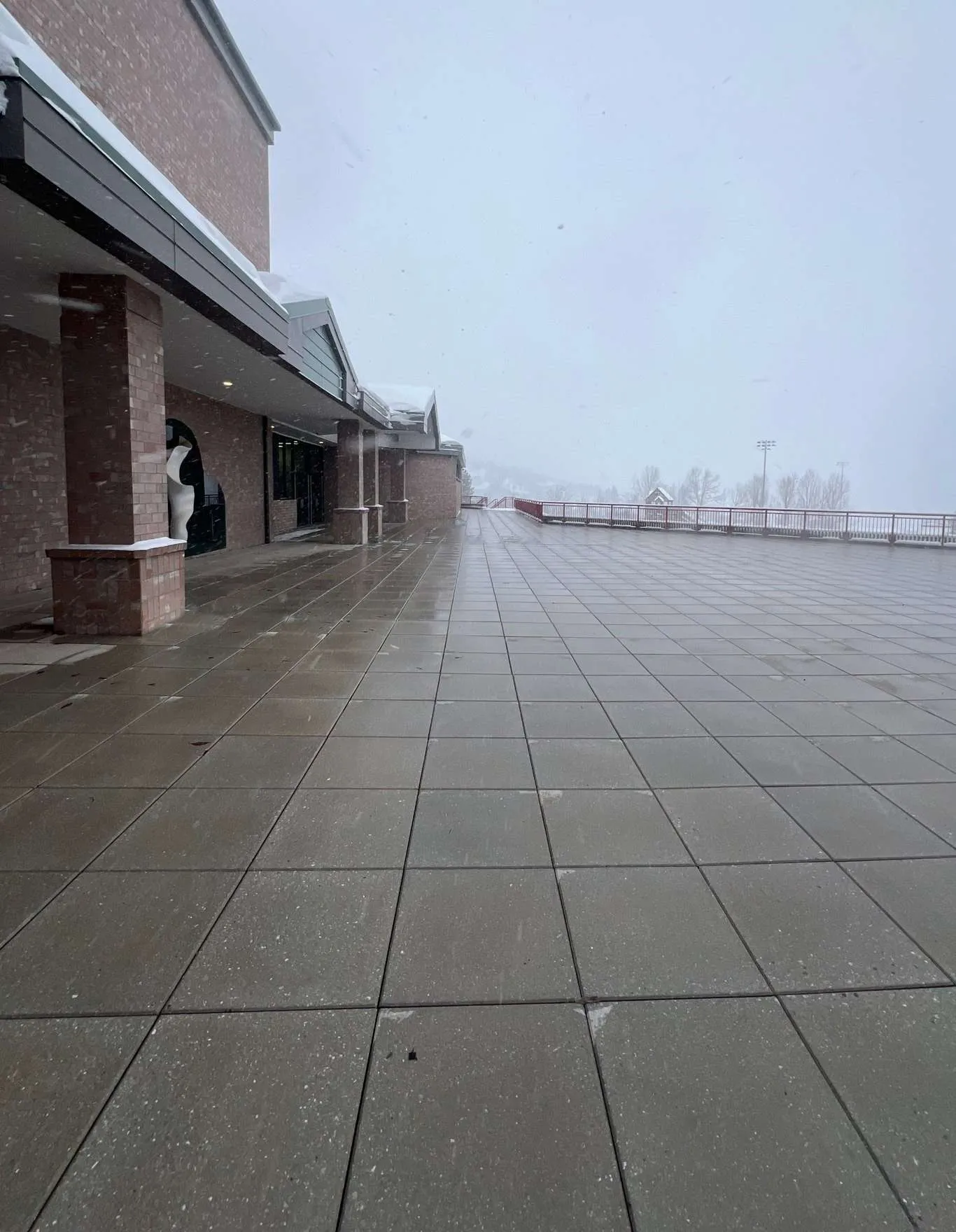
Most resort towns now regulate exterior energy. Aspen and Pitkin County cap it at 200 million BTU a year per property. Snowmass and Breckenridge charge a fee per heated square foot unless the energy is offset. Steamboat requires renewable energy for snowmelt. Telluride bars electric resistance snowmelt; Mountain Village offsets it through its own REMP. Teton County charges per square foot of heated hardscape. Ketchum, Crested Butte, Eagle County, Avon and Vail each have their own version. The rules, with sources and dates, are collected on our snowmelt energy codes page; the Aspen case is worked through in Snowmelt under Aspen’s 200 million BTU cap.
The towns have their own version of the problem. Some truck the snow off their streets to gas fired melters outside town, which is a reminder that plowed snow is not free either; it is moved and melted somewhere else, with diesel. A heated surface melts it where it falls.
What they all reward is a low temperature system that puts heat into the surface instead of into a slab. Under a cap, that is more melted square feet for the same BTUs. Under a fee, it is a smaller heated area that still keeps the doors open. Under a renewable rule, it is a surface a heat pump can actually feed. High output at low temperatures means high COP for heat pumps.
Why not tubing in a slab
Tubing in concrete was the mountain standard for forty years and it is what ThermaPANEL was designed in Aspen to replace. The slab takes hours to warm, needs high supply temperatures, adds weight a roof deck was not framed for, and when a tube fails the slab comes out. ThermaPANEL puts fluid directly under the paver across the whole surface, 24 channels per panel, with insulation under it so the heat goes up. At Snowbird, the Summit Lodge terrace on ThermaPANEL sits above a lower terrace with slab PEX by others; part of the slab system has failed and is out of service, and the only repair for it is to tear it out and start over.
What the install looks like
Pedestals go down on the roof as they would anyway. Panels in factory welded rows lie on the pedestal heads, the plumber connects the rows to the manifolds in the pedestal space, the system is pressure tested, and the pavers go on top. On grade, the panels lie on the compacted base and the pavers go over them. On a framed deck, panels sit between or across the joists and the decking goes down on top. Where stone is odd sized or not strong enough to be carried at its corners, grating on the pedestals or on the framing gives it full support. Your roofer, hardscaper and plumber do the work with our layout and manual; Therma-HEXX does not install, but we can send an onsite trainer for a crew’s first job.
What Therma-HEXX supplies
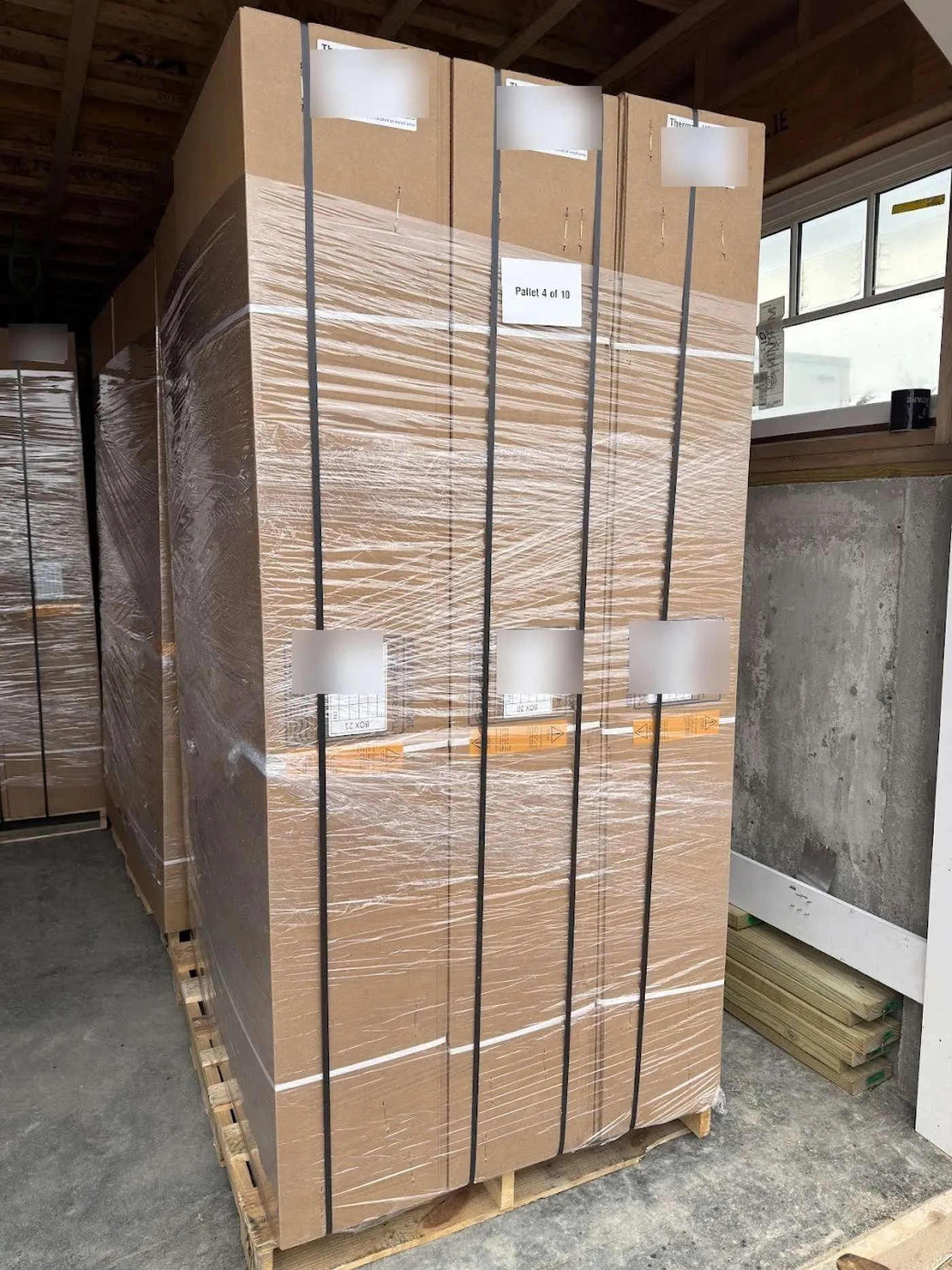
The panel layout and BTU estimate for your drawings, the annual energy figure where the town asks for it, the panels, manifolds, heat exchanger where needed, air and dirt separation, expansion and glycol feed, as an OEM partner of Caleffi, Taco Comfort Solutions, Grundfos, Spirotherm, Axiom, Amtrol, Chiltrix and others. ThermaPANEL is listed under ICC-ES PMG-1788. The design is covered by US Patents 8,944,146 B2 and 9,683,756 B2.
Send us the plans
Site plan or roof plan with the heated areas marked, square footage per zone, the surface and how it is mounted, the town, and the heat source you have in mind. Contact Therma-HEXX engineering or call (603) 319-8815.
Questions
Does it work at 9,000 feet?
Yes. Snowbird’s Summit Lodge terrace is at about 11,000 feet, Telluride projects run up to 10,000 feet, and Big Sky, Deer Valley, Jackson and Snowmass are all above 6,000. Altitude affects the design air temperature and the heat source’s output, both of which go into the sizing.
Can my existing boiler run it?
Often. The Missoula deck runs off the boiler that already served the driveway, through its own zone. We check the boiler’s capacity against the new load and add a heat exchanger where the boiler loop should stay separate from the glycol.
Will it meet the Aspen or Pitkin County energy cap?
We produce the annual energy estimate the application asks for and size the heated area to fit under the cap or to minimize the fee. The Aspen article walks through it.
Can it be added to an existing deck?
Yes. Pedestal decks are lifted and relaid; the Stein Eriksen Residences were a retrofit. Framed decks take panels in the existing framing when the decking is replaced.
What happens if a panel is damaged?
Lift the paver, swap the panel, set the paver back. No slab to cut.