
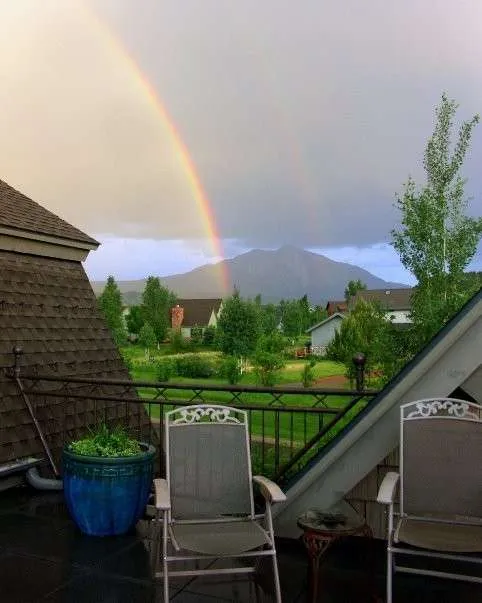
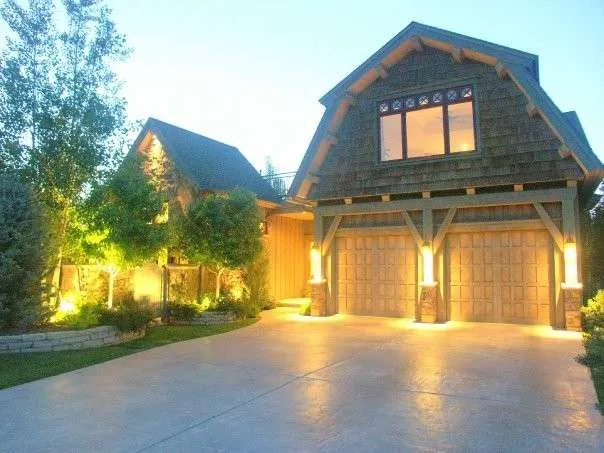
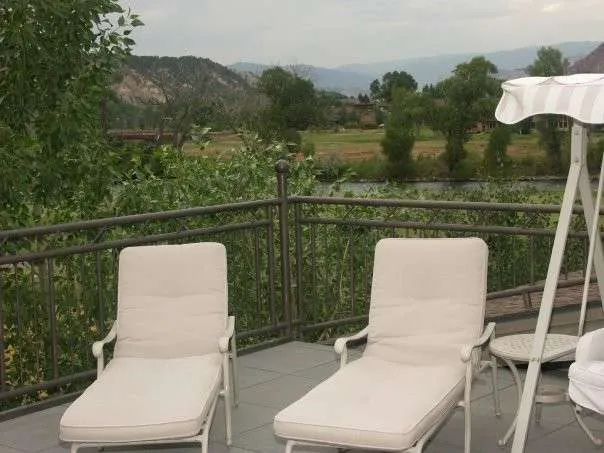
ThermaPANEL started as a complaint about a hot deck. I built this terrace on my own house at River Valley Ranch in Carbondale, Colorado, pedestal pavers over a roof, looking at Mount Sopris and down to the Crystal River. On an 85 degree afternoon the pavers hit 155 F. You could not stand on them barefoot and you could not sit out there in the evening because the deck gave the heat back for hours. In winter the same deck held snow until April. A terrace with that view, unusable for most of the year, is the kind of thing that bothers a builder, and more so when he lives there.
What was available
I had been designing and developing houses in Aspen and Snowmass for years and had used every snowmelt system the valley offered. They were all the same thing: PEX tubing in a concrete slab fed by a boiler running hot. On a driveway on grade that works, slowly. On a pedestal deck it does not work at all. There is no slab under pedestal pavers, and if you pour one you have added weight the roof was not framed for, buried the membrane under concrete, and given up the thing a pedestal deck is for, which is that any paver lifts for access. Nobody made a snowmelt system for a pedestal deck. The pavers sat on their pedestals with an air gap under them and froze from both sides, the way a bridge deck does.
Cooling a deck was not even a category.
The idea
The pavers were the problem and the pavers were the answer. A two foot paver on a pedestal has a flat underside and air under it. If a thin panel with fluid running through it sat directly under the paver, the paver would take whatever temperature the fluid was. Cold fluid in summer and the 155 degree deck becomes an 85 degree deck. Warm fluid in winter and the snow melts from underneath, with no slab to heat first. The heat only has to move through the paver, not through four or more inches of concrete, so the fluid does not have to be hot. The same panel, under the same pavers, could do both.
That is the whole product. Fluid under the entire surface, a panel the size of the paver, insulation on the back so the heat goes up, laid on the pedestals that were already there. It took longer to make it than to think of it.
Making it
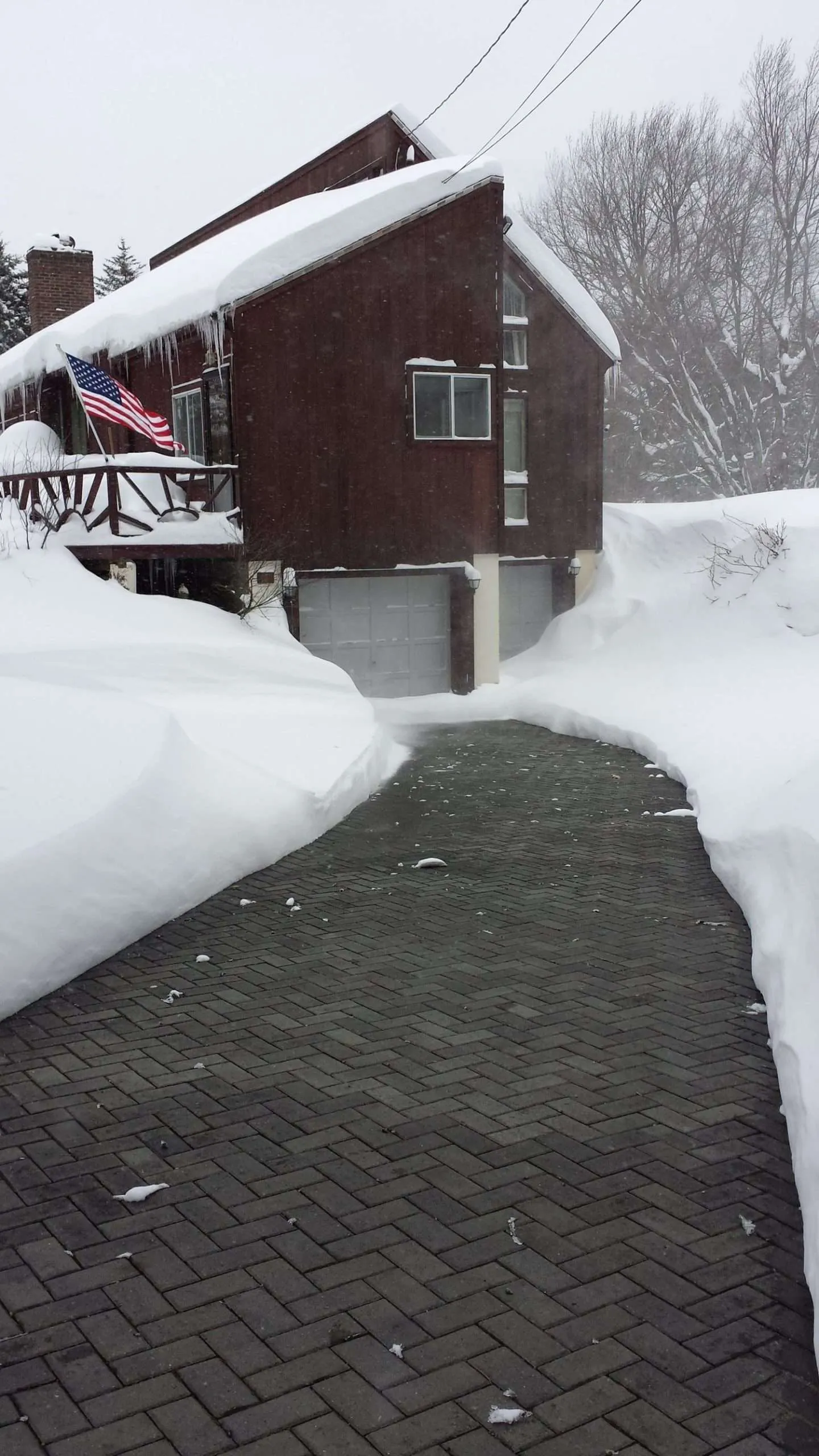
The first panels were aluminum, built to prove the idea, and the first installation was not a deck, it was a driveway in New England, pavers on grade, fed from a zone valve off the house boiler at a supply under 60 F. That driveway ran on that fluid temperature, which told me early that the low temperature idea was right and that a heat pump would be able to do this job when heat pumps got good enough. They did. After the first seven projects I replaced the aluminum with thermoformed PE-RT, for durability and so the panel could be made in the USA.
The production panel is thermoformed from PE-RT, 24 fluid channels across the face, rows welded at the factory so there are no fittings under the pavers. The US Patent Office granted the Modular Fluid Thermal Transfer Device patent in 2015 (US 8,944,146 B2) and a second in 2017 (US 9,683,756 B2). The Society of Plastics Engineers gave the panel its Plastics for Life award in 2019. It is listed under ICC-ES PMG-1788. It was the first pedestal paver snowmelt system in the world and it is still the only modular hydronic snowmelt system made for pavers.
Where it went
Back to the mountains first: Aspen, Snowmass, Telluride, Steamboat, Jackson Hole, Big Sky, the Yellowstone Club, Park City, Deer Valley, Snowbird, Mammoth, Lake Tahoe, Whistler and Revelstoke. ThermaPANEL is installed across the USA and Canada, coast to coast. Then the cities, where the same deck problem exists a hundred stories up, on The Edge NYC at Hudson Yards, and the weight matters even more: SUMMIT One Vanderbilt, The Edge NYC at Hudson Yards, the Aman and the Edition in New York, the St. Regis in Chicago. The cooling side became solar pool heating, because a cold deck in July is a pool full of warm water, and then it went indoors as ThermaCEILING, the same panel in a ceiling heating and cooling the room below it.
The energy codes caught up with the idea. Aspen now caps how many BTUs a year an exterior system may use. New York bars the gas boiler. A panel that works at the temperature a heat pump makes, under the pavers that were going to be there anyway, is what those rules describe. High output at low temperatures means high COP for heat pumps. I did not design it for the codes. I designed it for a deck in Carbondale that I wanted to sit on. That deck never got it; I had moved on to the next house by the time the panels were real.

If you have a deck like that one, send me the plan. Contact Therma-HEXX engineering or call (603) 319-8815.
Related: snowmelt for mountain homes and snowmelt for high rise terraces.