
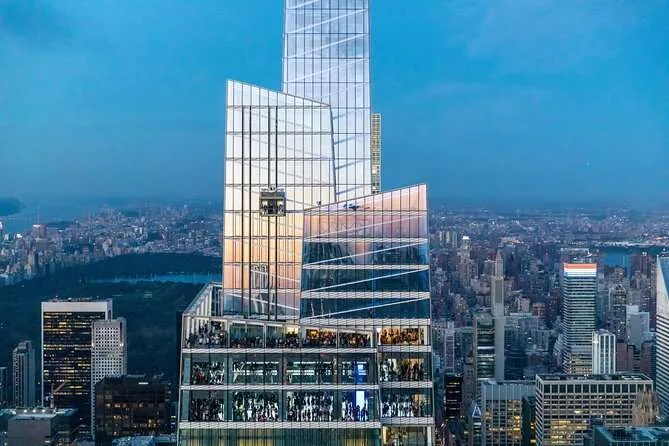
Amenity terraces, observation decks and rooftop restaurants on tall buildings have the same snow problem as a ski house driveway, with three complications: weight, egress, and the city’s carbon rules. ThermaPANEL is a modular hydronic snowmelt and radiant panel that sits under pedestal pavers, runs on efficient low temperature fluid, adds almost no load, and can be lifted and serviced one paver at a time. It is under the SUMMIT One Vanderbilt observation deck, the Aman New York garden terrace, the St. Regis Chicago amenity deck, The Edge NYC at Hudson Yards and the Edition Hotel Times Square rooftop.
Why tall buildings are different
A rooftop terrace on a tower sits in wind, drains to a membrane nobody wants to touch, and carries a load the structural engineer sized years before anyone talked about snowmelt. The owner still needs the terrace open: it is leased amenity space, an egress path, or a restaurant that loses a night’s revenue every time it closes for ice.
On an observation deck the arithmetic is brutal. Every hour the deck is closed is ticket revenue that does not come back, and on the famous towers that revenue is a major part of what the building earns. One well known observation deck on a classic New York skyscraper could not accept the closure a retrofit would take, so to this day the staff shovel the snow by hand into a propane fired melter on the roof. Plowing is not an option on a roof: there is nowhere to put the snow, and a shovel or a blade on a paver deck chips the stone and tears the membrane flashing. Hand shoveling also puts people on an icy deck a hundred stories up. The time to put snowmelt on an observation deck is when the pavers go down, which is what happened at SUMMIT One Vanderbilt and The Edge NYC.
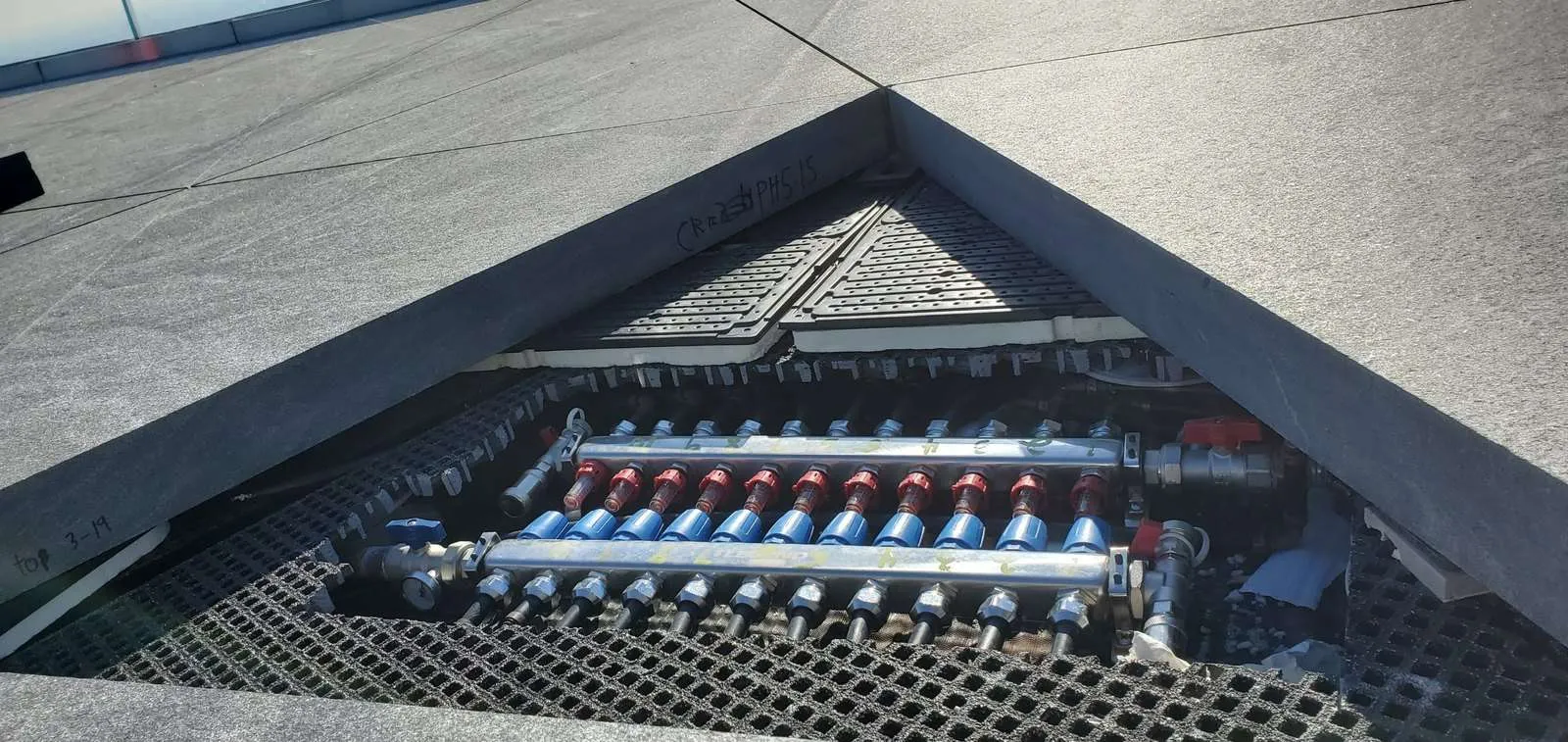
- Weight. A concrete topping slab with PEX in it adds 50 pounds or more per square foot before the pavers go on. ThermaPANEL holds about a quart of fluid per panel, roughly half a pound of fluid per square foot, on an EPS foam back. The pavers and pedestals were already in the design.
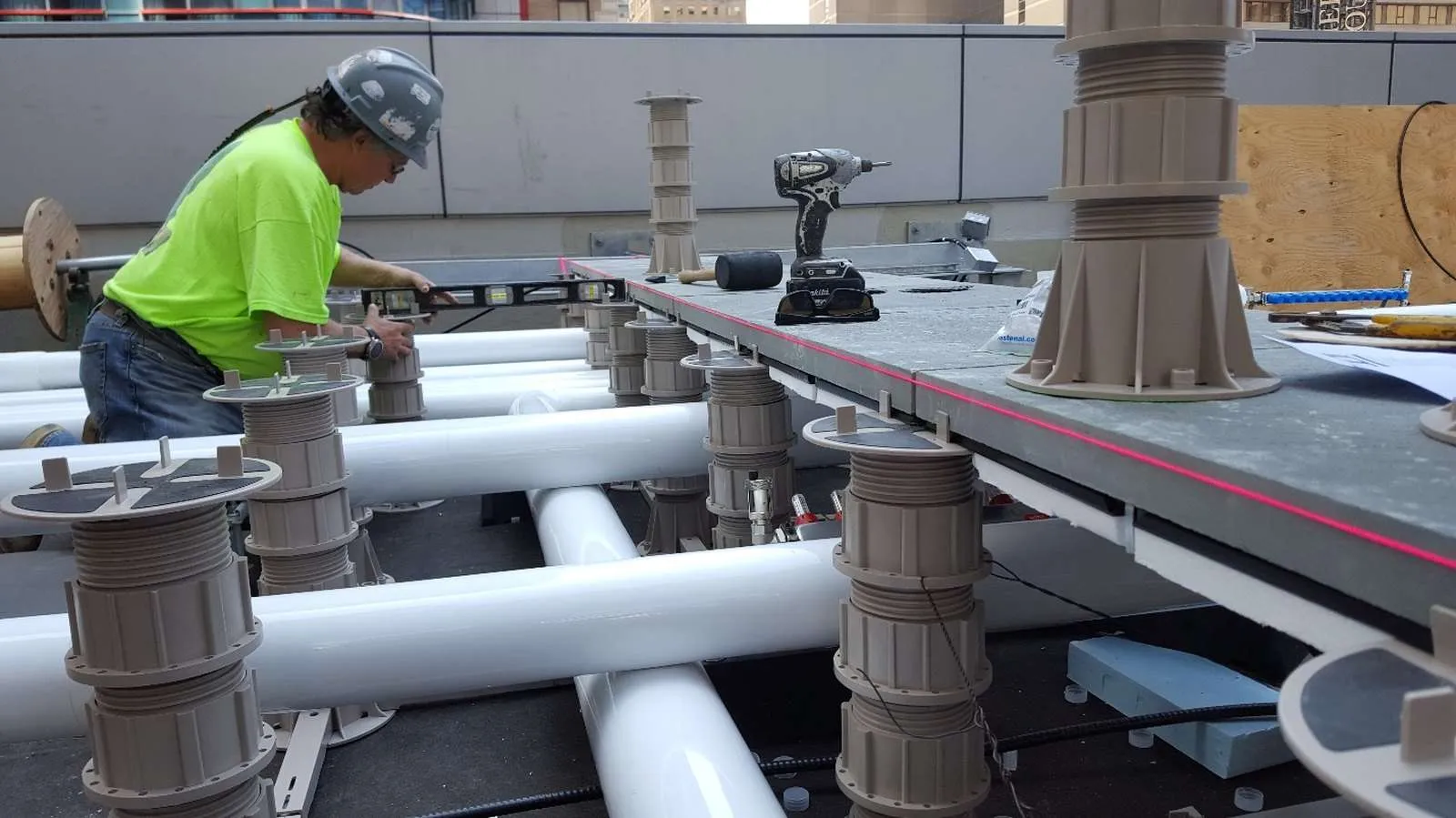
- Height. Door sills, drains and membrane flashing fix the build up height early. ThermaPANEL fits in the pedestal space that already exists: the panel adds 3/8 inch above the pedestal head and its 1 inch of insulation sits below the head, between the pedestals. At the Chestnut Street condominium in Chicago the egress terrace over the parking structure had 1.5 inches between the roof insulation and the door sills; the panels, supply and return tubing and manifolds all fit in it.
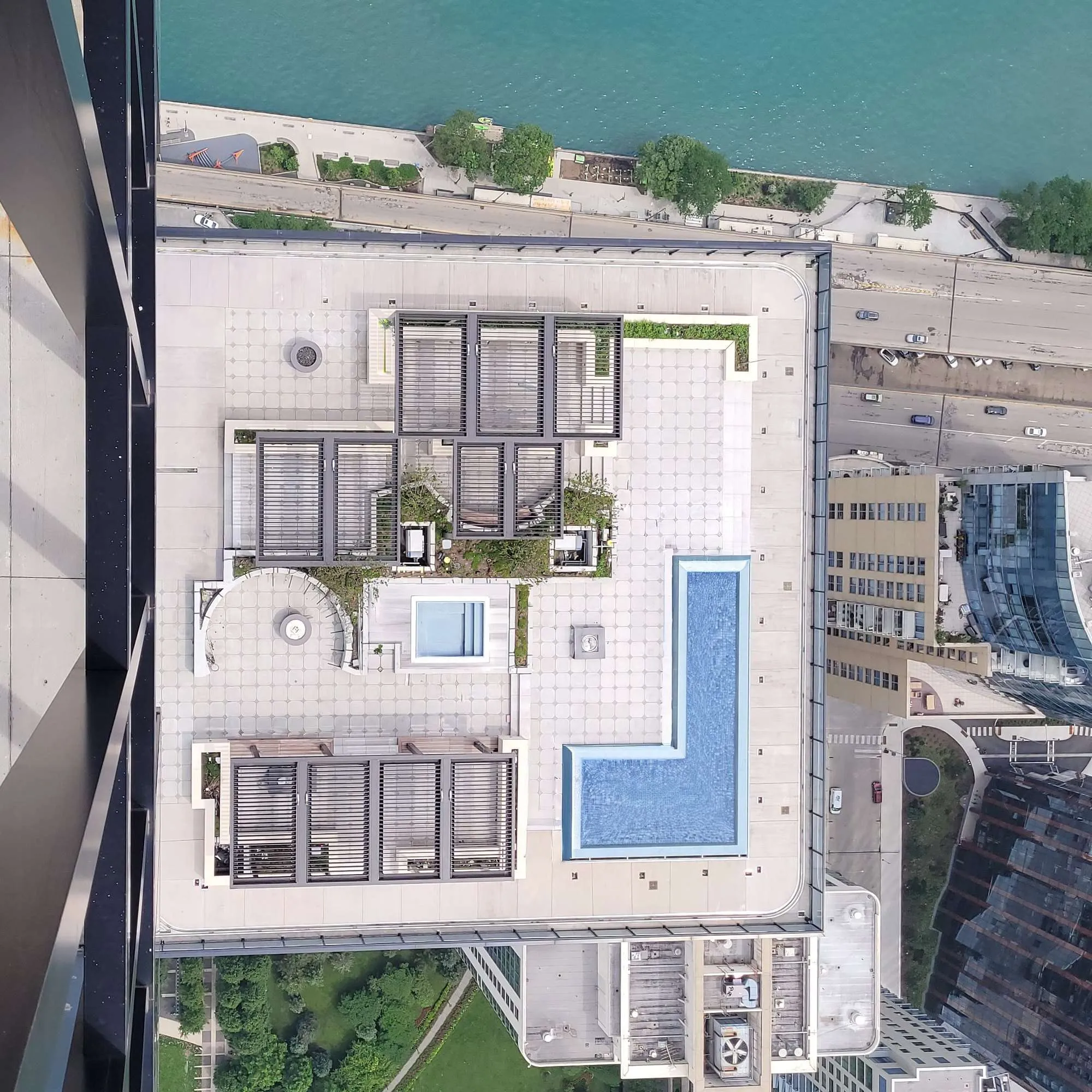
- Wind uplift. Tall roofs use locked or weighted pavers. At the St. Regis Chicago the amenity deck uses Hanover Guardian wind uplift pavers over ThermaPANEL; the panels sit between the pedestals and the paver interlock is unchanged.
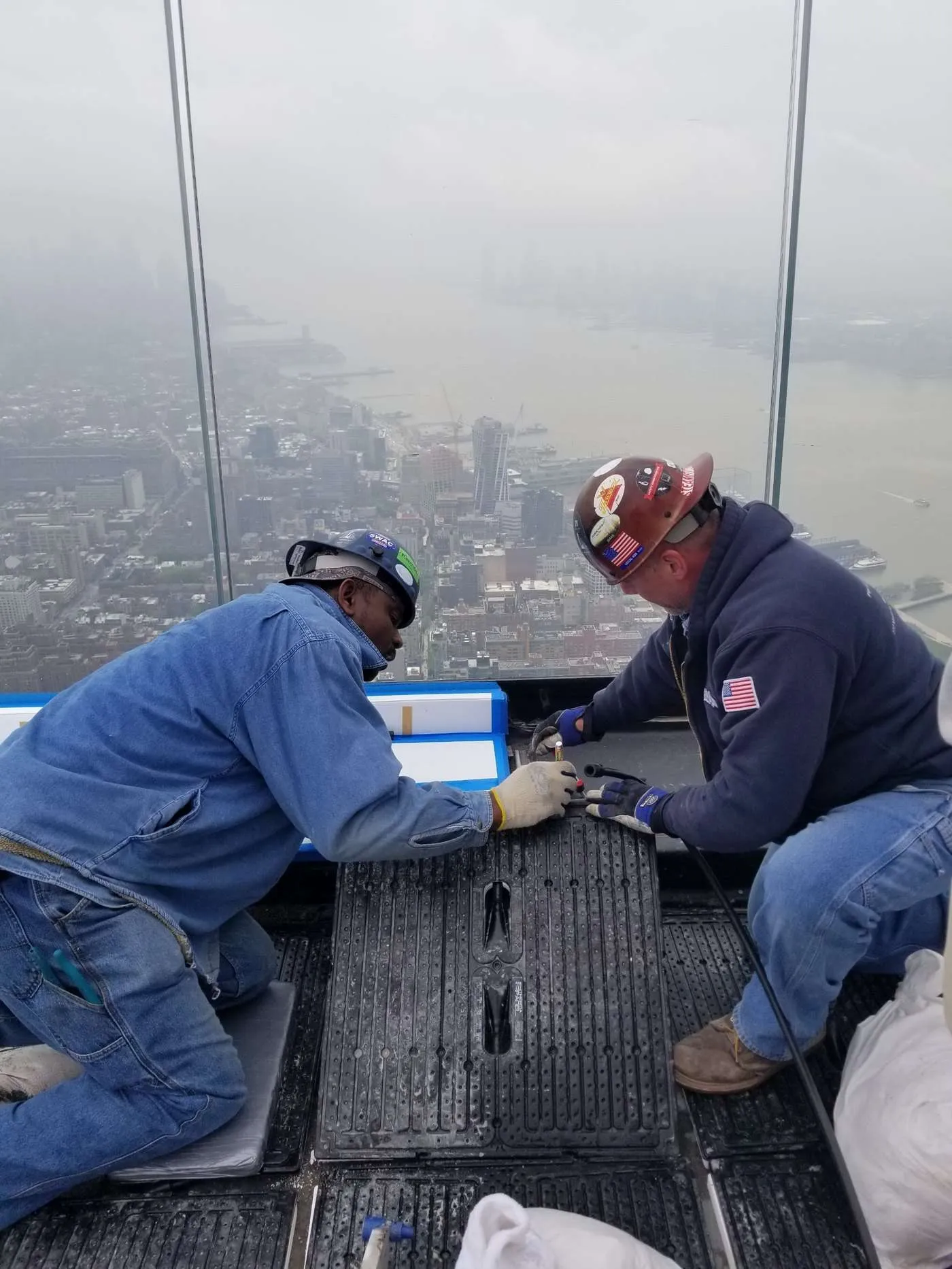
- The membrane. Nothing is fastened through the roof. The only penetrations are the supply and return mains, which usually come up through the deck in roofing collars sealed to the pipe, or through a wall, a cabinet or a bench seat. The panels lie on the pedestal grid or on grating, above the membrane and the roof insulation, and lift out the same way they went in.
- Repair. When tubing in a slab fails on a tower roof, the slab comes out with a crane. With ThermaPANEL the paver above the panel comes up, the panel is swapped, the paver goes back. A terrace at Snowbird, Utah has slab PEX by others on one level and ThermaPANEL on the terrace above it; a section of the slab system has failed and is out of service, the panel system is not.
The city rules that now decide the heat source
In the big northern cities the question is no longer whether you can heat the terrace, it is what you are allowed to heat it with. The details for each city, with sources, are on our snowmelt energy codes page. The short version:
| City | Rule that touches terrace snowmelt | What it means for the design |
|---|---|---|
| New York City | Local Law 154 bars fossil fuel combustion in new buildings (7 stories and under from 2024, taller from 2027). Local Law 97 fines existing large buildings for carbon above their cap. The energy code requires automatic controls on snowmelt. | New towers heat terraces electrically, which in practice means a heat pump. Existing towers want the fewest BTUs that keep the terrace open. |
| Chicago | 2022 Chicago Energy Transformation Code adopts the IECC snowmelt control requirements. | Surface sensing controls, no idling. The code does not name the fuel, the building’s own electrification plan usually does. |
| Boston | BERDO 2.0 sets emissions limits for buildings over 20,000 square feet, tightening to zero by 2050. | Every BTU of gas on the roof counts against the building’s budget. |
| Denver | Energize Denver performance targets and the gas restrictions in the Denver code. | Same answer: low temperature, heat pump ready. |
| Toronto | Toronto Green Standard v4 emissions tiers. | Terrace snowmelt is designed inside the building’s energy model, not added after. |
All of these reward the same thing: a snowmelt surface that works at the low fluid temperature a heat pump makes without effort. That is what ThermaPANEL was built for. High output at low temperatures means high COP for heat pumps.
Low temperature by design
ThermaPANEL puts fluid under the entire paver, 24 channels across each panel, so the surface above it sees an even, warm plane instead of hot stripes over a tube. Most of our snowmelt designs supply 100 to 130 F. Our first installation, a driveway in New England, ran on a zone valve off the house boiler at a supply under 60 F. Air to water heat pumps make 120 F fluid routinely; two New Hampshire houses, one on a lake in Jaffrey and one on the ocean in Rye, heat and cool the interiors and melt the exterior surfaces from the same Chiltrix heat pumps. On a tower the heat source is usually the building’s heating plant or a dedicated heat pump through a plate heat exchanger; we size the exchanger, the glycol loop and the controls as part of the package.
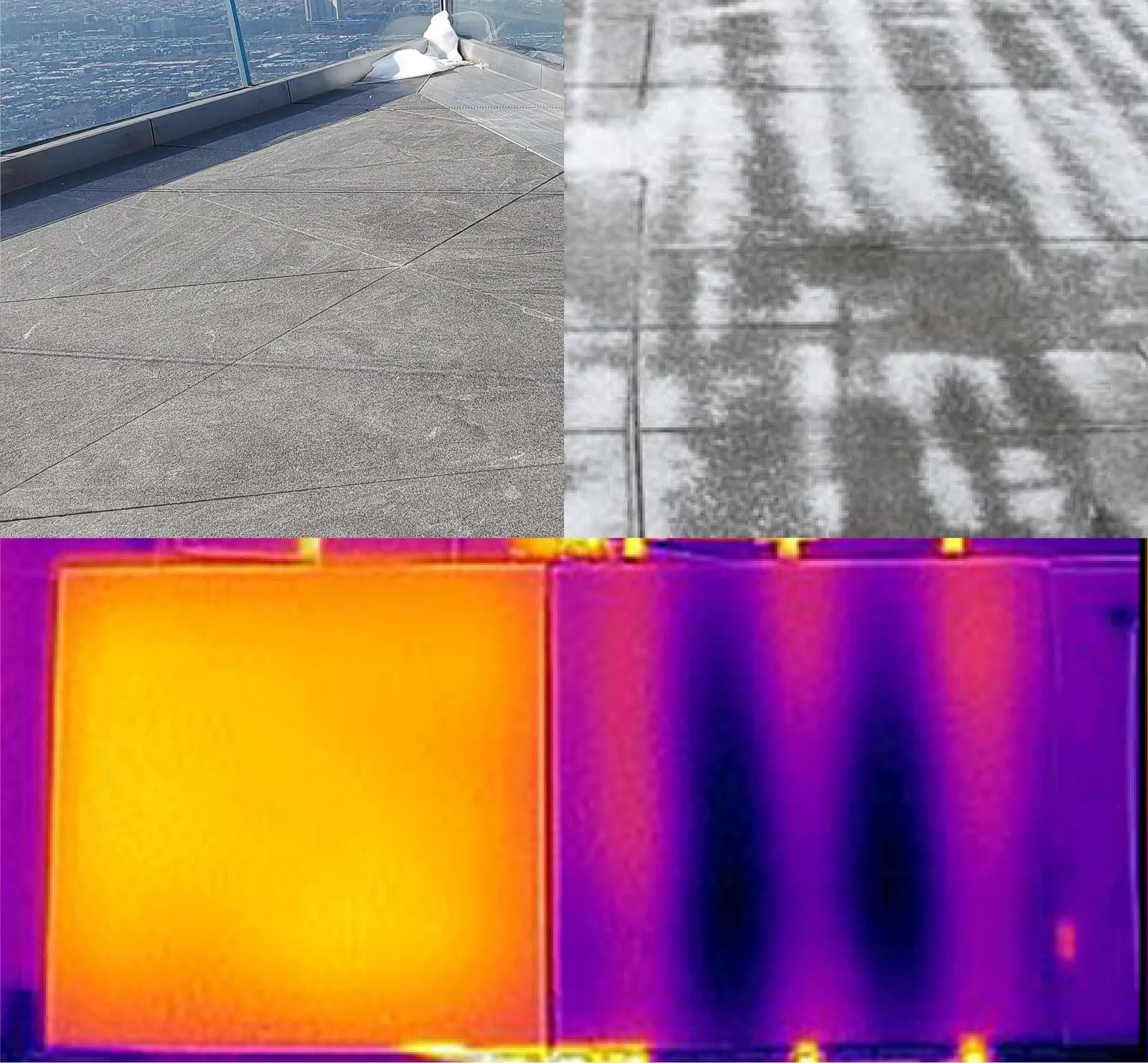
The tube and aluminum sheet products sold for pedestal decks are a different animal. A thin sheet under a paver has no fluid under most of the stone, and the tube has to run hot to push heat sideways through aluminum into a cold paver. A hot tube in a plastic tray expands, and the expansion lifts and dislodges the pavers sitting on it. And PEX is not rated for daylight; under open jointed pavers the tubing in a tray sees UV through the joints, which voids the tubing manufacturer’s warranty. The comparison below is the same storm: The Edge NYC at Hudson Yards, 4 inch granite slabs on ThermaPANEL at 1,100 feet, against a tube and sheet system under 3/4 inch porcelain.
Tower projects
SUMMIT One Vanderbilt, New York
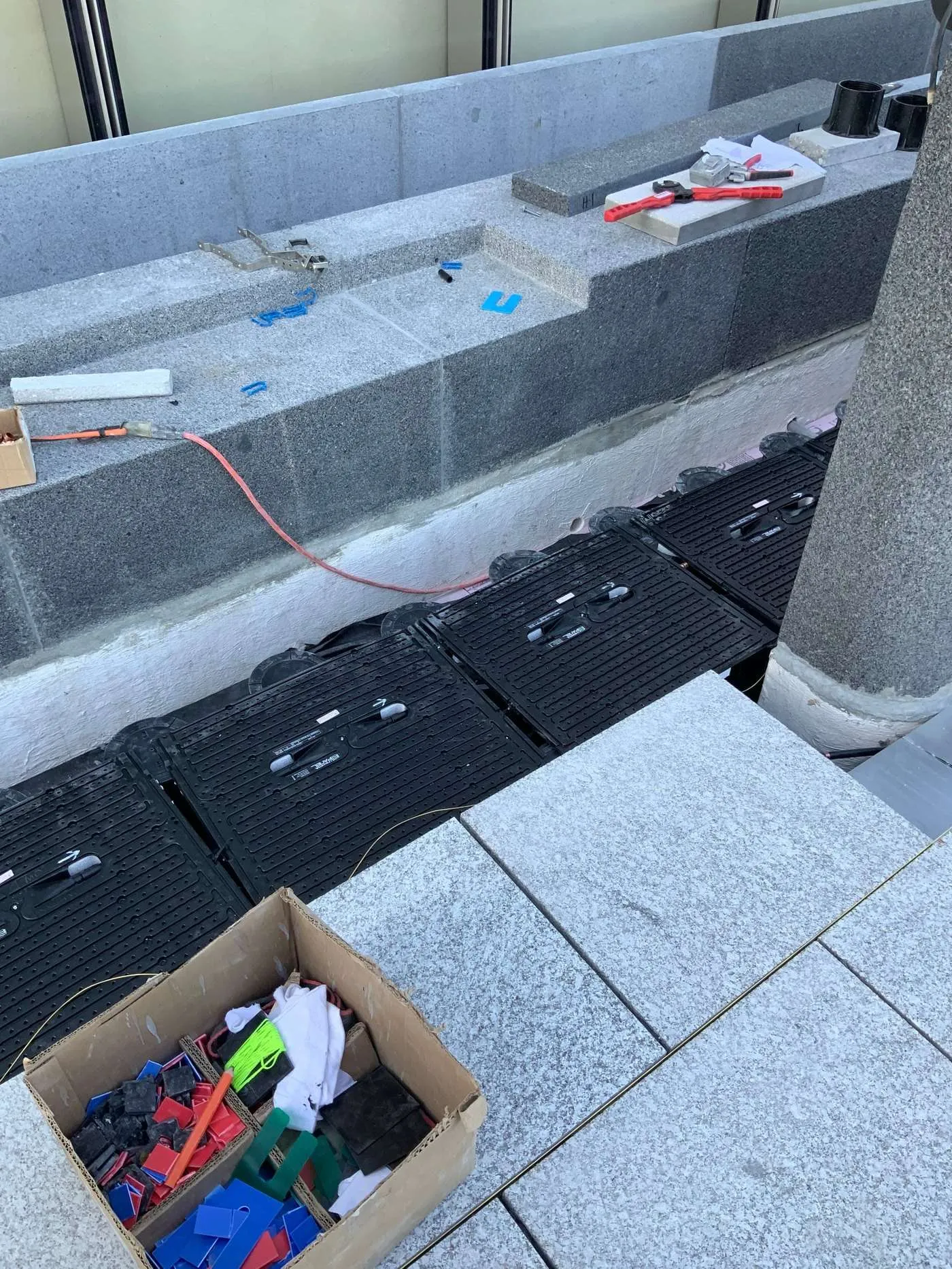
Pedestal mounted stone on ThermaPANEL across the outdoor observation terraces at the top of One Vanderbilt. The panels went down on the pedestal grid with the supply and return tubing run in the pedestal space; the stone slabs were set directly over them. Project page.
The Edge NYC, Hudson Yards, New York
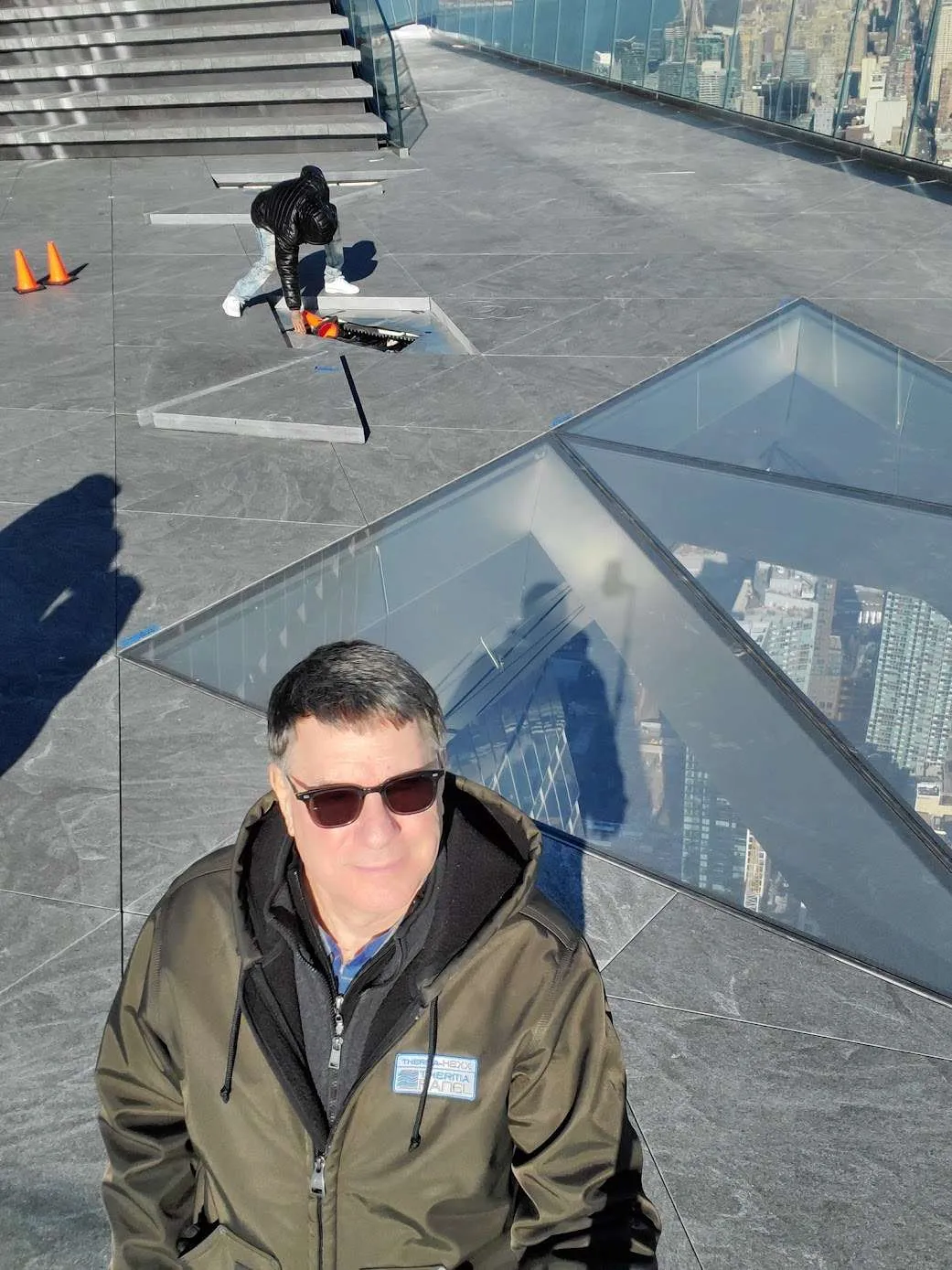
The highest outdoor sky deck in the Western Hemisphere, a cantilevered platform at 1,100 feet, 4 inch granite slabs over ThermaPANEL, kept clear through the storm shown above. Project page.
Aman New York, Crown Building, Fifth Avenue
Garden terraces on the Crown Building, pedestal pavers on ThermaPANEL beneath the planters and dining areas. Project page.
Edition Hotel, Times Square, New York
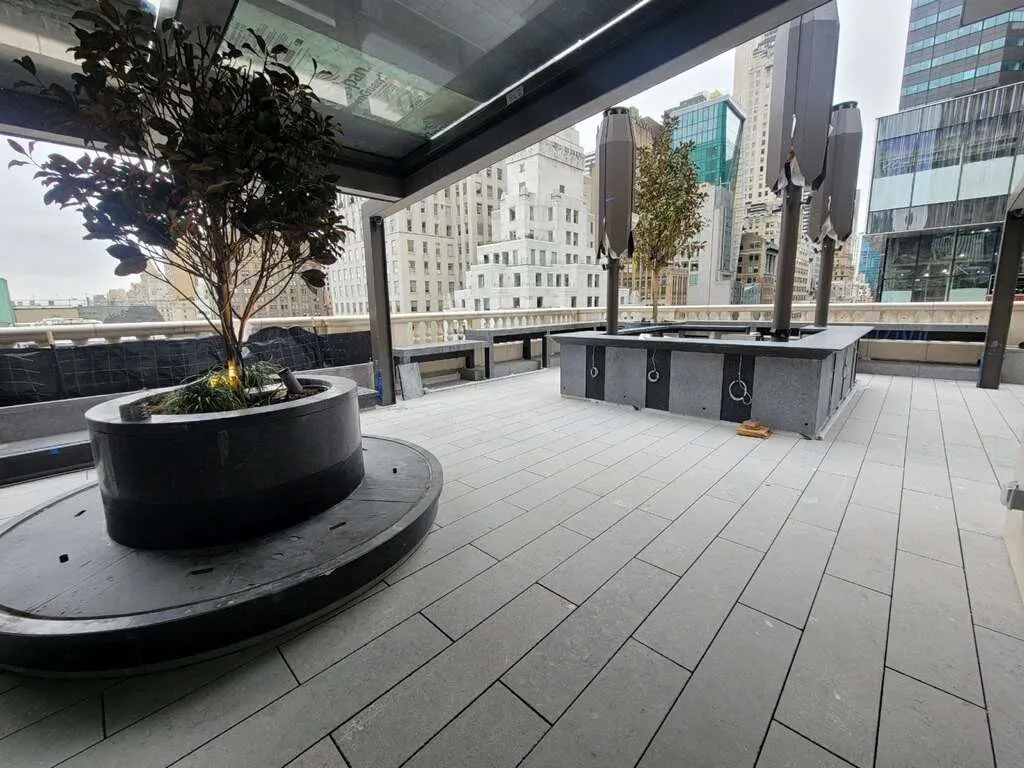
Rooftop terraces that convert between indoor and outdoor space with the season; ThermaPANEL on pedestals above the roof piping heats them in winter and cools them in summer. Project page.
St. Regis Chicago (Vista Tower)
Amenity deck with Hanover Guardian wind uplift pavers over ThermaPANEL. Project page.
Williamsburg Hotel, Brooklyn
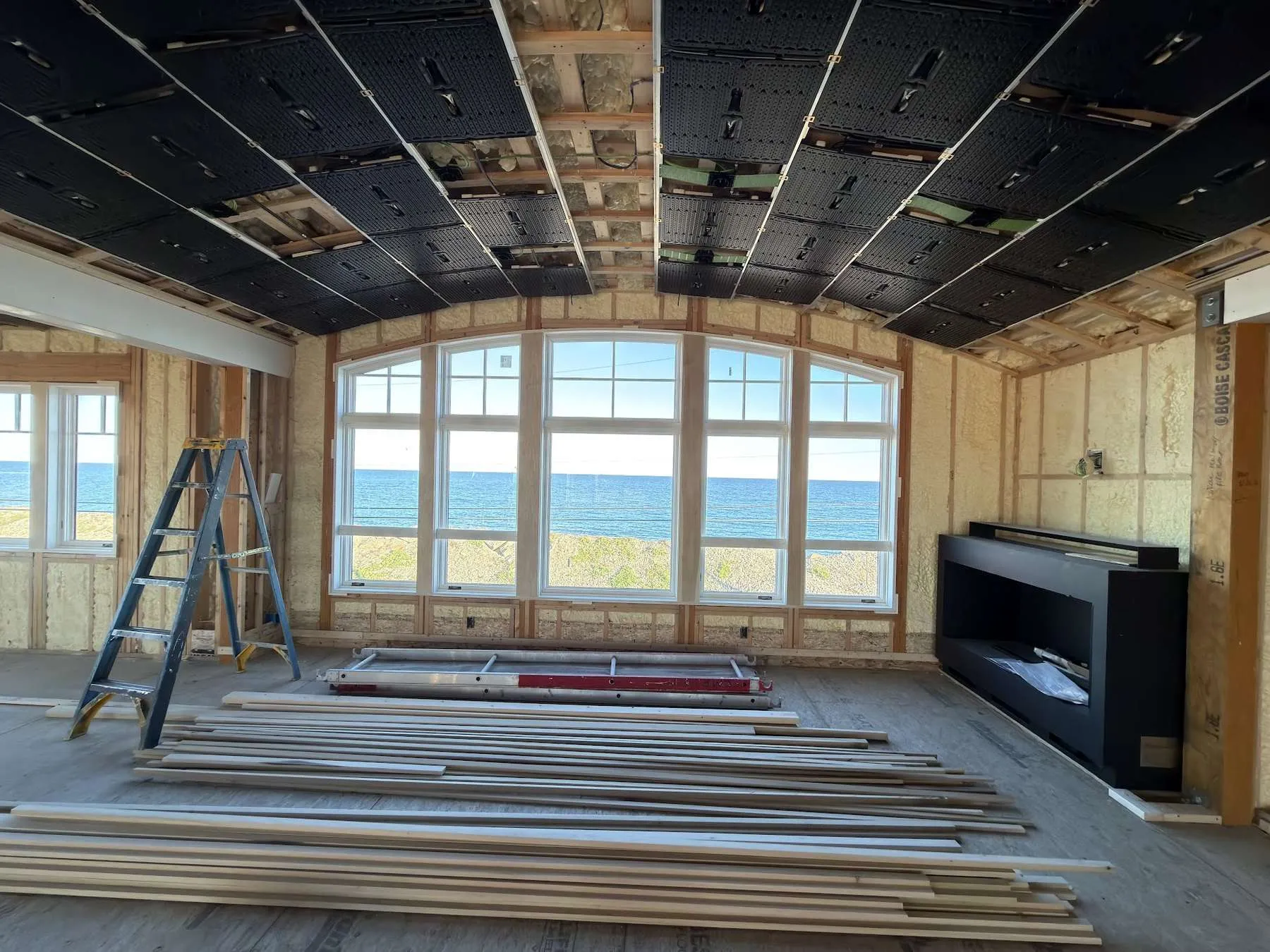
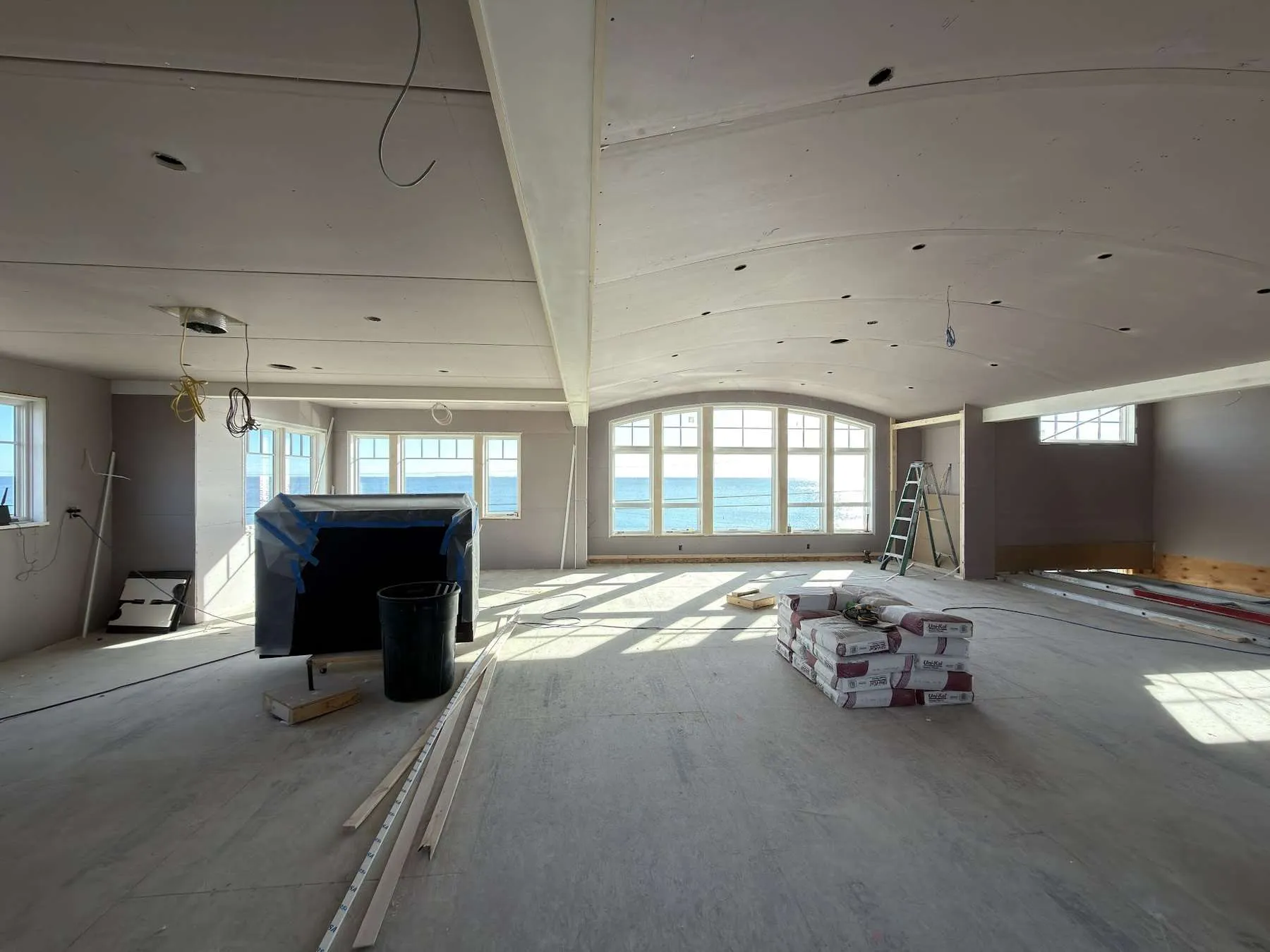
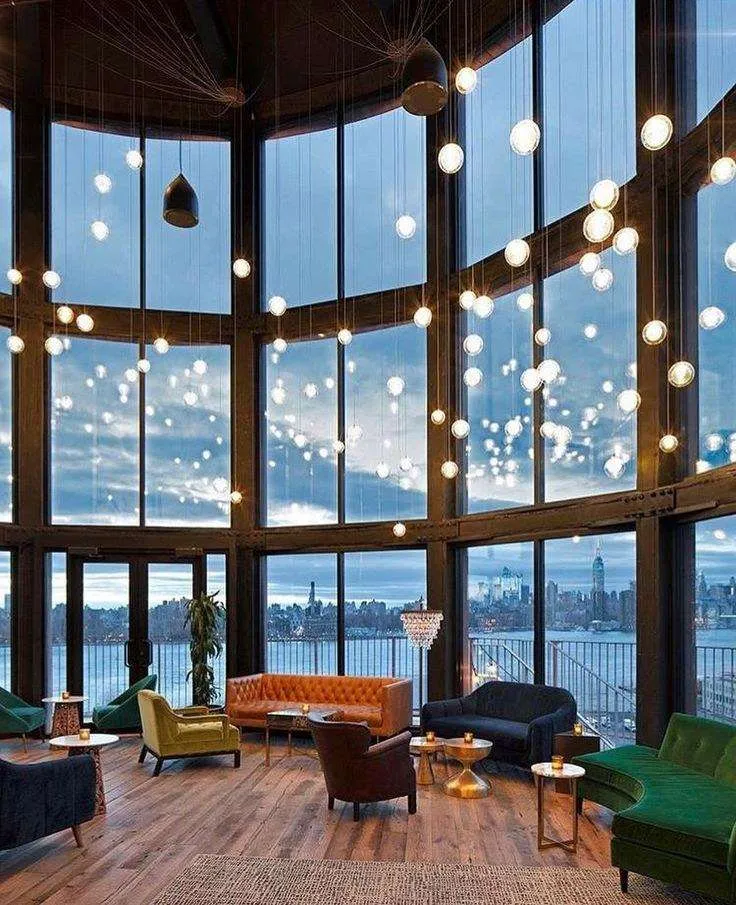
Not snowmelt: the rooftop restaurant built to look like a wooden water tank needed invisible heat in 1.5 inches over the structural slab. ThermaPANEL went down as a radiant floor under the antique wood, the first interior ThermaPANEL installation. Project page.
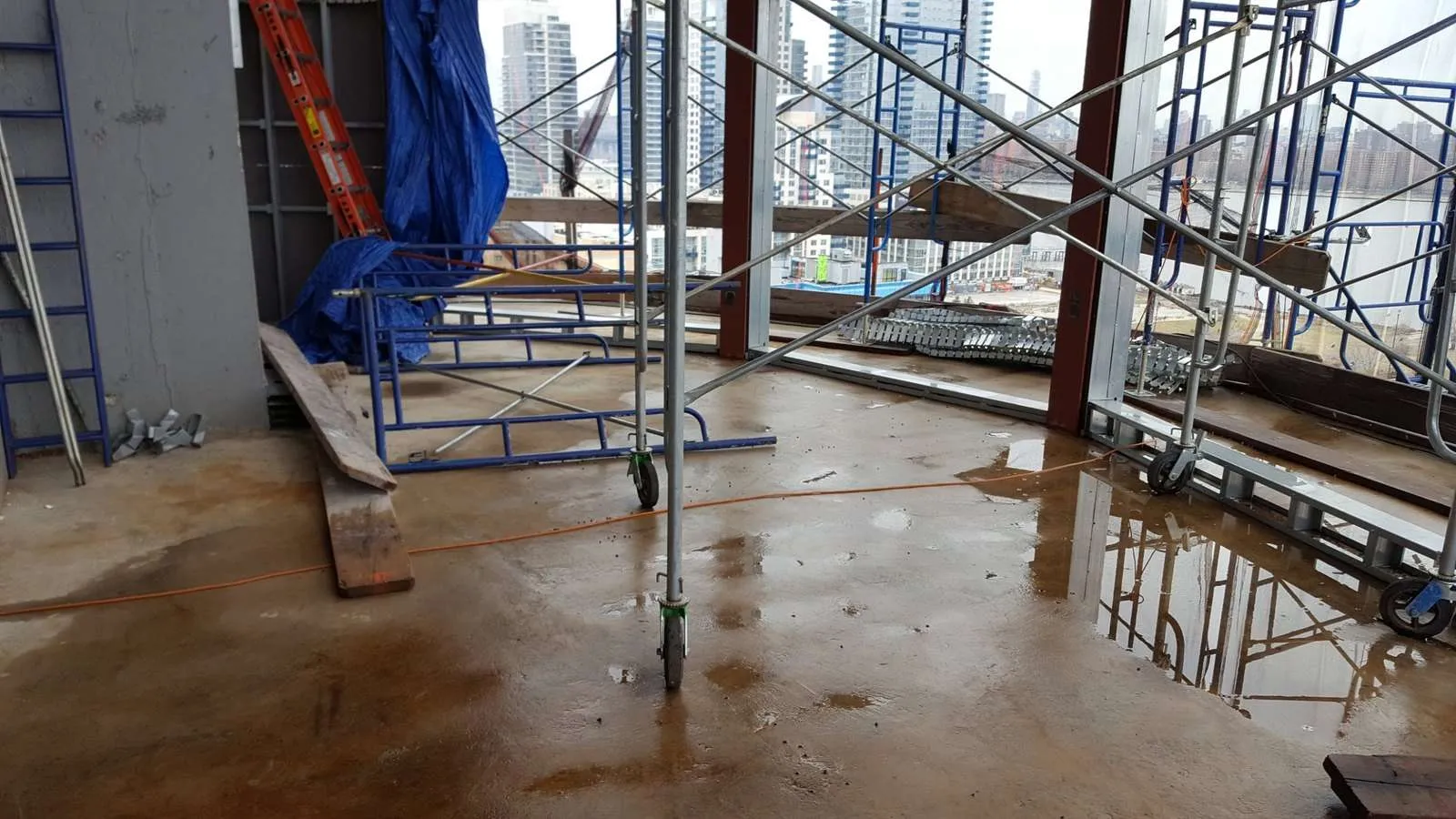
Chestnut Street, Chicago
Egress paths across a common terrace over underground parking, 1.5 inches of height, panels, tubing and manifolds all inside it. Project page.
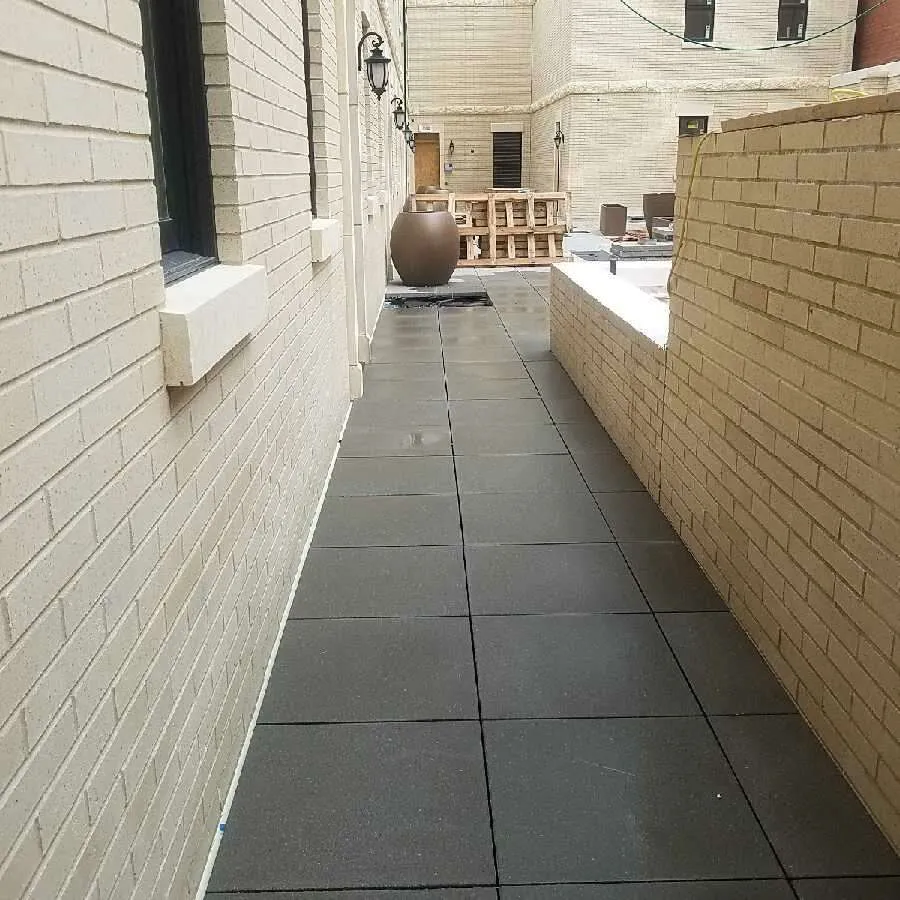
Other city work: the Redbury Hotel and a West 20th Street residence in Manhattan, Superior Street in Chicago, the Google Skybridge, and Hartford Hospital.
What we supply
Therma-HEXX engineers the layout to the architect’s paver module and the structural grid, then supplies the panels, manifolds, heat exchanger where the building loop must stay separate, air and dirt separation, expansion and glycol feed, as an OEM partner of Caleffi, Taco Comfort Solutions, Grundfos, Spirotherm, Axiom, Amtrol, Chiltrix and others. ThermaPANEL is listed under ICC-ES PMG-1788 and is specified under CSI 32 17 43 and 23 83 16 on ARCAT. The roofing contractor sets pedestals, the plumber connects manifolds, the paver installer sets stone. Nobody learns a new trade, and for a crew’s first ThermaPANEL job we can send an onsite trainer for the start of the installation.
Send us the terrace drawings
For a BTU estimate and a panel layout we need the roof plan with the terrace and paver module marked, the city, the available build up height at doors and drains, and the heat source the mechanical engineer has in mind. Contact Therma-HEXX engineering or call (603) 319-8815. Portsmouth, New Hampshire.
Questions
How much weight does a heated pedestal paver terrace add?
ThermaPANEL adds the panel, its EPS backing and about a quart of fluid per 2 foot panel, roughly half a pound of fluid per square foot. The pavers and pedestals are the same ones the architect already drew. A topping slab with tubing in it adds 50 pounds or more per square foot by comparison.
Can a heat pump run rooftop snowmelt in New York or Chicago?
Yes. Most of our designs supply 100 to 130 F, which air to water and water to water heat pumps produce routinely. On a tower the usual arrangement is a plate heat exchanger between the building loop and a glycol loop serving the panels.
What happens if a panel is damaged years later?
Lift the paver above it, swap the panel, set the paver back. The membrane is not touched. Tubing in a slab has no such option.
Does it work with wind uplift pavers and tall pedestals?
Yes. The St. Regis Chicago amenity deck uses Hanover Guardian wind uplift pavers over ThermaPANEL. Where stone is odd sized or not strong enough to carry at its corners, grating on the pedestals or on deck framing goes under the panels for full support.
How fast does it respond?
Faster than a slab, because there is no concrete to heat. Fluid sits directly under the paver across the whole panel, so the surface warms as a plane. Surface sensing controls start the system when the sensor sees moisture and freezing together, which is what the New York and Chicago codes require.